
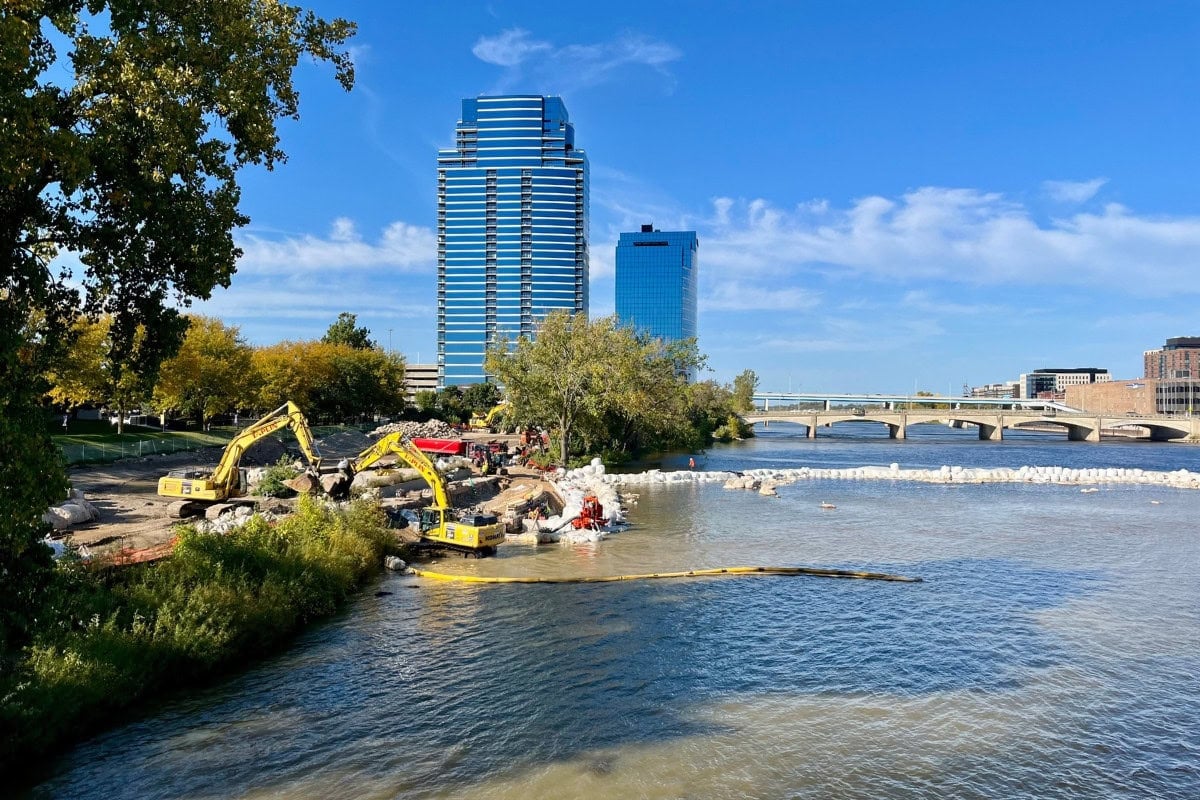
The Rapids are Coming Back to the Grand River!
Would you like to save this full guide?
Imagine visiting Niagara Falls and finding no falls. You would have a few questions. Visitors to Grand Rapids have had a similar question for generations: Where are the rapids?
The city’s namesake rapids disappeared after dams were built in the late 1800s and early 1900s. But what a community needs from its river can change over time. For more than 15 years, Grand Rapids has been working toward a different future for the waterway, one that brings back the rapids while improving habitat, safety, and river access.
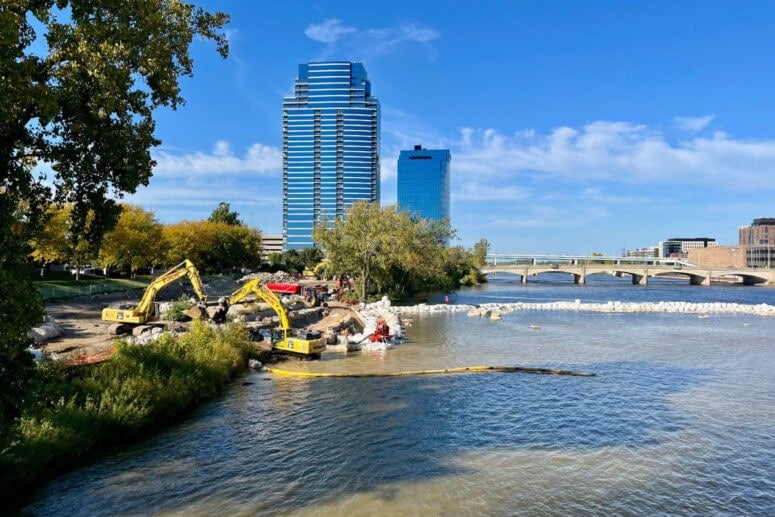
Now, construction is underway on the first phase of a restoration effort focused on 2.5 miles of the Grand River. Years of planning to bring back the rapids are also expected to bring a wave of revitalization along the river.
Here’s what you need to know about the Grand River restoration project.
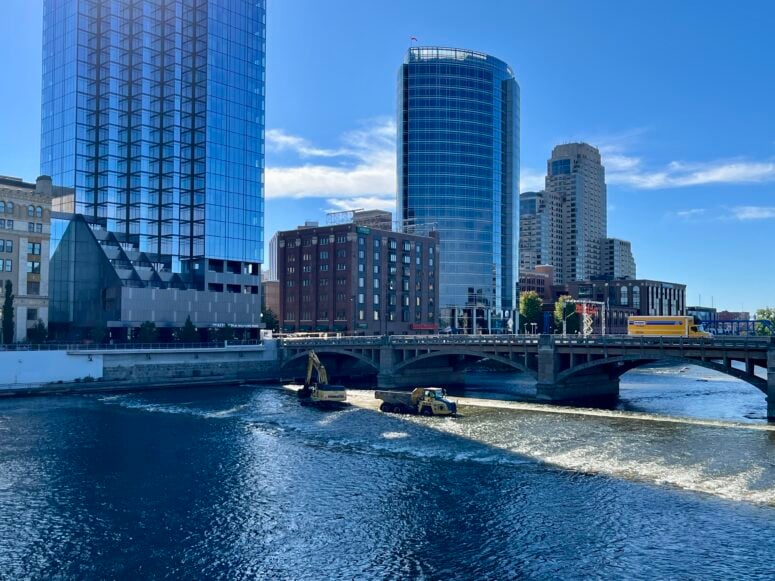
The goal is to restore the natural habitat of the river.
Before we talk about where we are going, it helps to look back to time immemorial. Long before Grand Rapids became a city, the Ottawa people called the river Owashtanong, meaning “Far Away Water.” It supported their communities culturally and economically for centuries. Dams built in the late 1800s and early 1900s later submerged the rapids that gave the city its name.
Restoration aims to improve habitat for native fish and mussels, help fish move through the river, and improve public safety. People stand to benefit, too, with expanded opportunities for fishing, wading, tubing, canoeing, and kayaking. Whitewater paddling may be possible when river flows allow.
Years of planning have gone into this restoration project.
Since 2009, Grand Rapids WhiteWater has helped lead a restoration effort involving community, government, and tribal partners. Years of scientific study, public engagement, and design work have shaped a project that balances recreation with the river’s ecological health. Bringing back the rapids comes with quite a bit of homework.
Protecting wildlife also meant moving some residents before construction. In summer 2024, crews relocated 9,040 mussels to suitable habitat elsewhere in the Grand River. These included common species, state-listed species, and 38 federally endangered mussels.
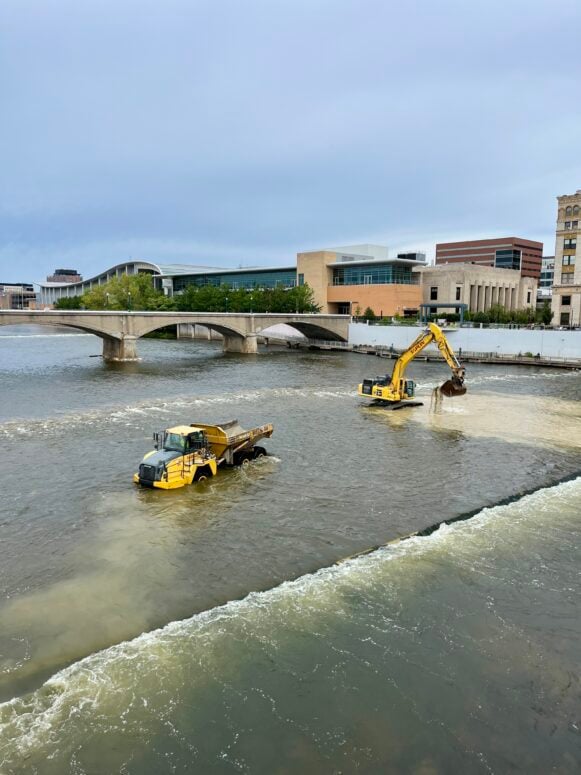
The project has two parts: the Upper Reach and the Lower Reach.
The overall restoration effort focuses on 2.5 miles of the Grand River. The Lower Reach extends from Bridge Street to Fulton Street, while the Upper Reach runs from Bridge Street to Ann Street. The Upper Reach includes the Sixth Street Dam, where restoration plans must also address protection against invasive sea lamprey.
The first phase is expected to span two construction seasons, with completion anticipated in fall 2027. Work in the river will pause over winter, and water levels or weather delays could affect the schedule. The Upper Reach will follow a separate timeline that has not yet been established.
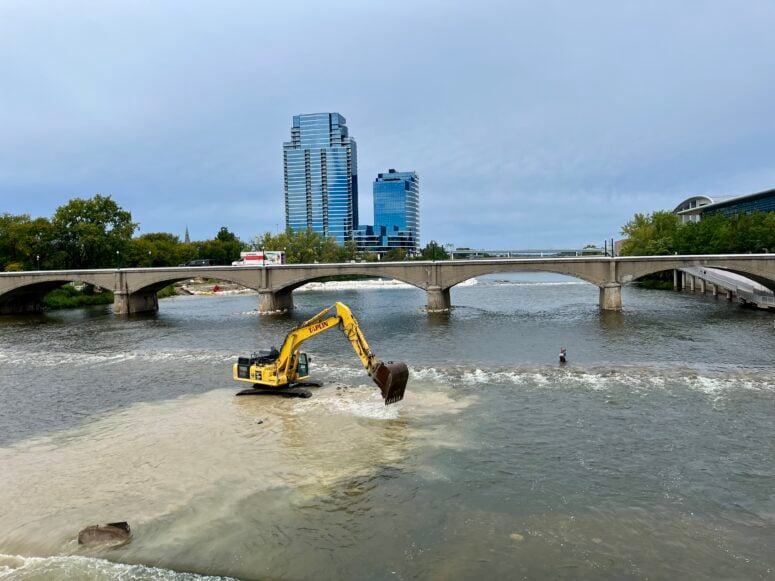
Construction has already begun on the Lower Reach portion.
Lower Reach construction began in summer 2026. Removing its four aging dams will address dangerous recirculating currents that can trap people. New rock structures will help create a more varied river environment, improving fish passage and habitat while opening up more recreational opportunities.
A draft environmental study for the Upper Reach is expected in July 2027.
The Great Lakes Fishery Commission and U.S. Army Corps of Engineers are evaluating alternatives for the Upper Reach, with a draft environmental impact statement anticipated in July 2027. Construction does not have a start date yet. The environmental review and a design that can receive permits must come first.
More research needs to be done to block invasive Sea Lamprey.
Sea lamprey are parasitic fish that attach to other fish and have caused substantial ecological and economic harm across the Great Lakes. The Sixth Street Dam currently keeps them from reaching roughly 1,900 miles of upstream habitat, making an effective replacement barrier essential to any plan to remove it.
The Sixth Street Dam will not be affected by Lower Reach construction. Researchers are evaluating options for maintaining lamprey protection as Upper Reach planning continues. The goal is to help native species move through the river without giving invasive fish the same invitation.