How a Michigan Sculpture Park Turns Priceless Art Into a Glowing Winter Light Show
Auguste Rodin once said, “I invent nothing, I rediscover.” That’s part of the magic of ENLIGHTEN at Frederik Meijer Gardens & Sculpture Park in Grand Rapids: familiar sculptures take on a new life after dark.
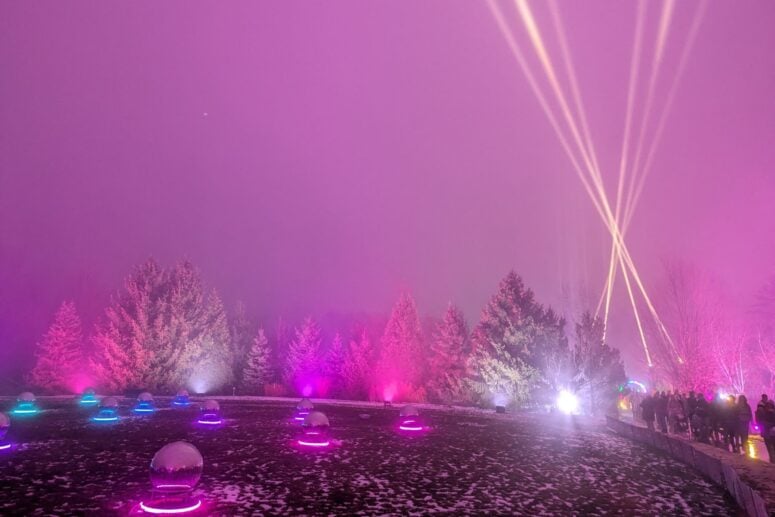
Rodin’s Eve glows beneath chandeliers at the end of a colonnade of European hornbeam trees. Lasers sweep across the waterfall, and visitors can change the colors around Roxy Paine’s Neuron with a wave of the hand.
ENLIGHTEN returns for its third season in November 2026 with new features, fun, and festivity you might not notice unless you know where to look and where to linger. Plus, you can’t just string holiday lights from Rodin like a traditional Christmas tree.
In fact, nothing you’ll experience during ENLIGHTEN at Meijer Gardens & Sculpture Park is by accident. We wanted to find out how it all comes together.
Bringing the Gardens to Light
Another Rodin quote rings true at Meijer Gardens: “Art is the pleasure of a spirit that enters nature and discovers that it too has a soul.” Here, art and nature have always shared the stage.
For ENLIGHTEN, Lightswitch and production partner Upstaging took time to understand what makes the gardens distinctive: “the kind of marriage and blend of horticulture and sculpture,” says John VanderHaagen, director of media and public relations.
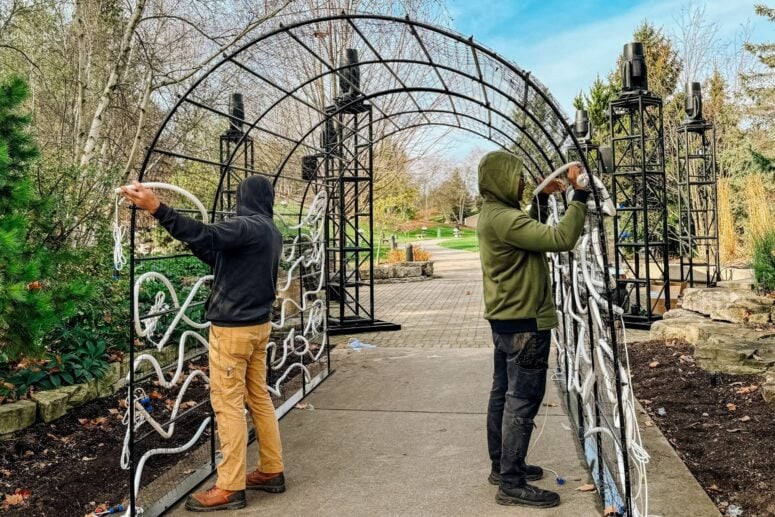
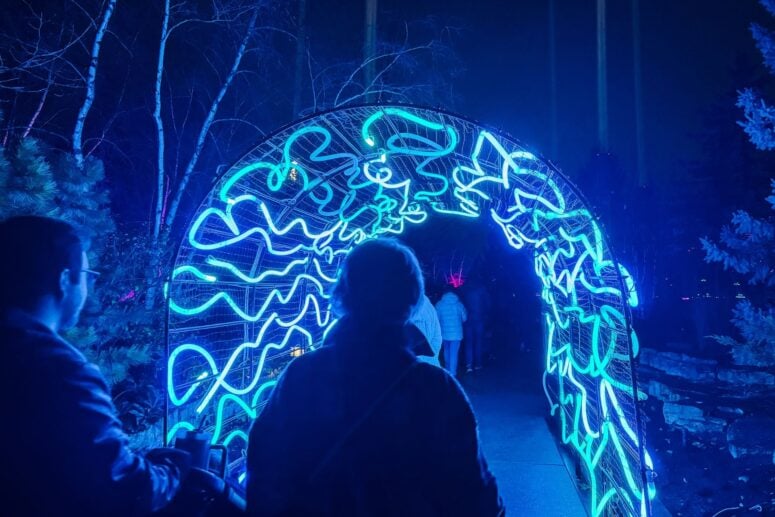
That relationship shapes the mile-long route, with lighting designed around the sculptures, the trees and the way visitors move through the grounds after dark. The work begins well before opening night. About 20 crew members started installing in early October, running more than 100,000 feet of cable and setting up 3,000 lights, according to lighting designer Collin Mulligan.
The goal isn’t simply to make the gardens glow. It’s to bring art and landscape together in a new way, with every beam, shadow, and movement carefully considered.
“It is all intentional — every shadow that’s cast, every light beam, every synchronized dancing, moving light,” VanderHaagen adds. “It’s curated from the moment you park in our parking lot to the moment you walk back out to your car through light, through sound, and scent, like the fresh burning wood of the fire pits.”
John Featherstone, principal and managing director of Lightswitch, adds, “While this project involved lights, it was about much more than that—it was about crafting a unique, differentiated human experience. We often talk about creating ‘emotional souvenirs,’ and we don’t take that lightly. A great deal of creative effort and thought went into making these moments truly memorable.”
When the Weather Becomes Part of the Show

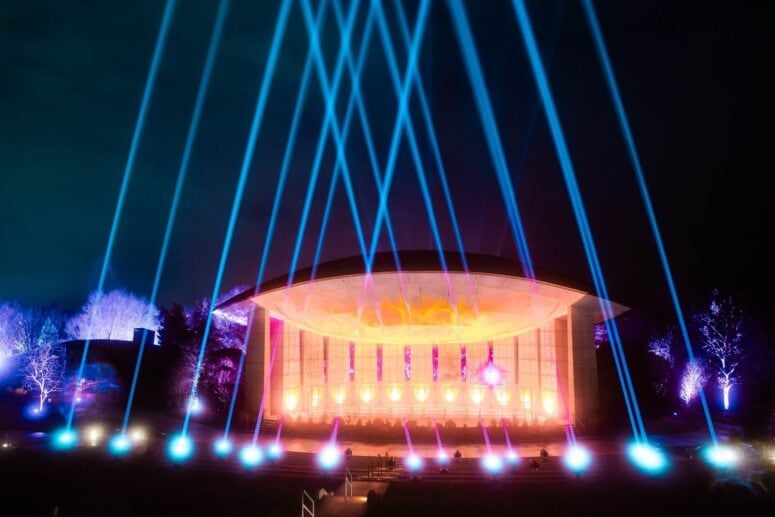
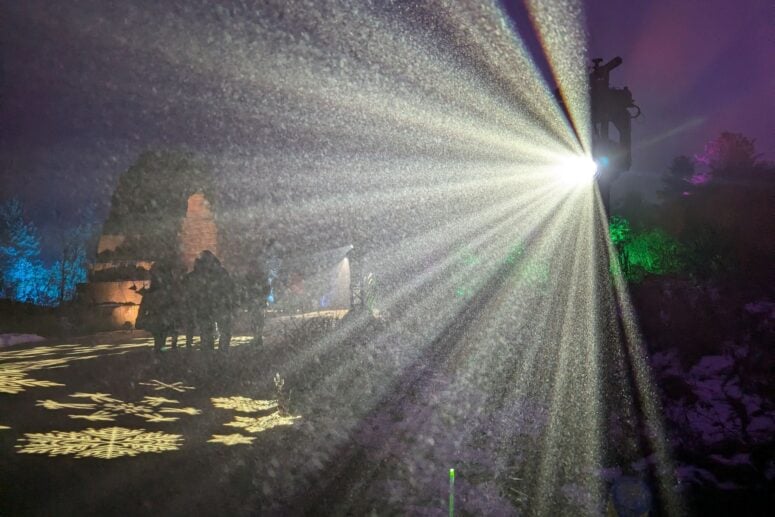
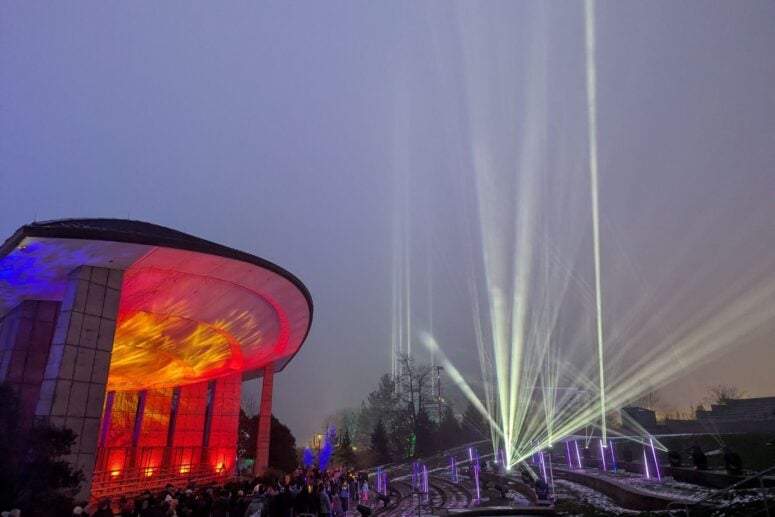


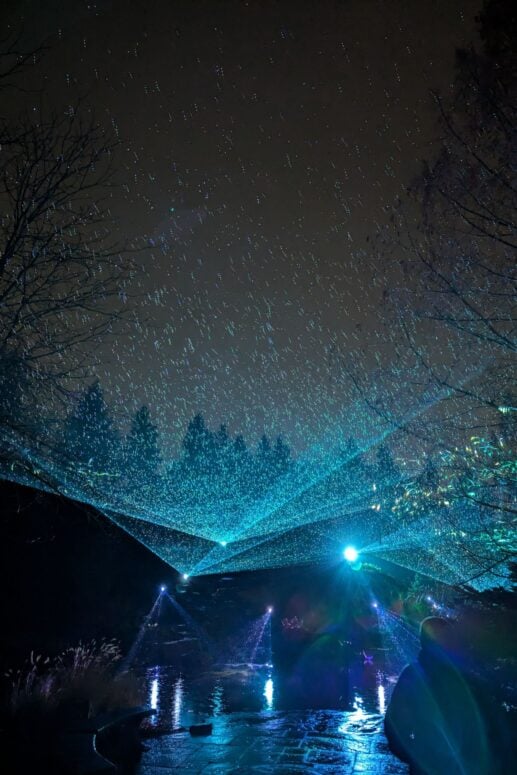
A dry, quiet night gives ENLIGHTEN one kind of atmosphere. Snow falling through the beams gives it another. The designers know that Michigan winter doesn’t stick to one script, so they plan for more than a perfect night.
“Even if you come on a dry night with no snow, the show is going to be completely different in a blizzard or falling dramatic snow,” says John VanderHaagen, director of media and public relations at Meijer Gardens. “If guests have a ticket to an evening where it’s looking like it’s going to snow, bundle up, put on some boots, and embrace it.”
While stunning, the photos hardly do the experience justice. Snow catches the moving lights and changes the way they travel through the trees and across the grounds. It becomes part of the show, even though nobody can choreograph the weather.
The equipment has to be ready for it, too. Mulligan says the crew uses fixtures suited to winter conditions, along with miles of cable and a network of power and data running through the park.
Garden crews work to keep the paths and gathering areas clear and safe, while letting nature work its magic around them, complemented by the lights, shadows and sounds designed by Lightswitch and brought to life by Upstaging.
A Sculpture Park Becomes a Series of Galleries
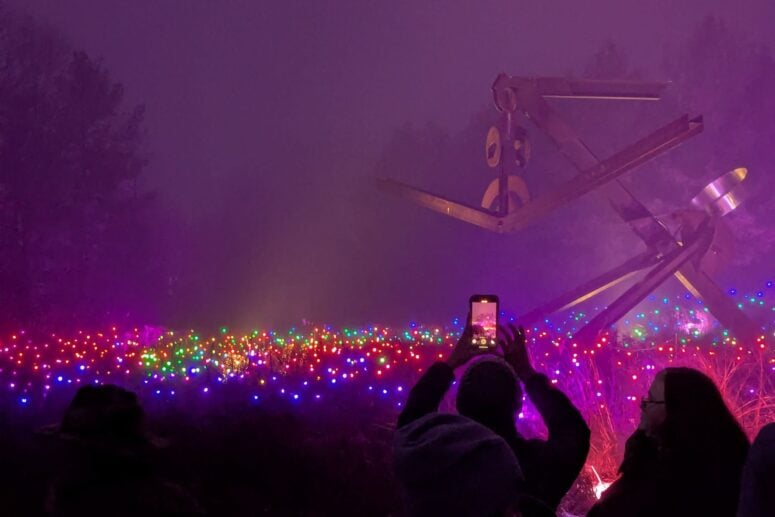
Scarlatti by Mark di Suvero | photo via Frederik Meijer Gardens & Sculpture Park 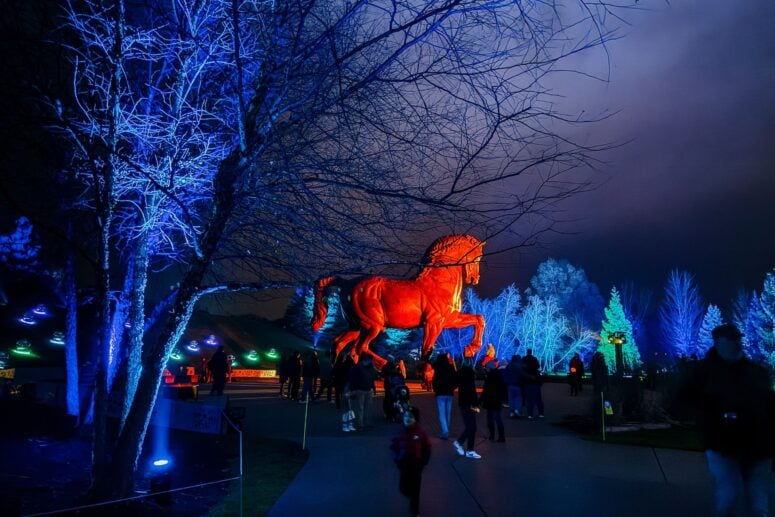
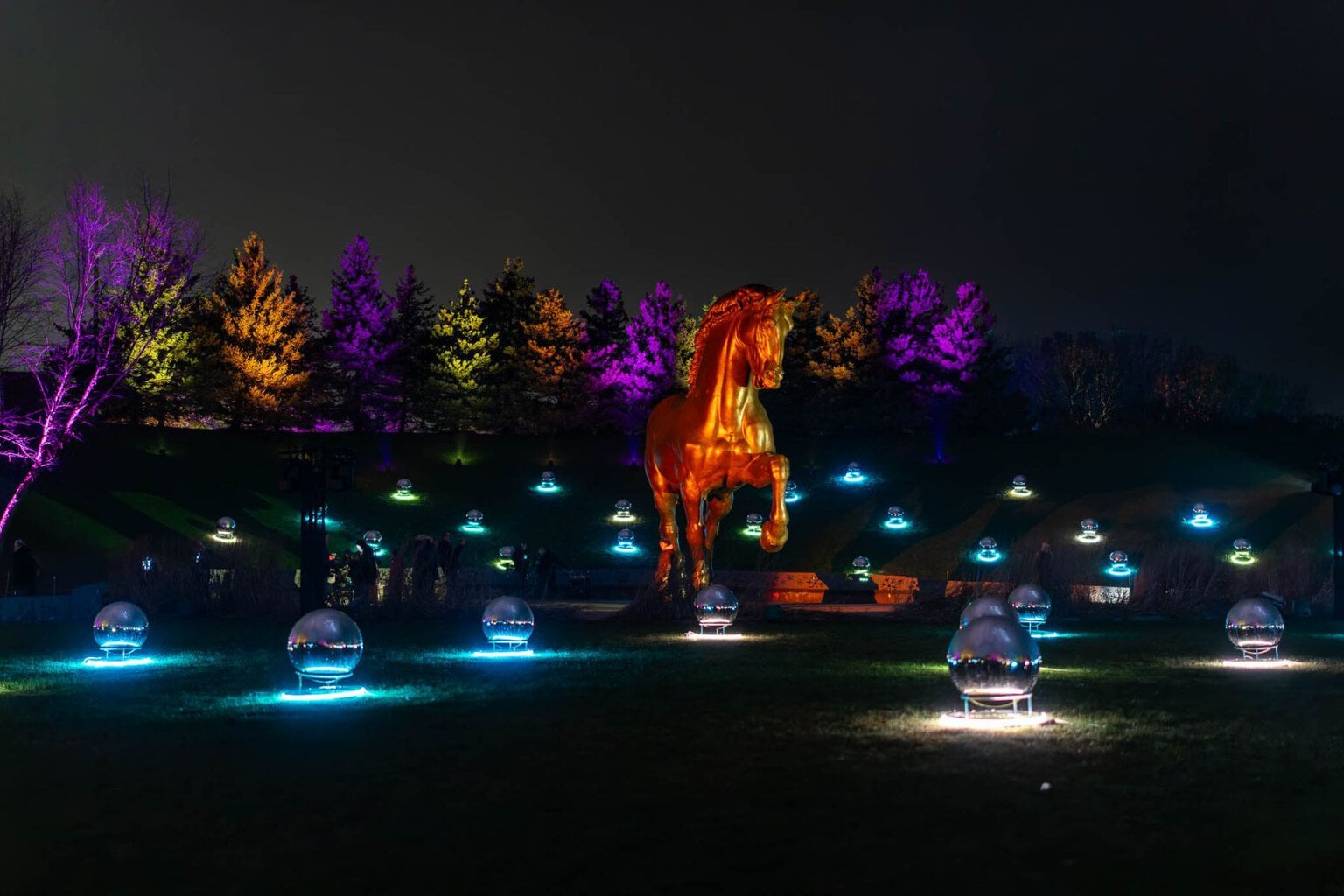
The American Horse by Nina Akamu at ENLIGHTEN | photo via Frederik Meijer Gardens & Sculpture Park Lying Man by British sculptor Sean Henry | photo via Frederik Meijer Gardens & Sculpture Park 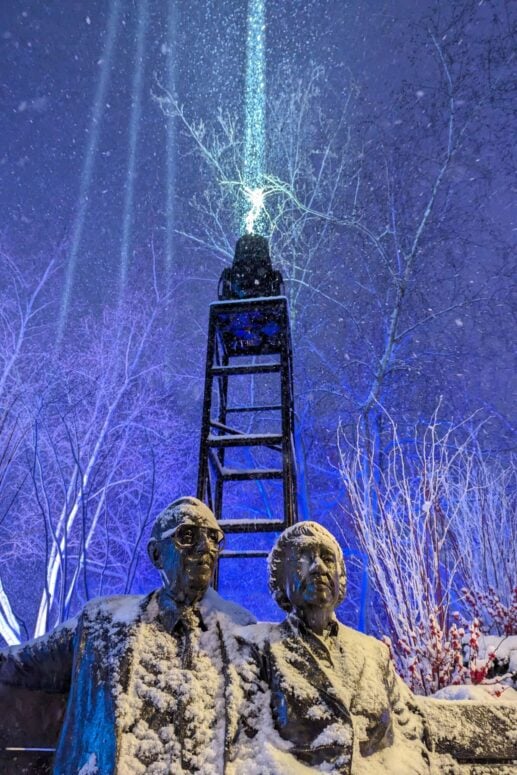
ENLIGHTEN | photo via Frederik Meijer Gardens & Sculpture Park 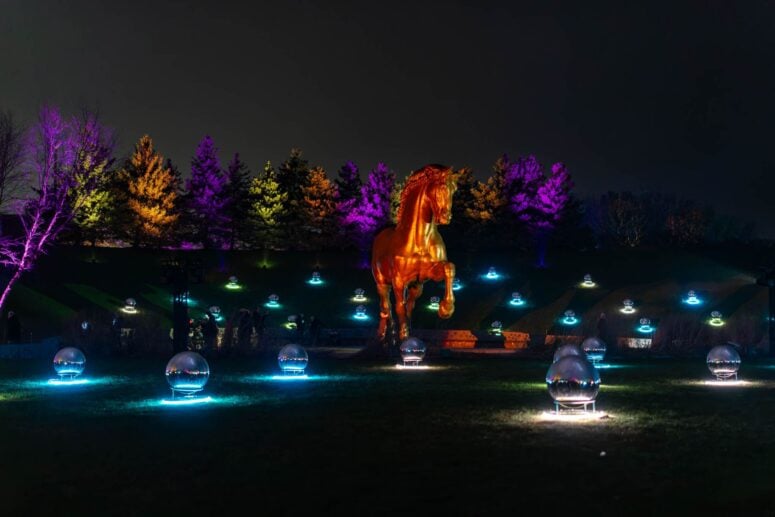
The American Horse by Nina Akamu at ENLIGHTEN | photo via Frederik Meijer Gardens & Sculpture Park
Lightswitch, ENLIGHTEN’s design team, approached the grounds like a museum with rooms that visitors move through outdoors. Each sculpture and setting called for its own treatment.
“We worked to make sure that every experience felt like it was responding to the aesthetic of the particular work of art,” Featherstone notes, adding, “They needed different techniques to work.”
That means the light around Neuron, Roxy Paine’s bright chrome sculpture, has a different feel from the treatment around Scarlatti, Mark di Suvero’s imposing work of rusted steel. Alexander Liberman’s Aria, a towering sculpture roughly the size of a four-bedroom home, becomes part of an interactive experience where visitors can shape light and sound.
The approach fits a collection that spans artists, materials and styles. Neuron looks “super cool high tech,” Featherstone said, while Scarlatti looms over visitors as “a behemoth of rusted metal.” One lighting treatment couldn’t do justice to both.
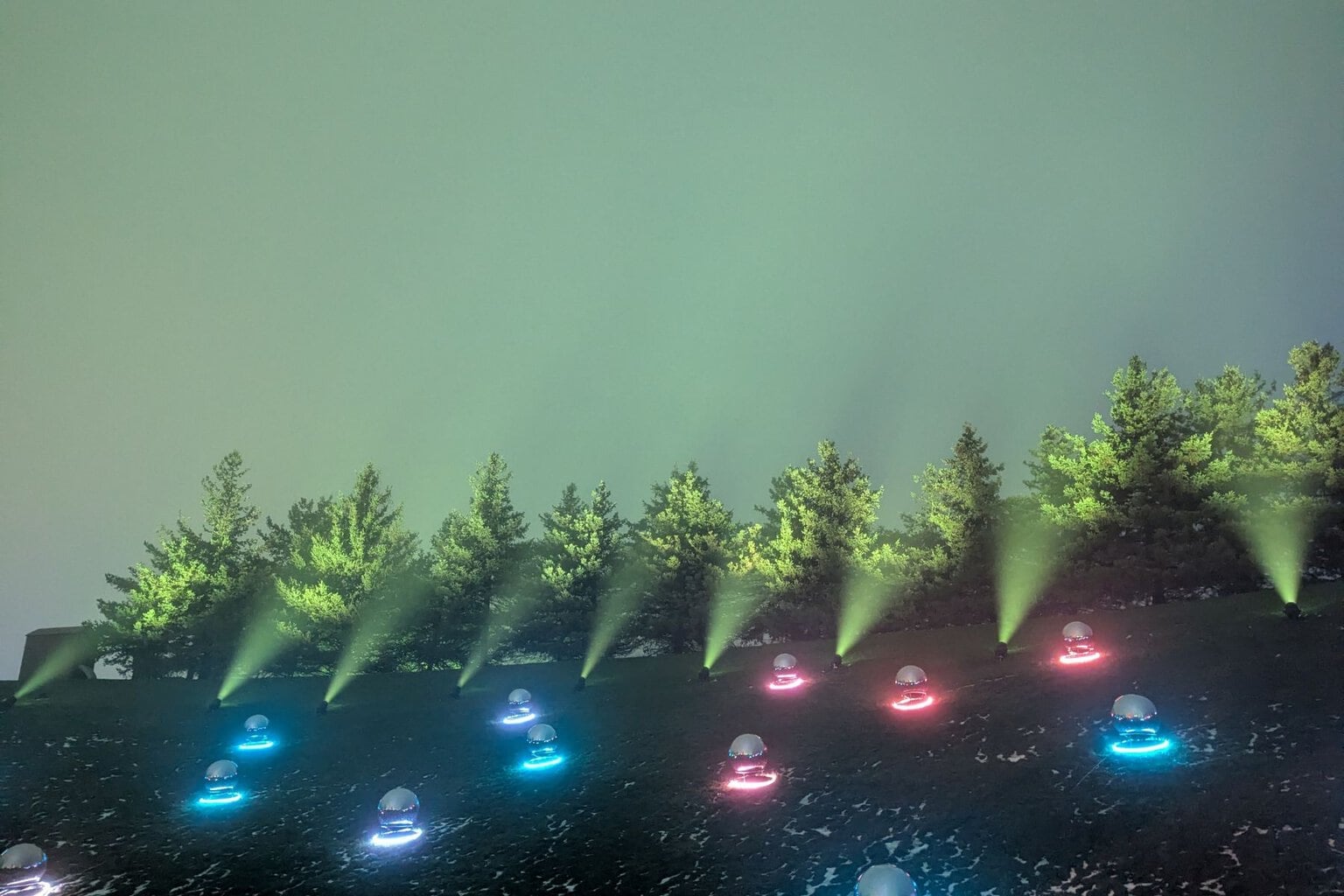
Color shifts along the way, too. Rather than leaning on the usual holiday palette, the designers built a broader arc of color through the experience.
“Color is subjective,” Featherstone said. “We want to make sure everyone sees their favorite.”
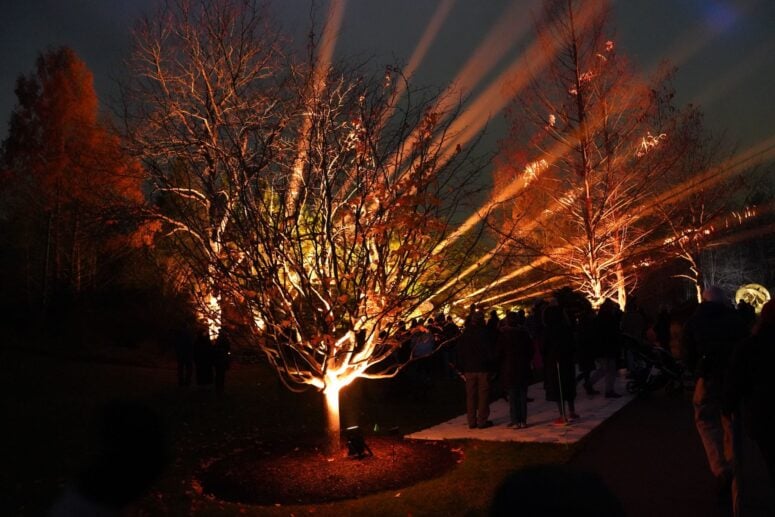
Even the natural surroundings are part of the aesthetic consideration: “It’s the shape of the trees, how the lasers and lights hit those trees to cast shadows behind it. All of that is thought through and designed intentionally.”
 ENLIGHTEN | | photo via Frederik Meijer Gardens & Sculpture Park
 ENLIGHTEN | | photo via Frederik Meijer Gardens & Sculpture Park
 ENLIGHTEN | | photo via Frederik Meijer Gardens & Sculpture Park
 ENLIGHTEN | photo via Frederik Meijer Gardens & Sculpture Park

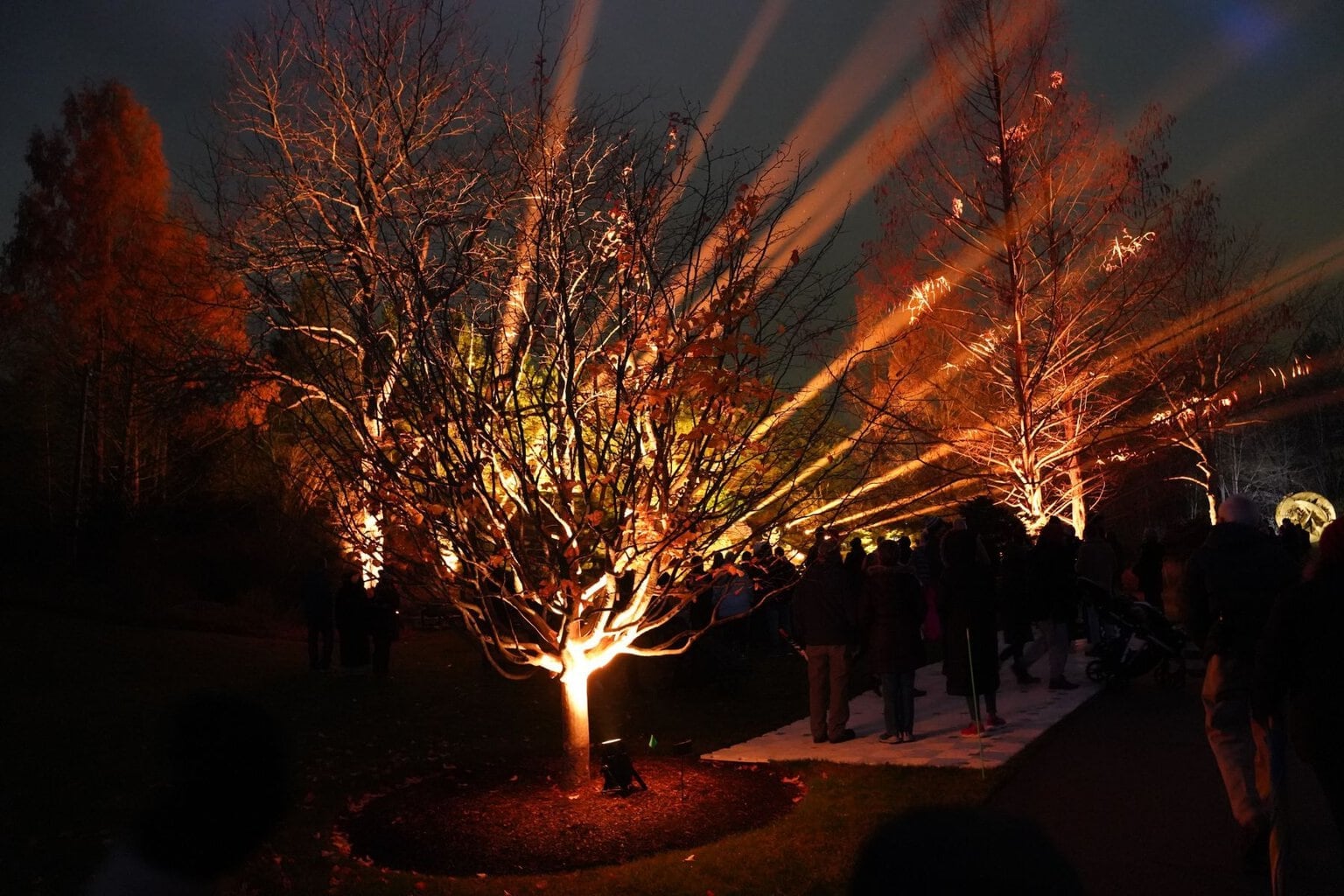
Lighting the art without touching it

The sculptures are the stars of the show, but the lighting is designed to reveal them without physically altering them. Meijer Gardens has priceless works by major artists, says John VanderHaagen, director of media and public relations, and protecting their integrity is essential.
“We really don’t touch it,” he says of the artwork. “Our collection truly is an art history book come to life of monumental outdoor sculpture. We wouldn’t do anything that would physically harm that, or that affect the integrity of the work. So a lot of what they’re doing is just dramatic lighting to showcase the works in ways that our guests are not accustomed to seeing them, which is in the daylight.”
Instead, the lighting changes what visitors notice: a sculpture’s shape, its surface, or the shadows it casts. At Eve, for example, chandeliers create a new atmosphere around a work many guests are accustomed to seeing in daylight.
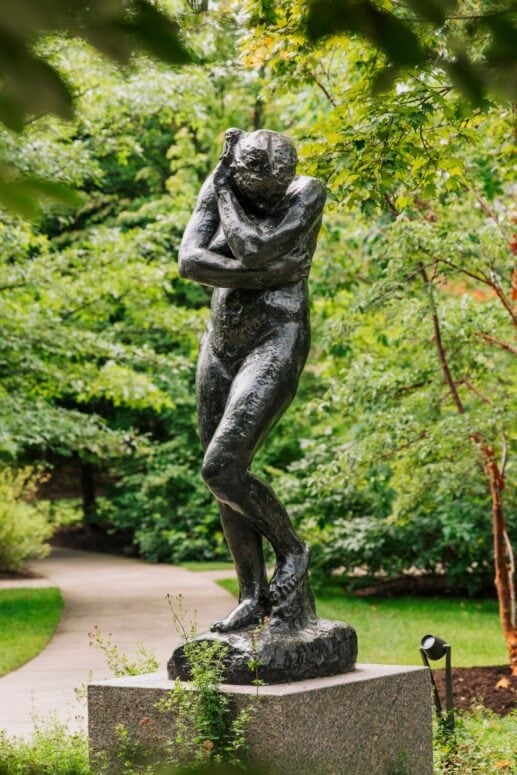
Did You Know?
Eve is considered unfinished, and here’s why: The model was pregnant. A “happy accident” as Rodin called it from an artist’s perspective, adding “…my model found the studio too cold; she came less frequently, then not at all. That is why my Eve is unfinished.”
While the sculptures come with so much history, the lights and gear have a story to tell, too. Mulligan explains, “For a lot of the equipment, it’s actually a second life. They’ve come from rock and roll or other concert tours around the country. Most of the tree uplights were on the Coldplay tour.”
Visitors become part of the show
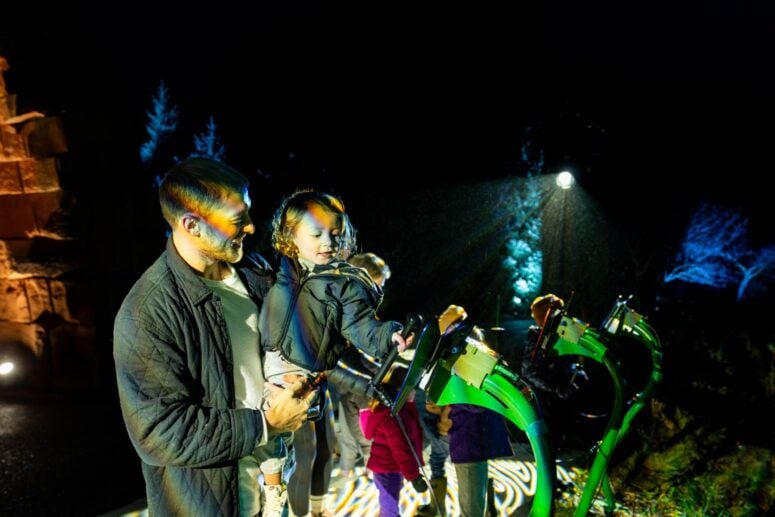
Some installations invite guests to do more than look. At Neuron, visitors can change the sculpture’s color and intensity with hand gestures and custom controllers. Moonlight Melody, based on Liberman’s Aria, lets guests influence light and sound through their actions, turning the sculpture into an instrument of sorts.
The musical thread runs through the collection. Aria takes its name from a musical form; Scarlatti is named for composer Domenico Scarlatti. Elsewhere, visitors can play butterfly chimes that activate lights in oversized six-foot dandelions, a nod to Meijer Gardens’ annual release of 8,000 butterflies into the Tropical Conservatory each April.
The route also brings new ways to interact and linger. In Shadowplay, visitors can dance or strike a pose as their silhouettes become projected art. Ways to Say Goodbye offers a quieter pause in a field of glowing LED grass beside Ariel Schlesinger’s symbolic sculpture.
For 2026, Scarlatti has been reimagined with new lighting, music, and choreography. It sits midway through the journey, alongside a warming tent, fire pits, and food and beverage options.
The Main Stage Showstopping Moment
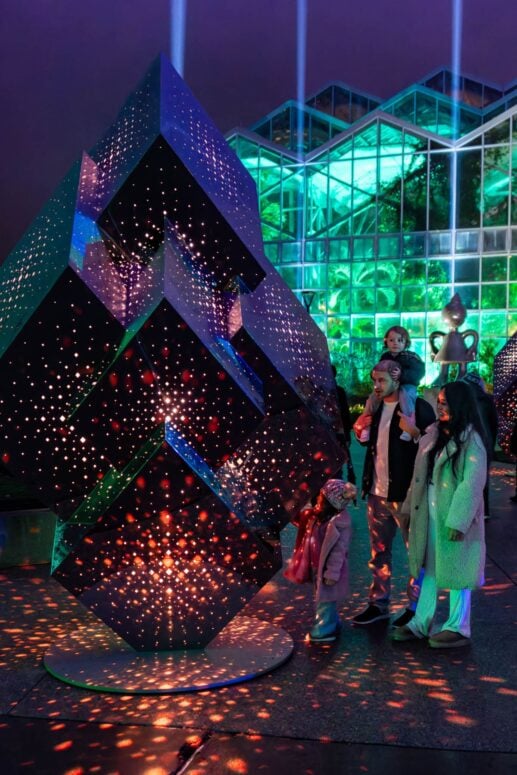
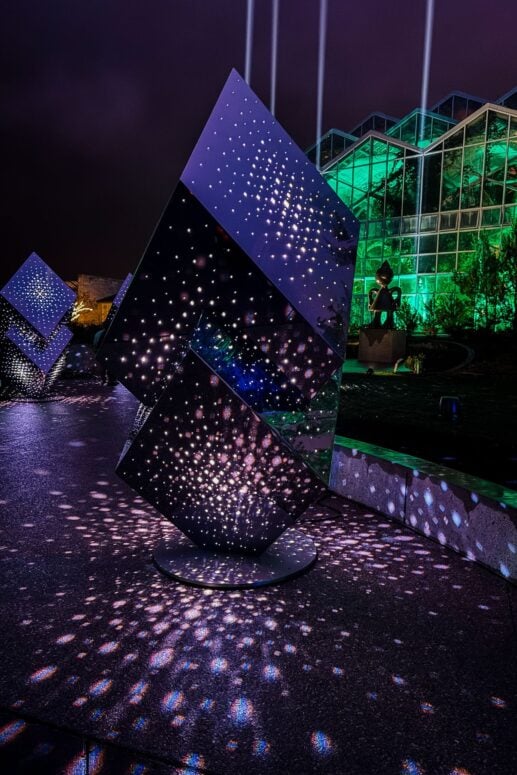
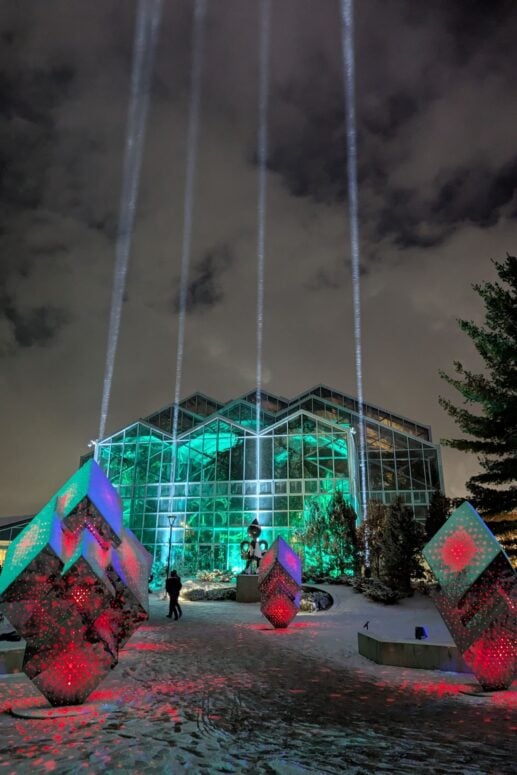
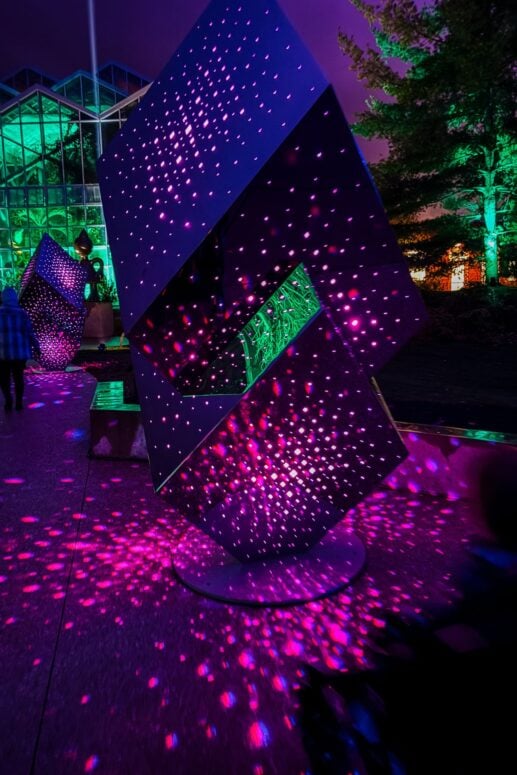
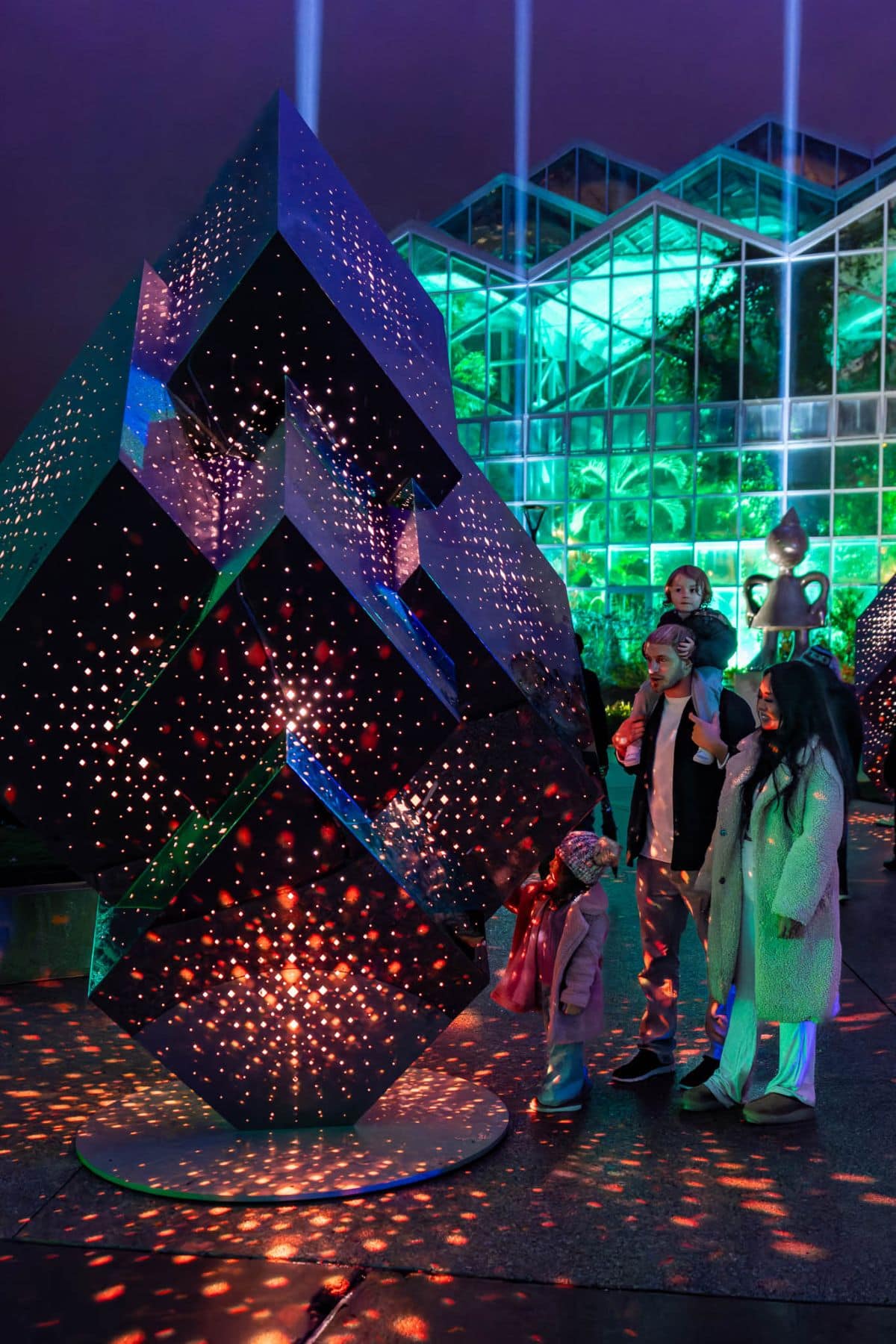
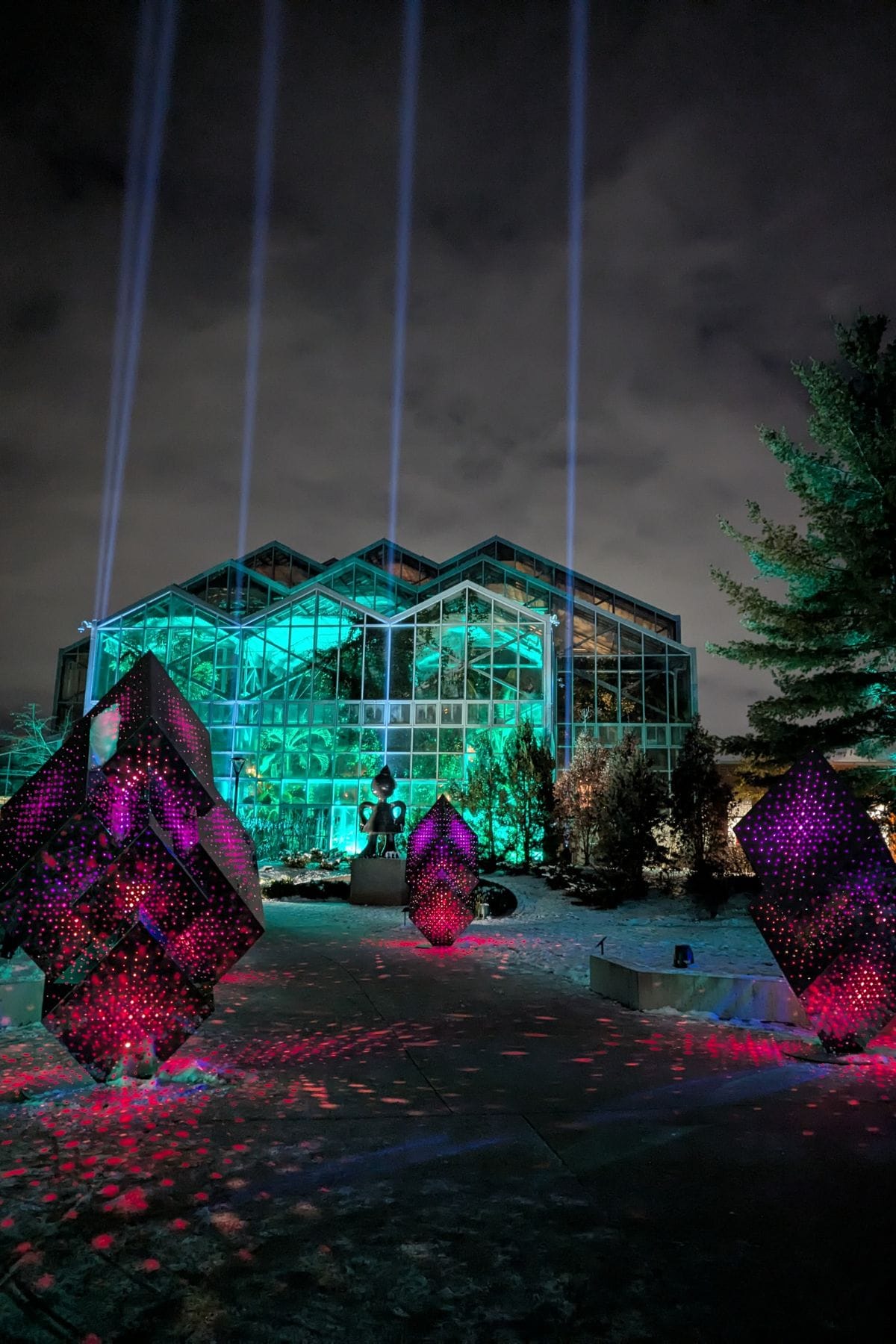
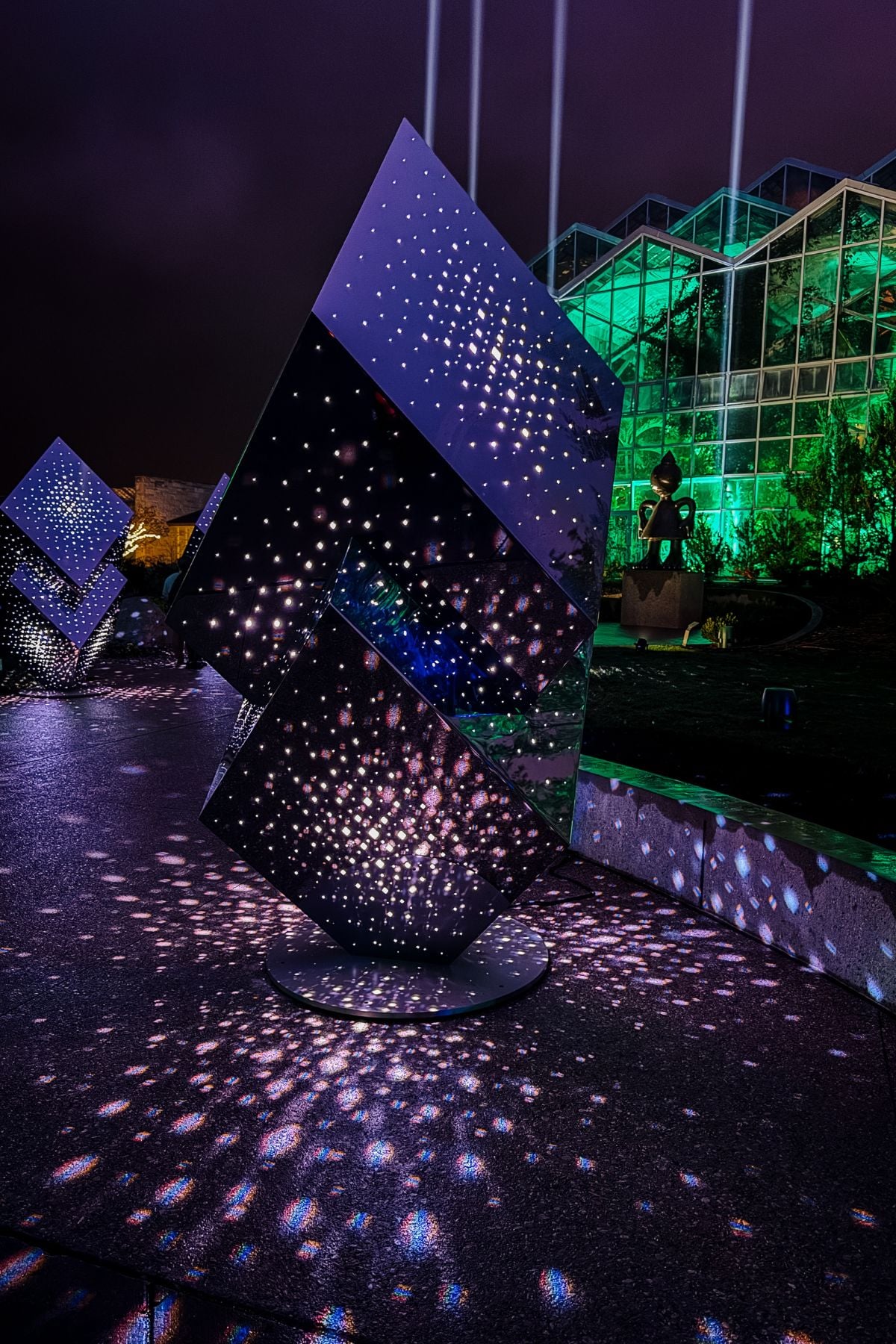
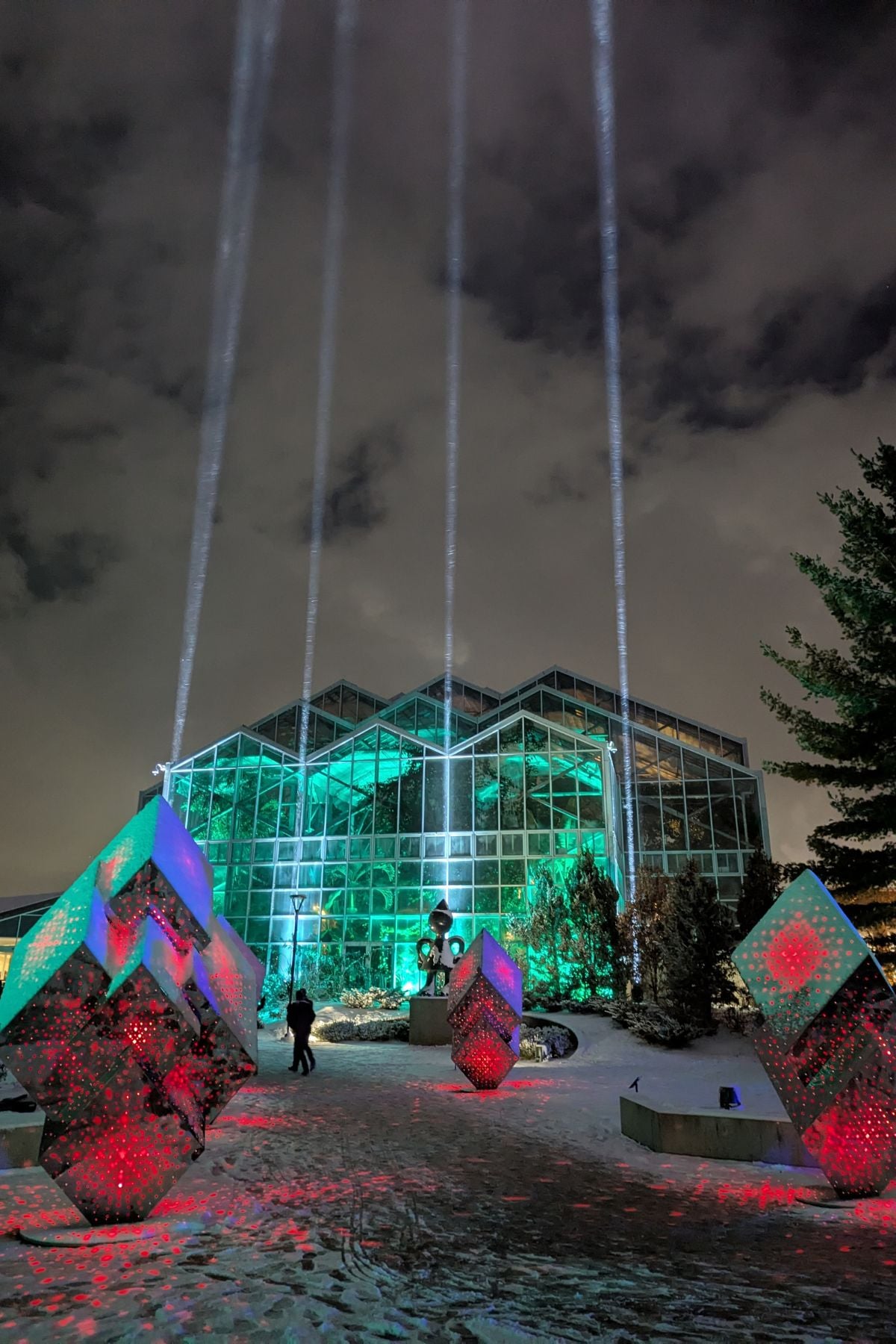
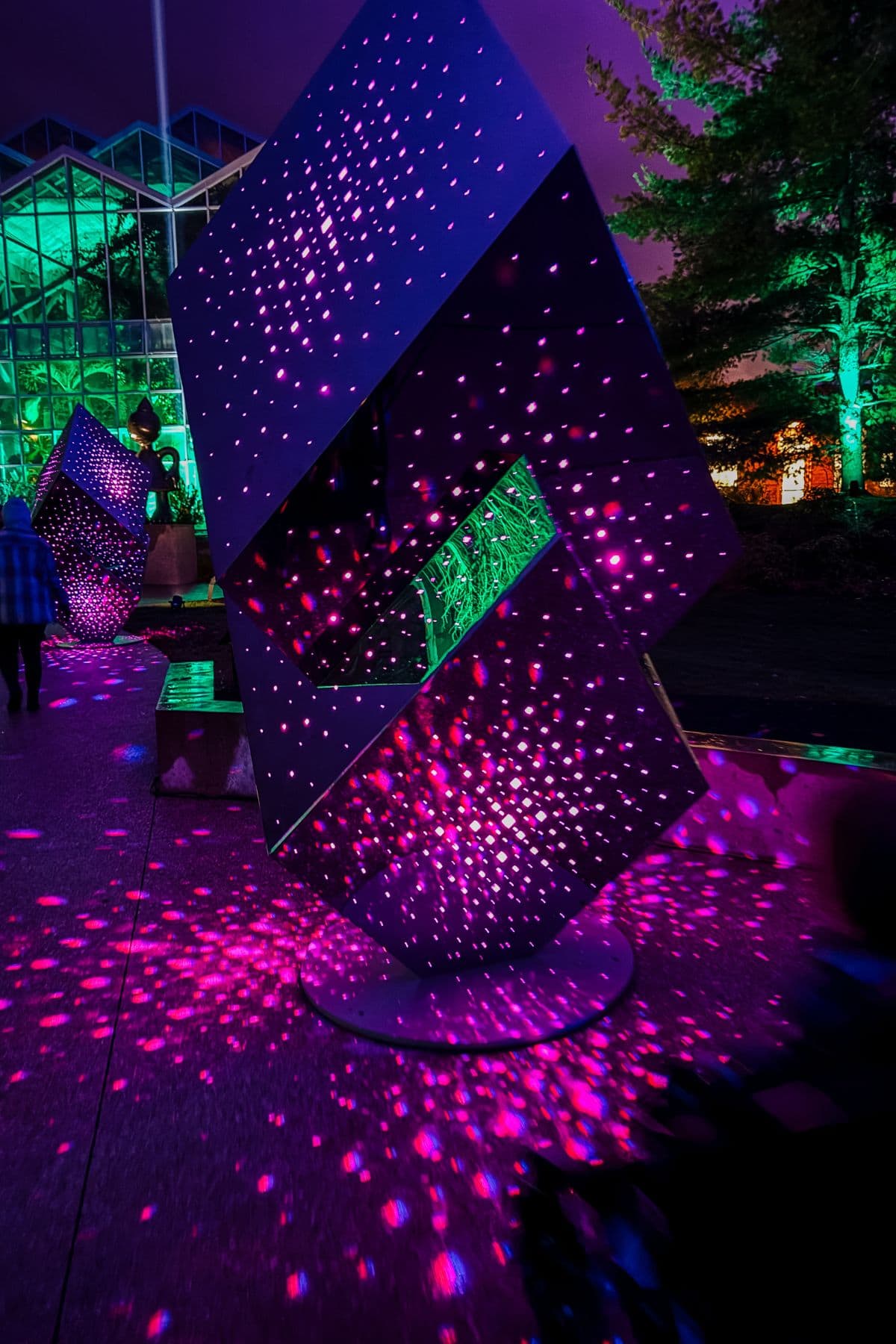
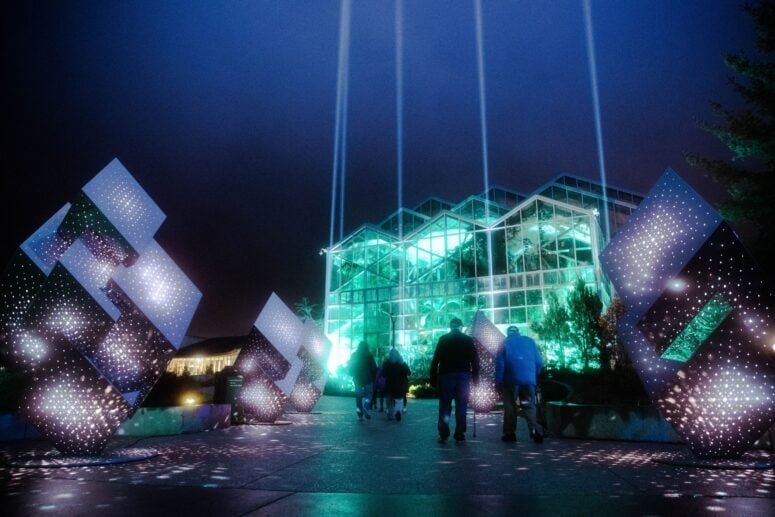
At the Main Stage, the HYBYCOZO installation Glacial Light offers a 10-minute show synchronized to music. Its giant geometric sculpture draws on snowflakes and global patterns, with laser-cut shapes playing with light and shadow.
“This is this is part of our overture to the experience. These are commissioned sculptures by HYBYCOZO . They made these sculptures specifically specifically for enlightenment. So you only see these at the gardens while our show is going on.” Mulligan adds.
Plus, it’s a chance to get a “flipped on it’s head” experience at the amphitheater. Featherstone: “During their summer concert series, guests sit in the audience and watch the show on the stage; here, it was flipped to look out at the lights.”
Winter Waterfall Wonderland
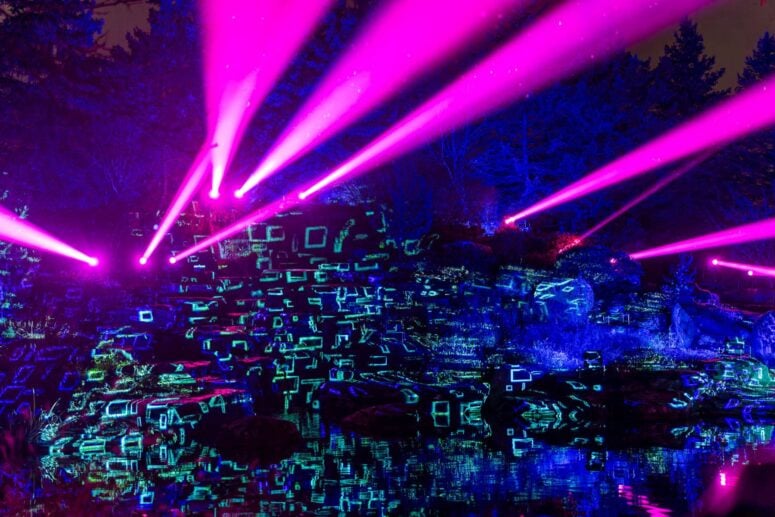
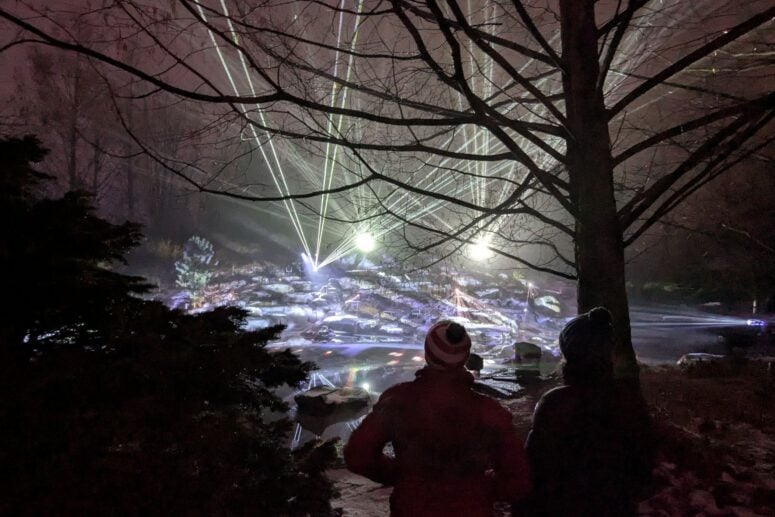

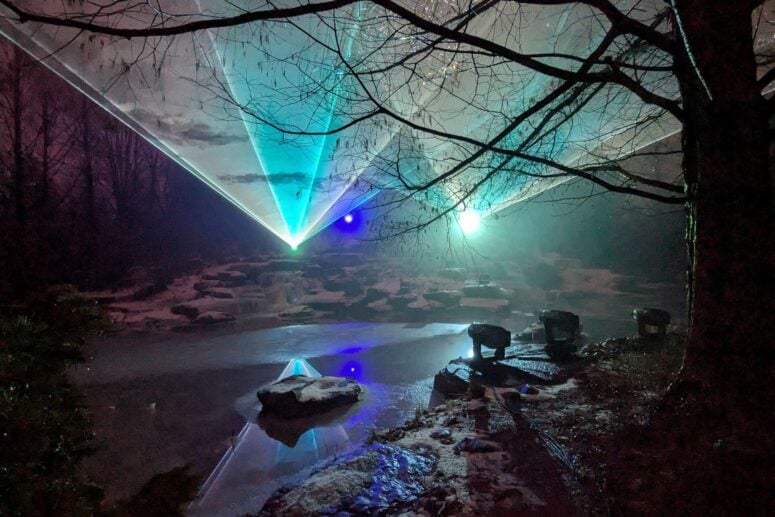

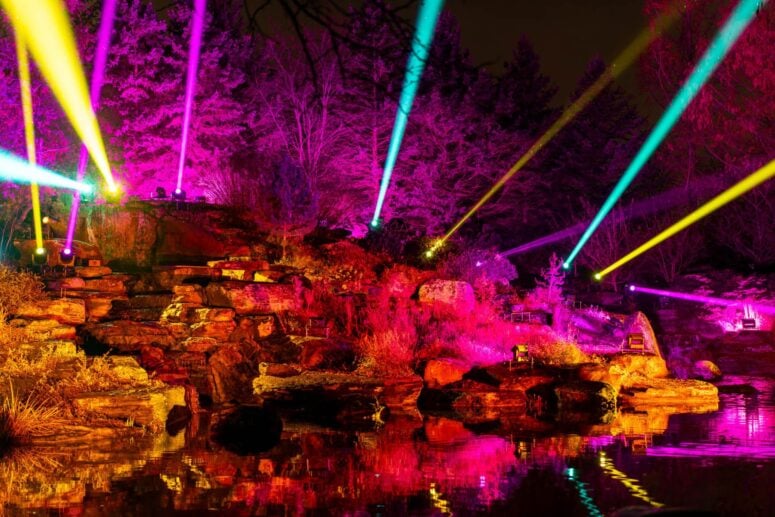
At the waterfall, there’s another reason to linger and soak in colorful transitions. Lasers and moving lights play across the water and the trees behind it. VanderHaagen calls it a “showstopper moment,” designed to give visitors a reason to pause.
“There’s lasers, there’s dancing lights, there’s choreographed music that’s shining on the water and the trees behind it,” VanderHaagen says. “Our waterfall is running year-round. That gives it a beautiful, kind of ethereal look to it that you don’t get other times of the year. Once the ice starts to form, once the lights shine on the water, it’s a really cool moment.”
A new finale indoors
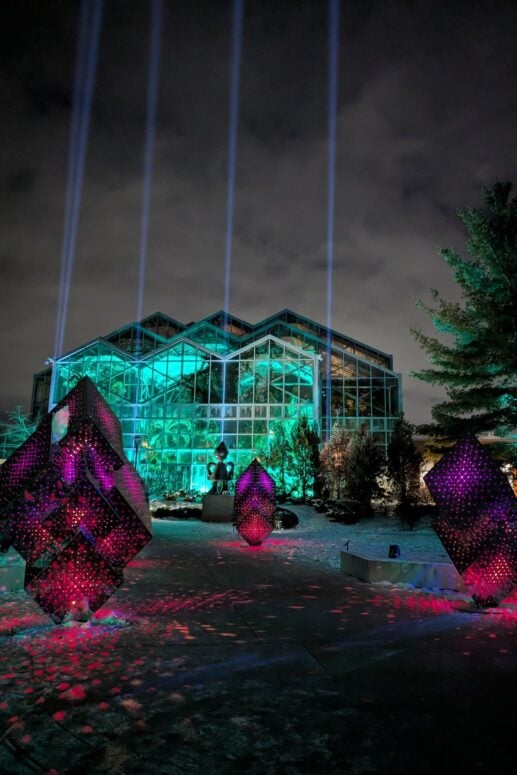
The outdoor journey ends with a new immersive experience inside the Lena Meijer Tropical Conservatory, where specialty lighting and effects transform the tropical landscape into an indoor finale. From there, visitors can continue into the annual University of Michigan Health–West: Christmas & Holiday Traditions exhibition.
What Happens After ENLIGHTEN?

By the time visitors return to the winter air, they’ve seen the familiar collection in a new way.
“We want them to be inspired to leave with a sense of awe, to be filled with joy, and maybe they’ll be interested in learning more about Aria, or learning more about Henry Moore, or hopefully with a plan to come back in warmer weather months where they can learn a little bit more,” VanderHaagen told us.
As if you’d need another reason to come back, we’ve still got one for you — 12 giant wooden trolls coming in 2027. In fact, buying someone tickets to see the Trolls could be the perfect holiday gift! Gift cards are also available at the admission desk. The brilliant works of Thomas Dambo remind us of another Rodin quote: “Now to the great artist, everything in nature has character.”