
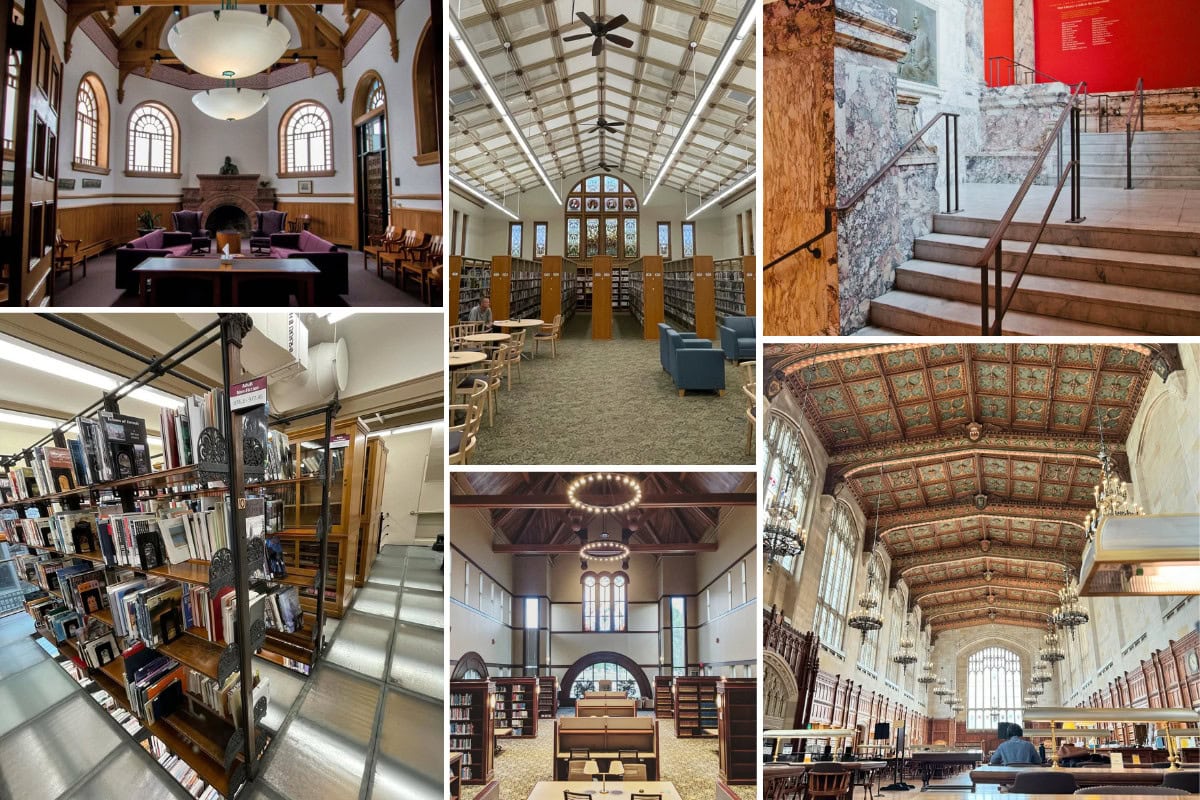
Your Guide to the Most Epic Michigan Libraries
Would you like to save this full guide?
Michigan’s library heritage stretches far beyond rows of books and quiet reading nooks. Across the state, you’ll find architectural gems — grand civic landmarks, Gothic cathedrals of learning, and historic treasures that anchor their communities.
We asked our Day Trips in Michigan Facebook Group, “Are there any amazing cathedral-like libraries in Michigan?” and were excited to see so many stellar recommendations roll in.
This guide showcases some of Michigan’s most architecturally and culturally distinctive libraries, each with a unique story worthy of a stop on your next Mitten road trip.
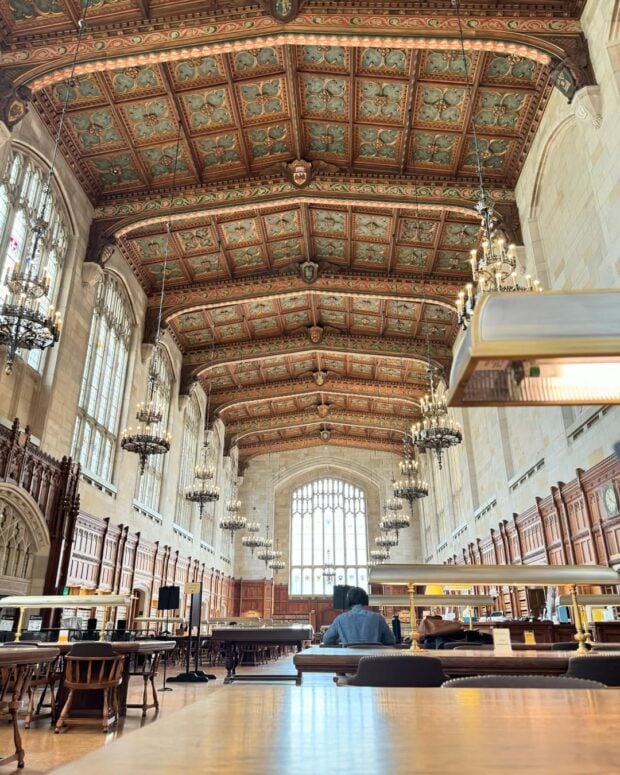
William W. Cook Legal Research Library — University of Michigan | Ann Arbor
801 Monroe St, Ann Arbor
Hogwarts in Michigan? This library looks like it could be straight out of a Harry Potter book!
Tucked into the Gothic-style buildings of the William W. Cook Law Quadrangle at University of Michigan Law School, this is the kind of place that makes you slow down the second you step into the quad.
The Legal Research building is home to the Law Library’s magnificent Reading Room, and it’s part of a larger, storybook-worthy setting that includes arches, courtyards, and a true campus sense of place.
The “Cook” name is more than a dedication — William W. Cook gave nearly his entire fortune to support Michigan Law, helping lay the foundation for the Law Quadrangle and long-term legal research.
There’s also a smart modern layer beneath the historic atmosphere.
The complex includes a modern underground library addition, the Allan F. and Alene Smith Library, which opened in 1981. It expands the library’s footprint while letting the above-ground quad keep its timeless look and feel.
If you’re planning to go inside, posted building hours can change with the academic calendar, so it’s worth checking hours before you visit.
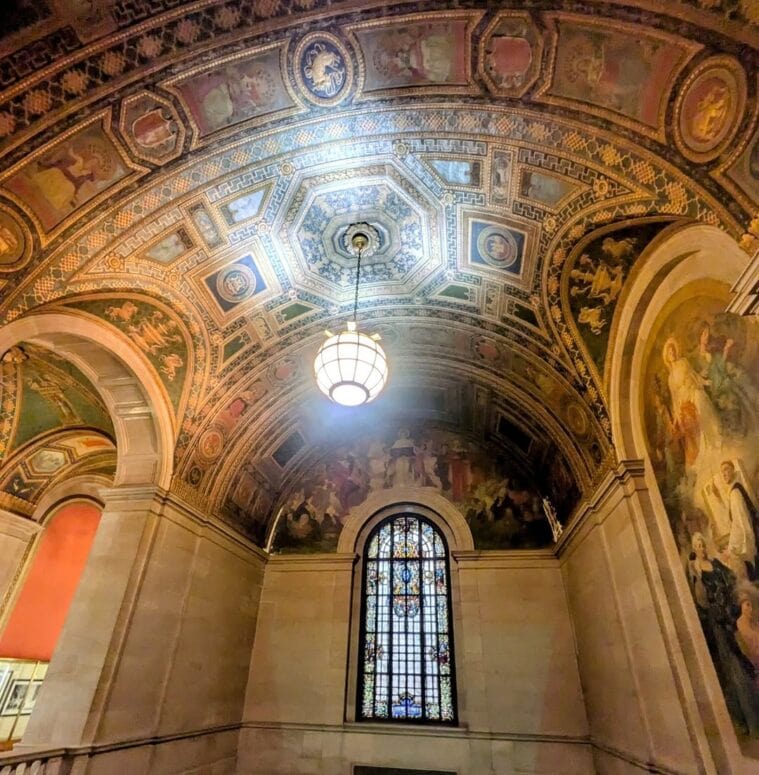
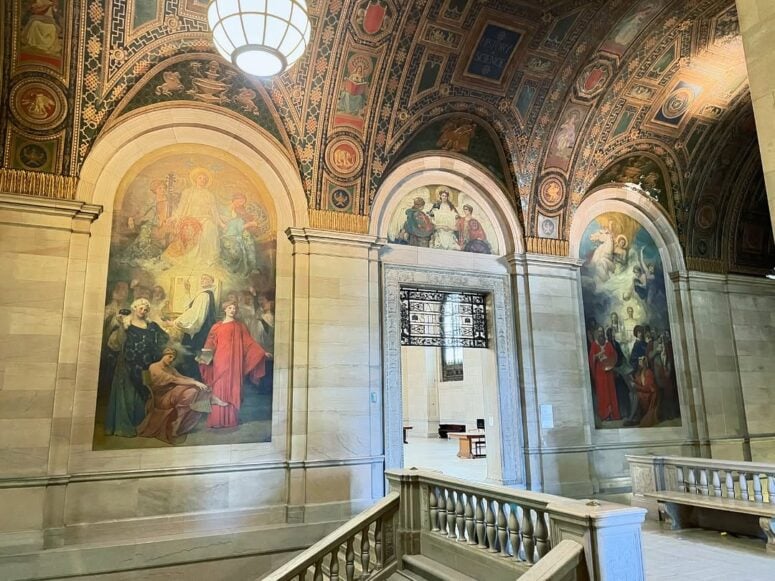
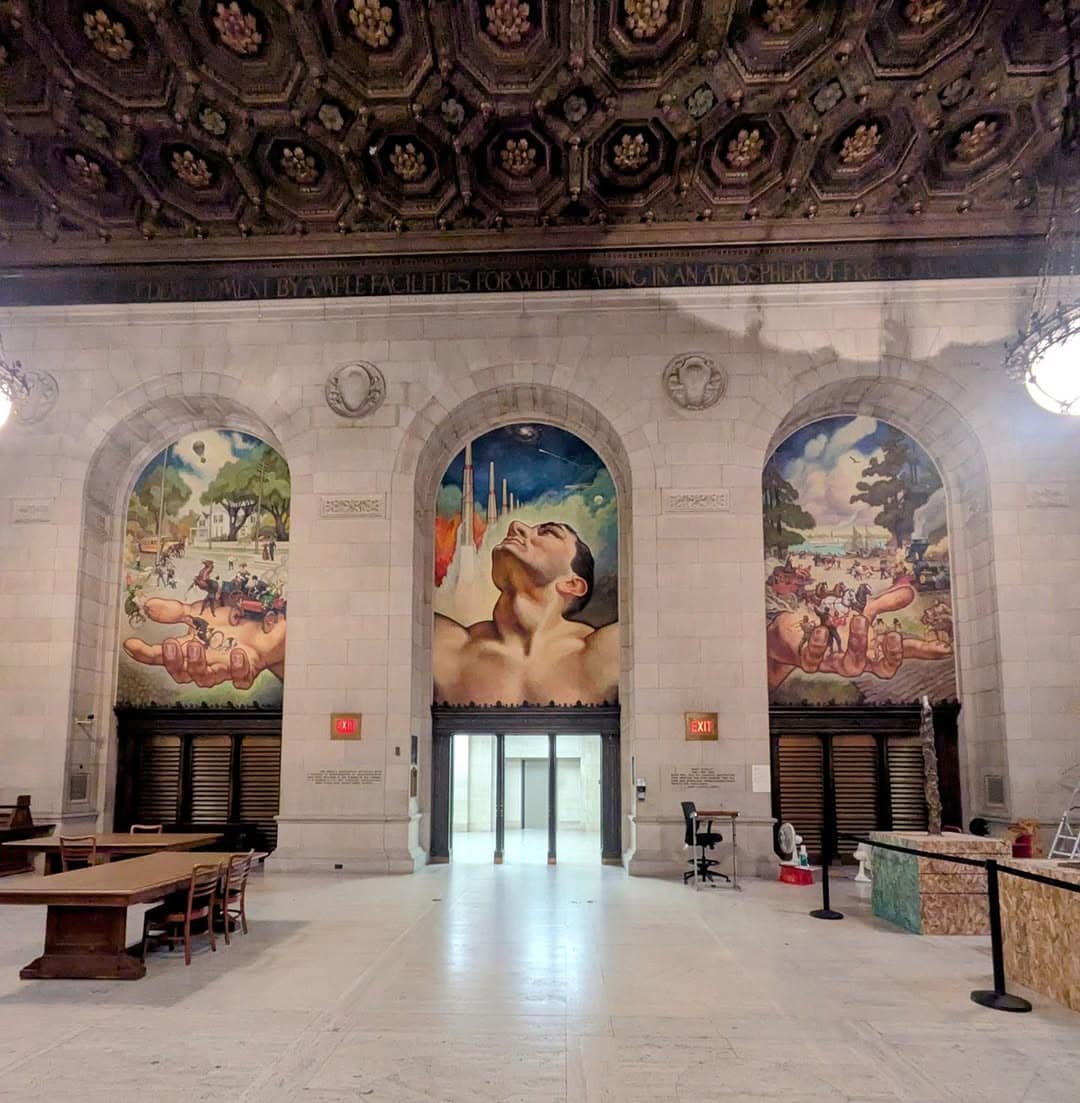
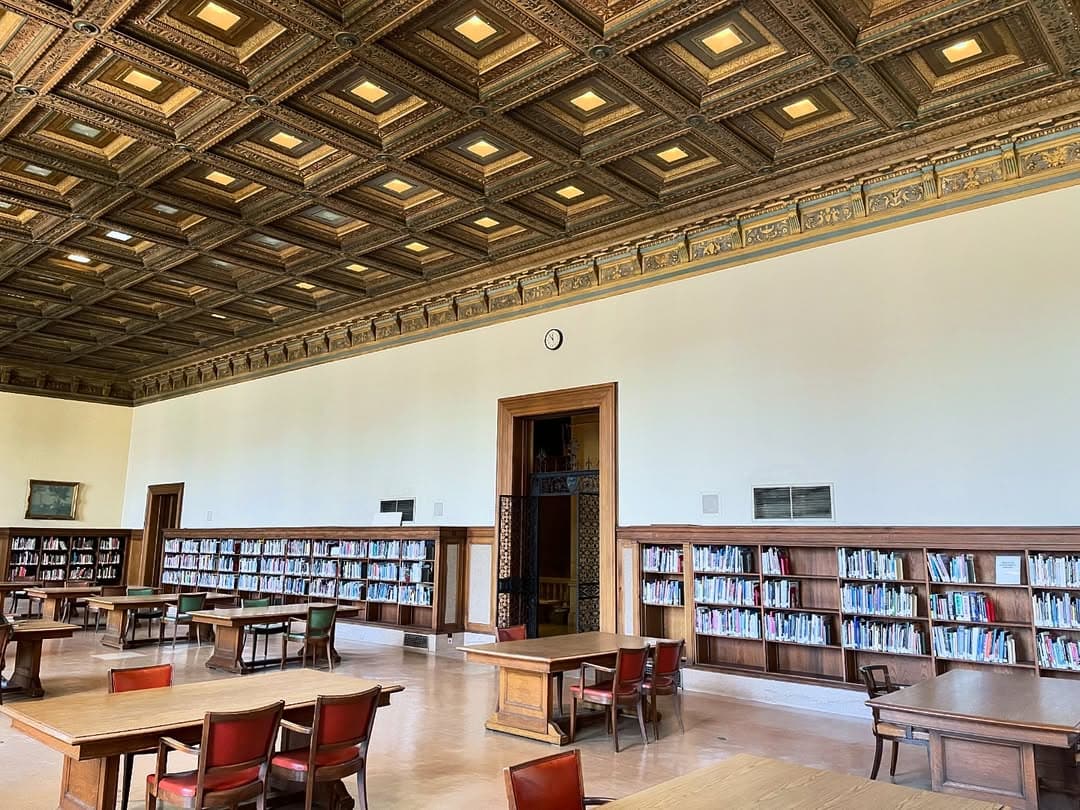
Detroit Public Library — Main Branch
5201 Woodward Ave, Detroit
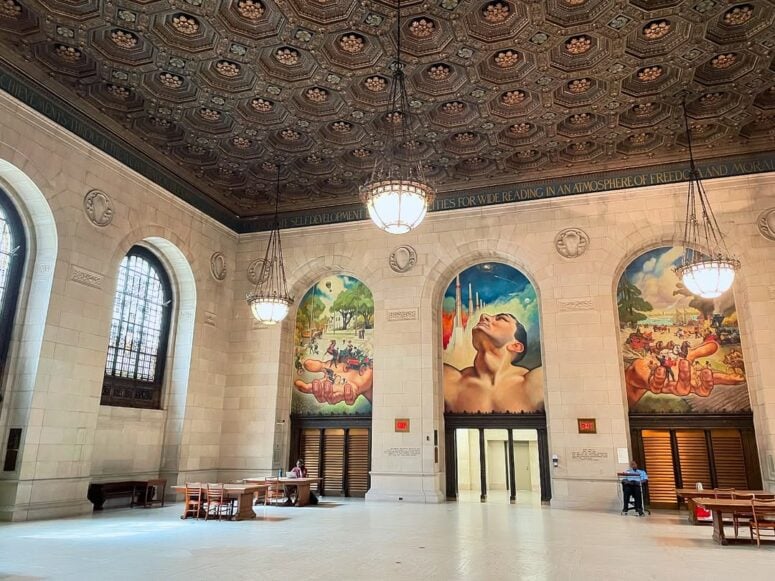
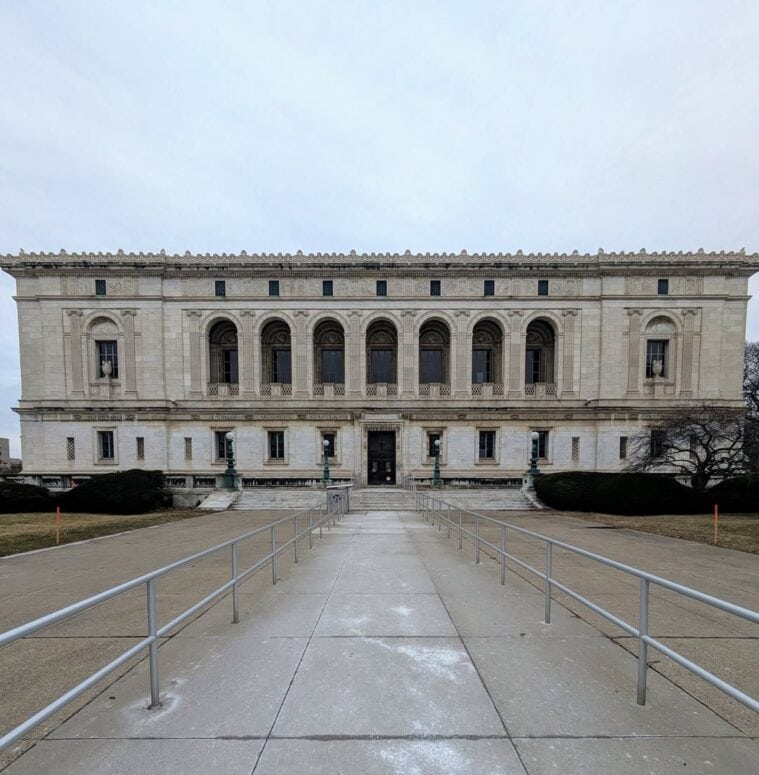
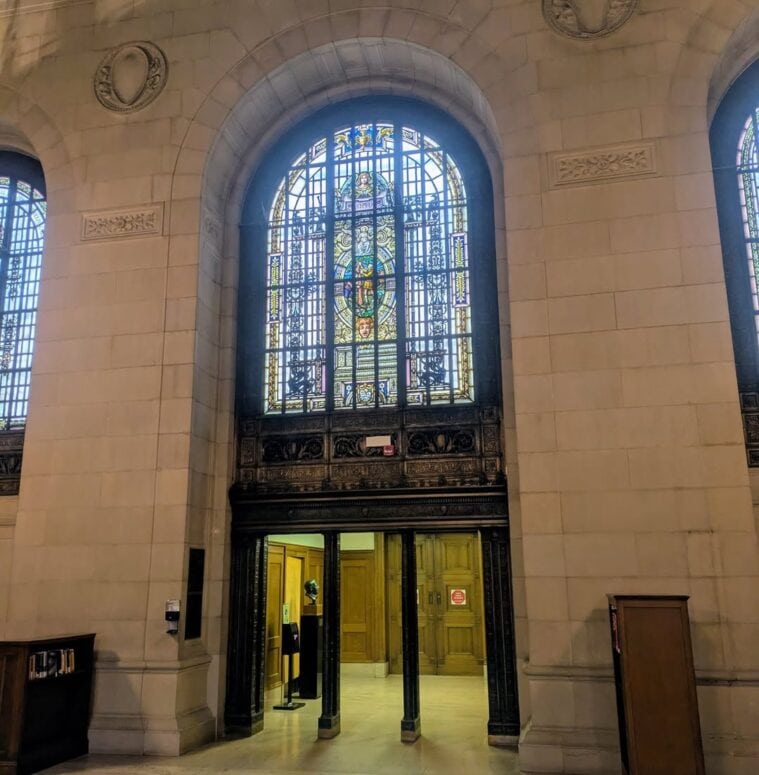
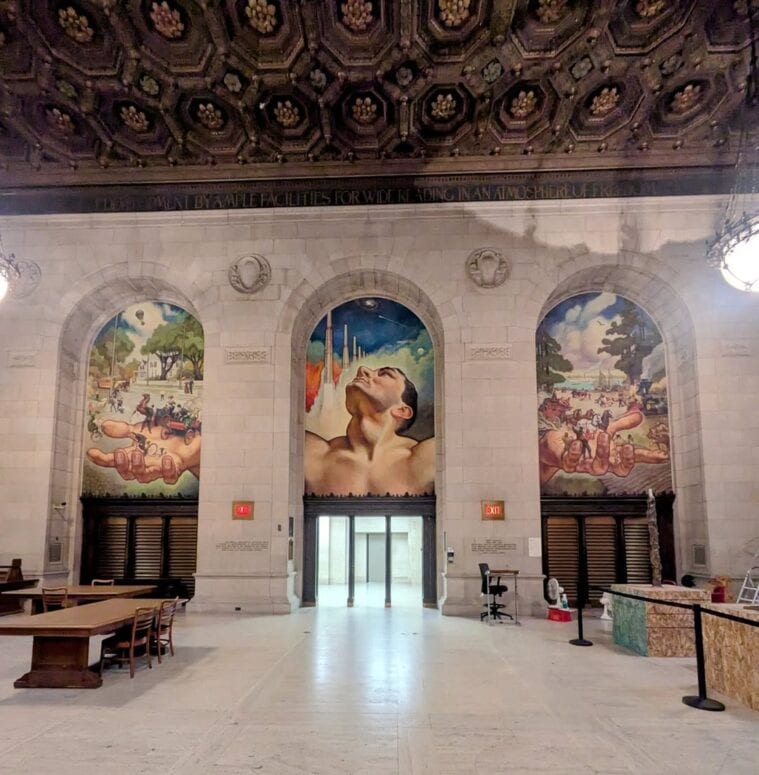
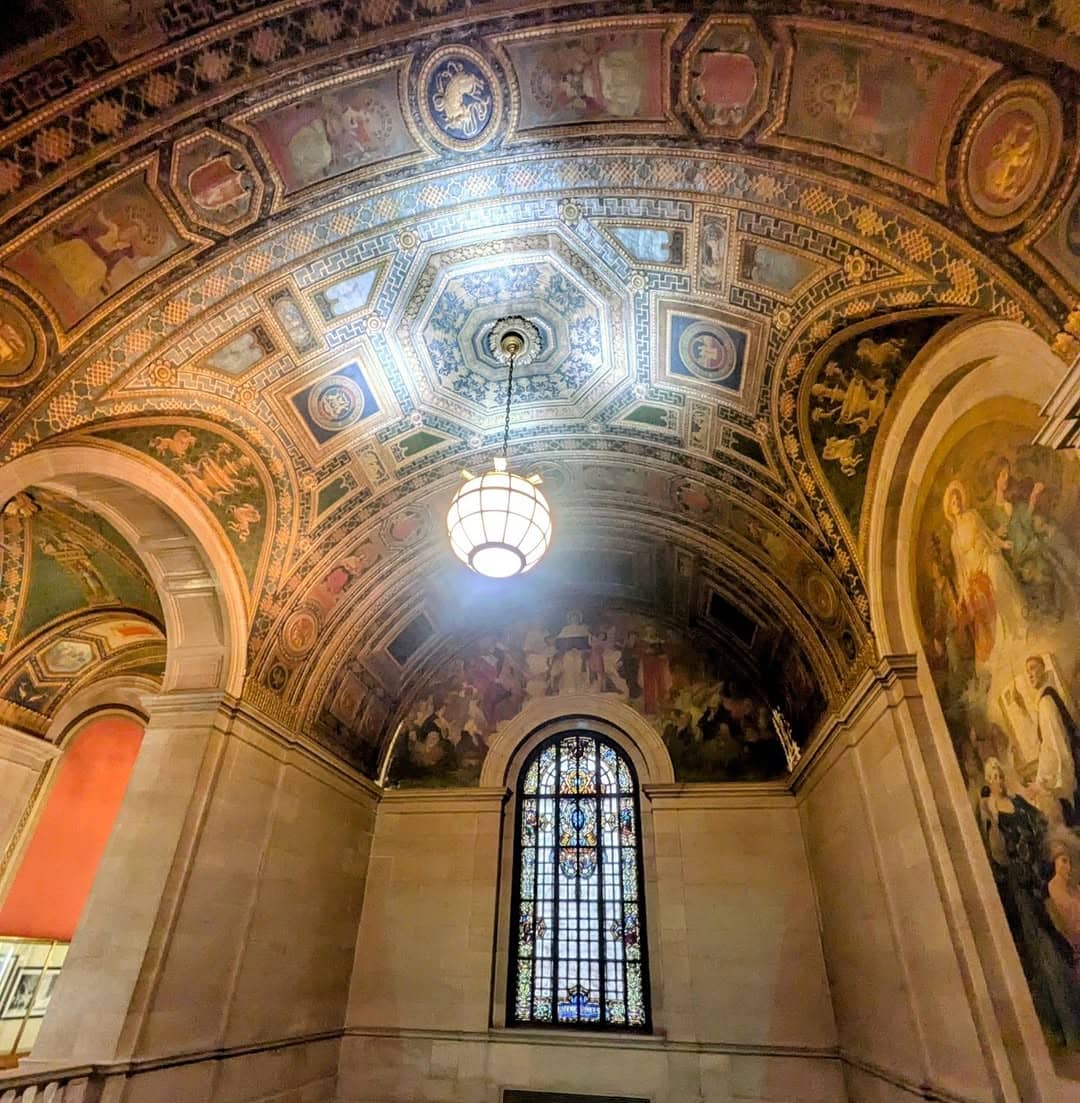
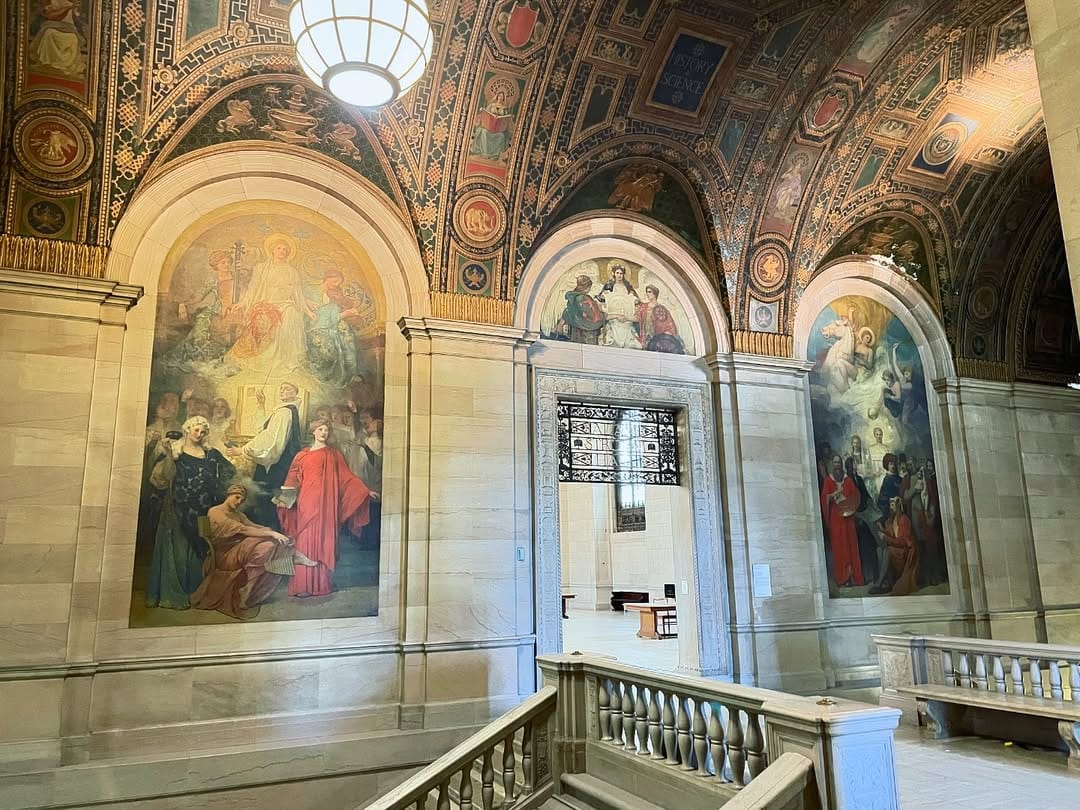
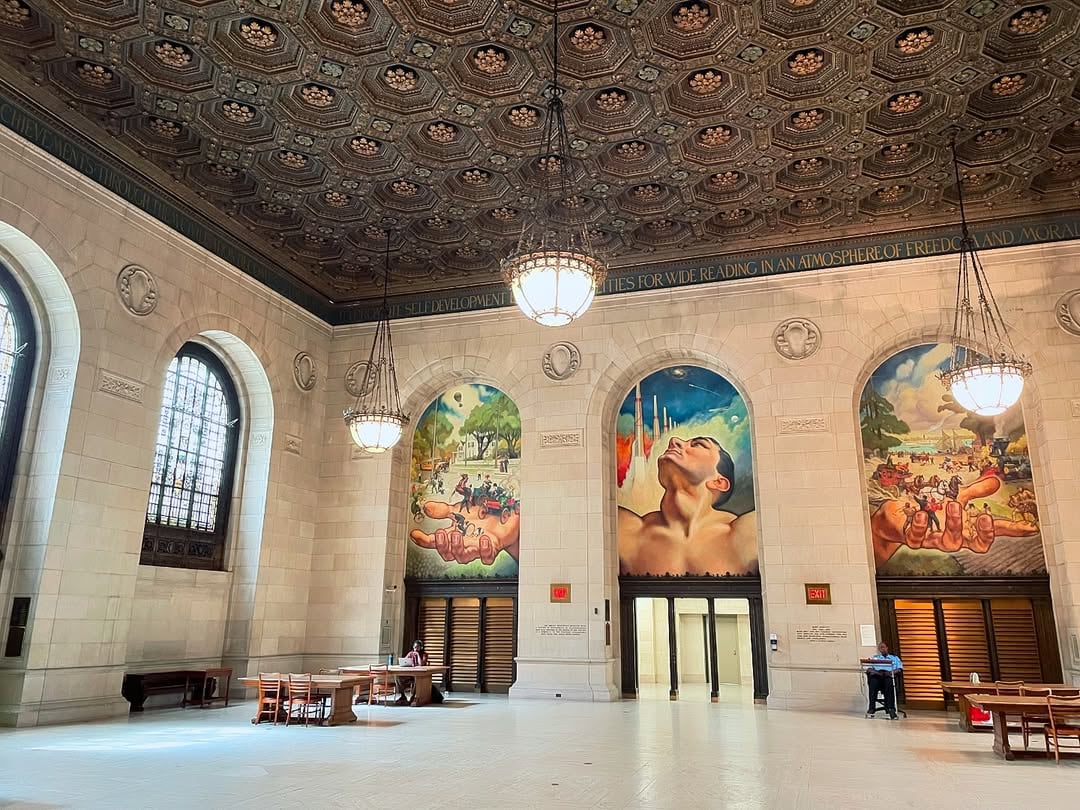
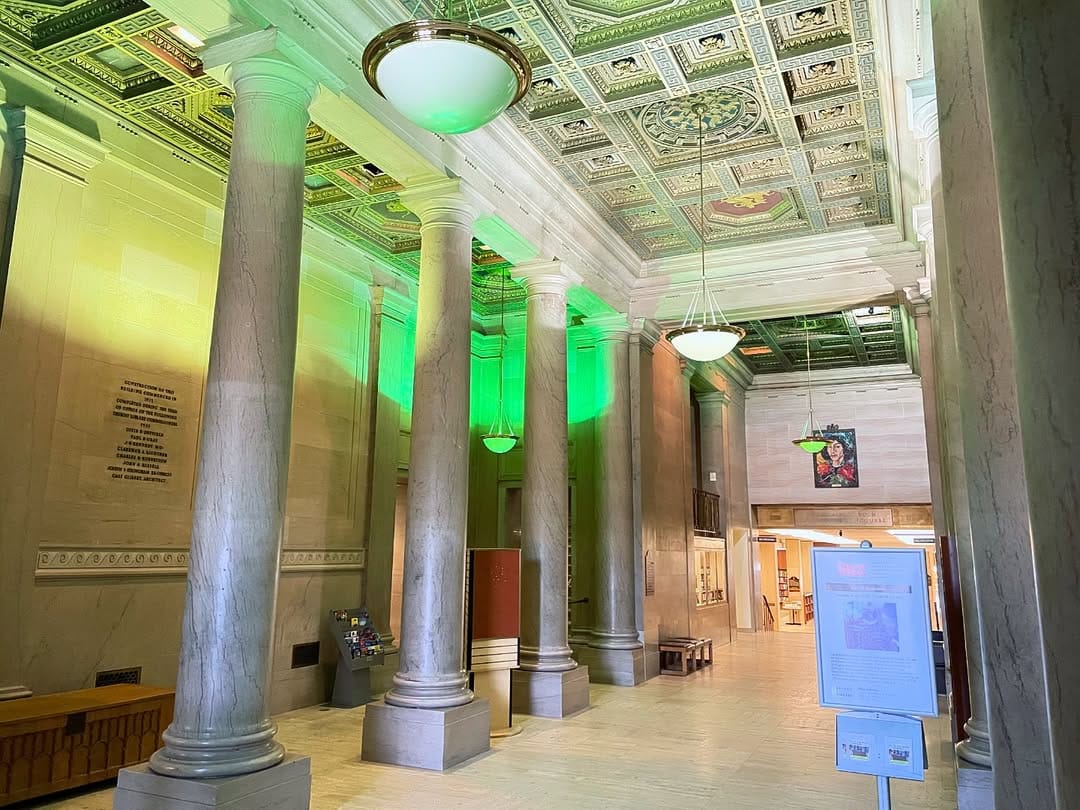
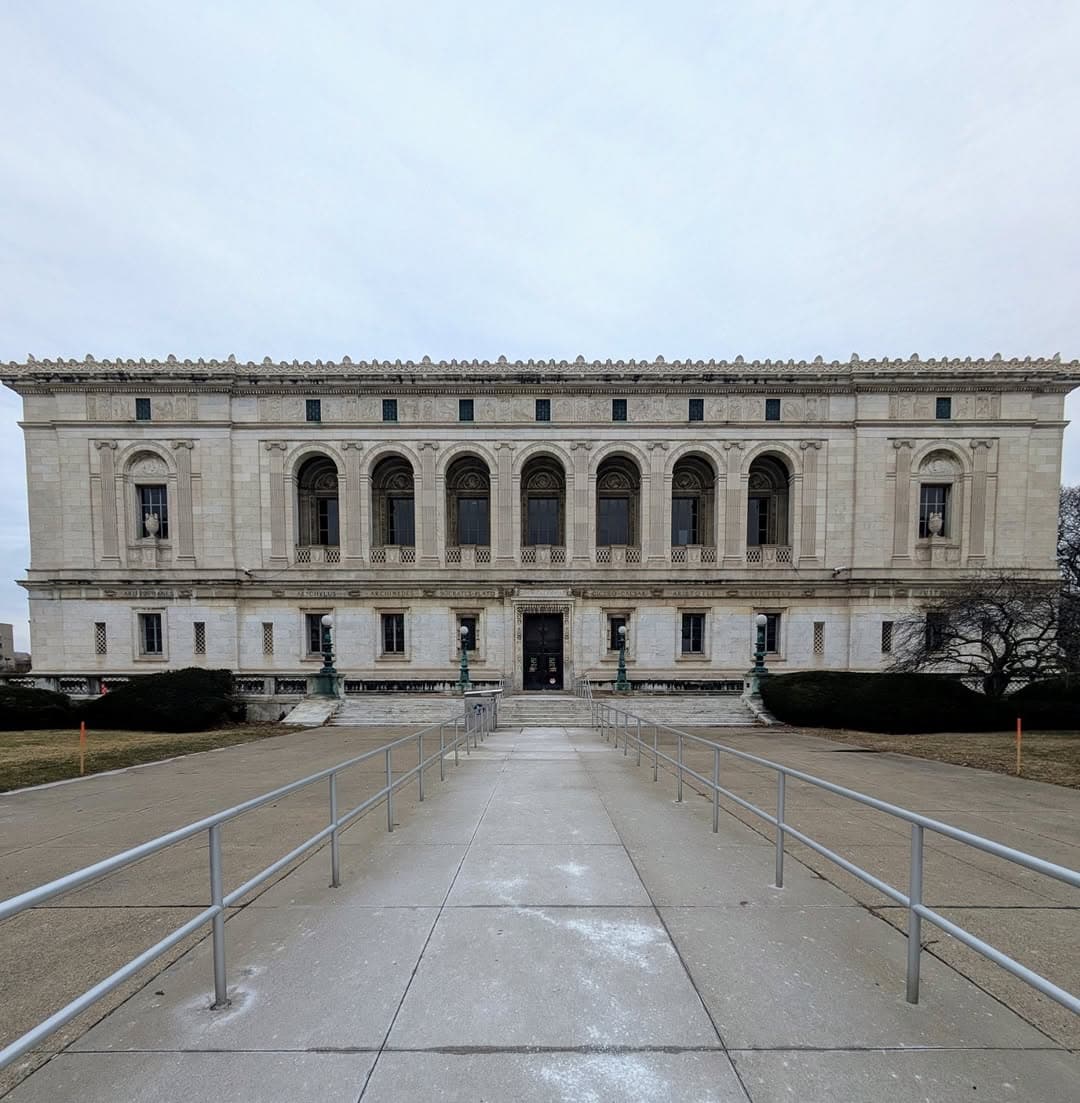
If you love big, beautiful “they don’t build them like this anymore” spaces, the Main Branch of the Detroit Public Library is one of those places that instantly feels special. It marks a major milestone on Woodward Avenue, welcoming visitors since 1921.
The story starts long before the current structure, though. The Detroit Public Library’s beginnings trace back to 1865, and the Main Library building itself was years in the making. Inside is where it really hits, though.
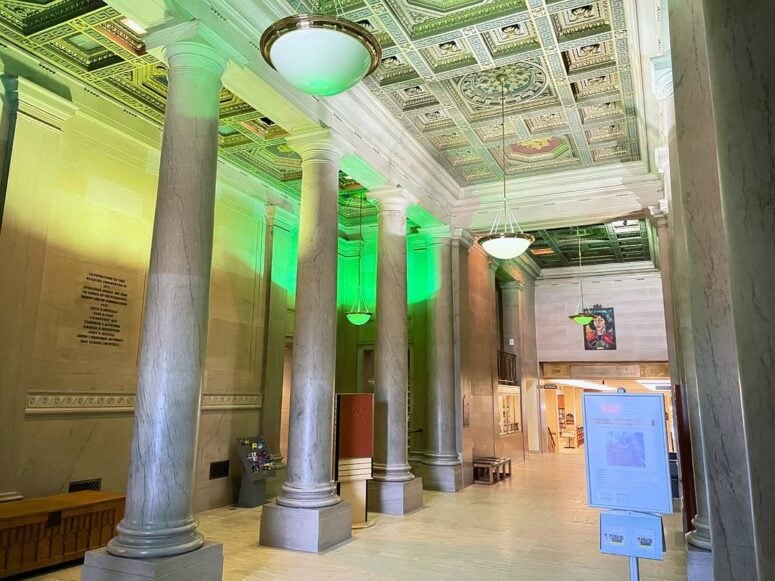
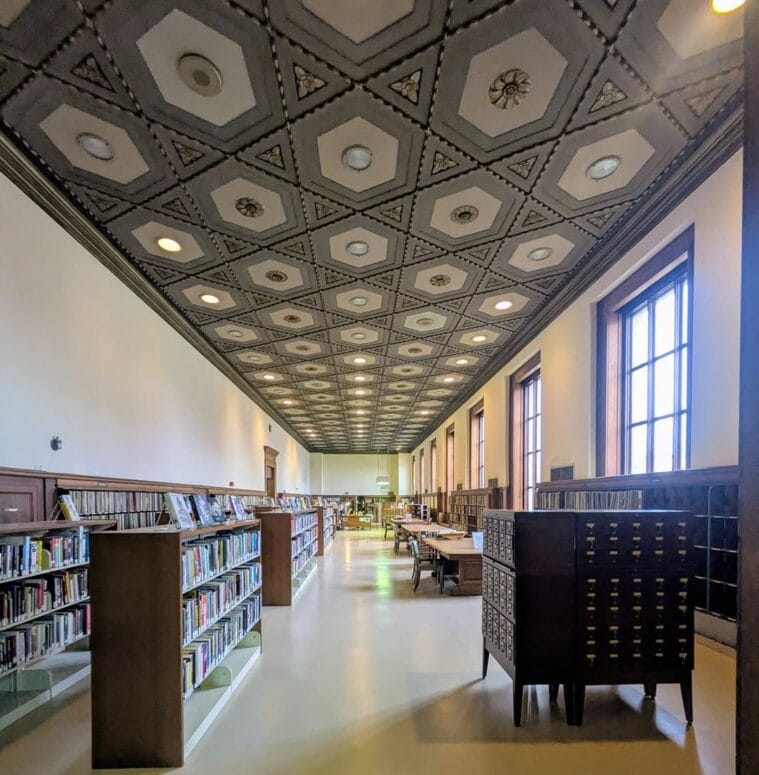
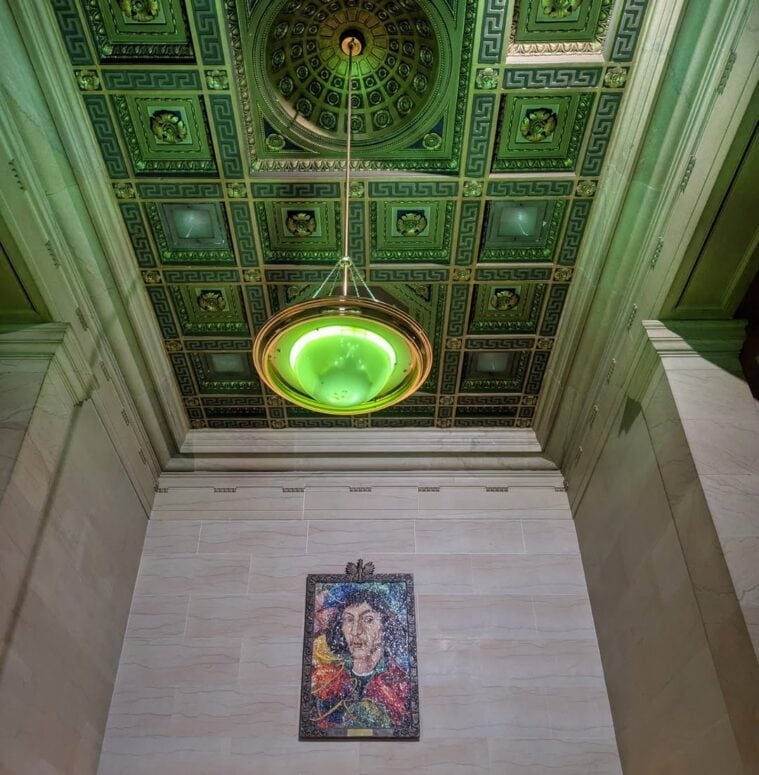
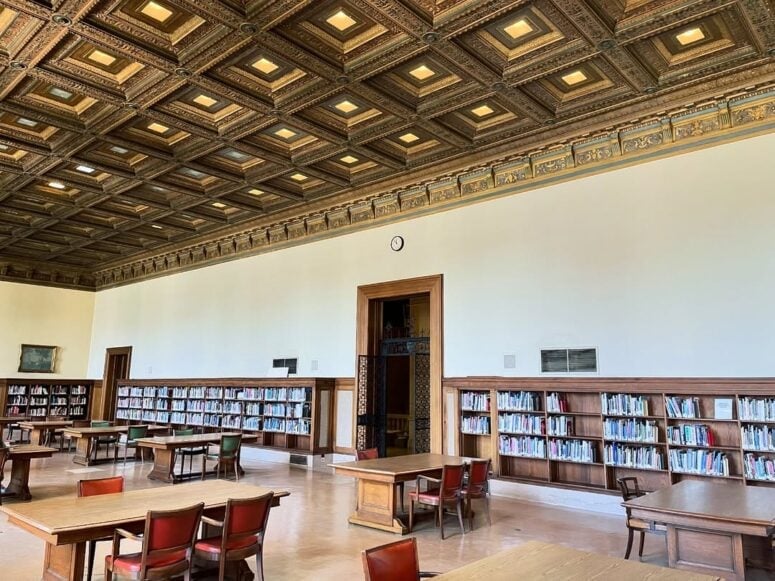
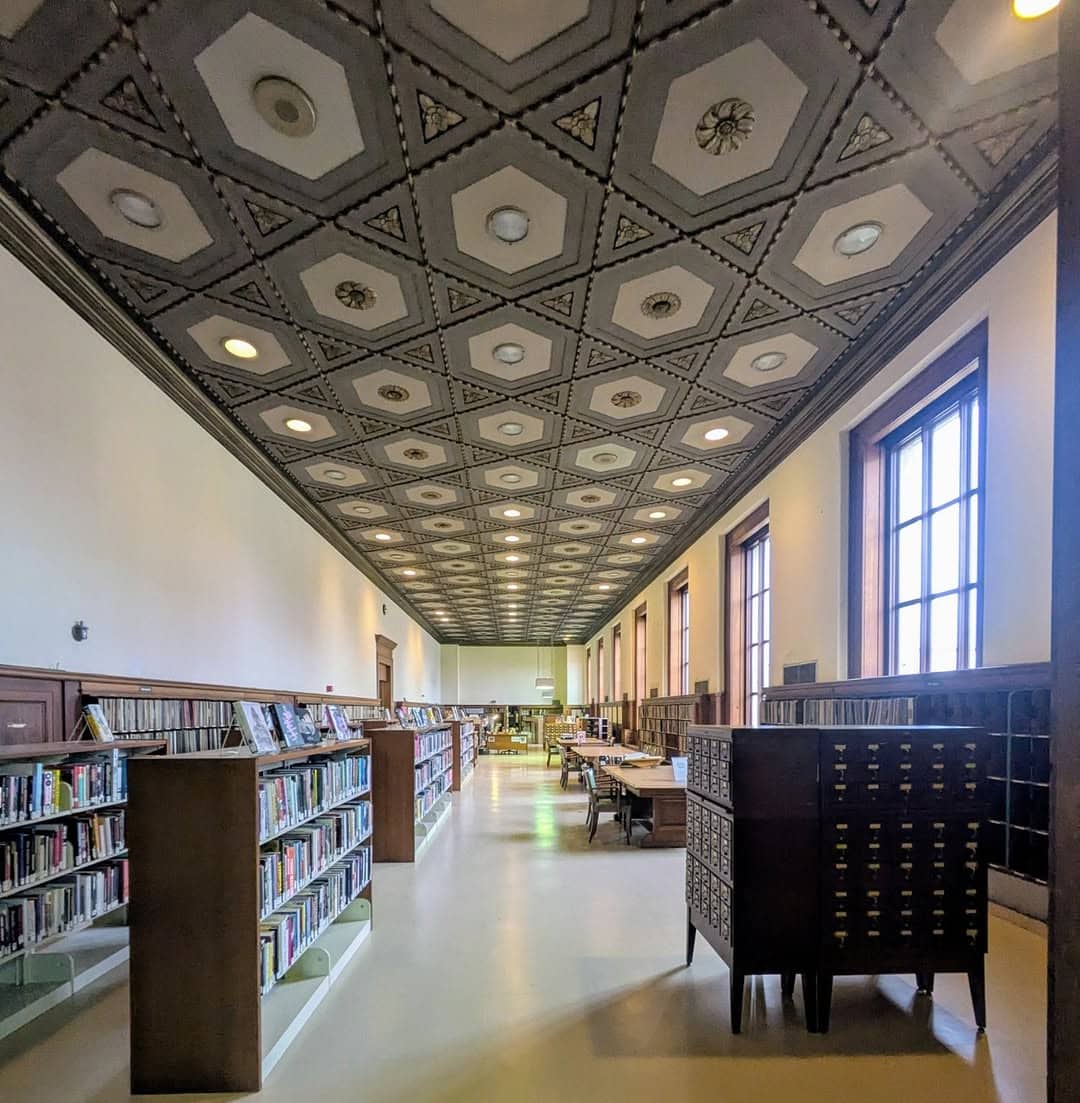
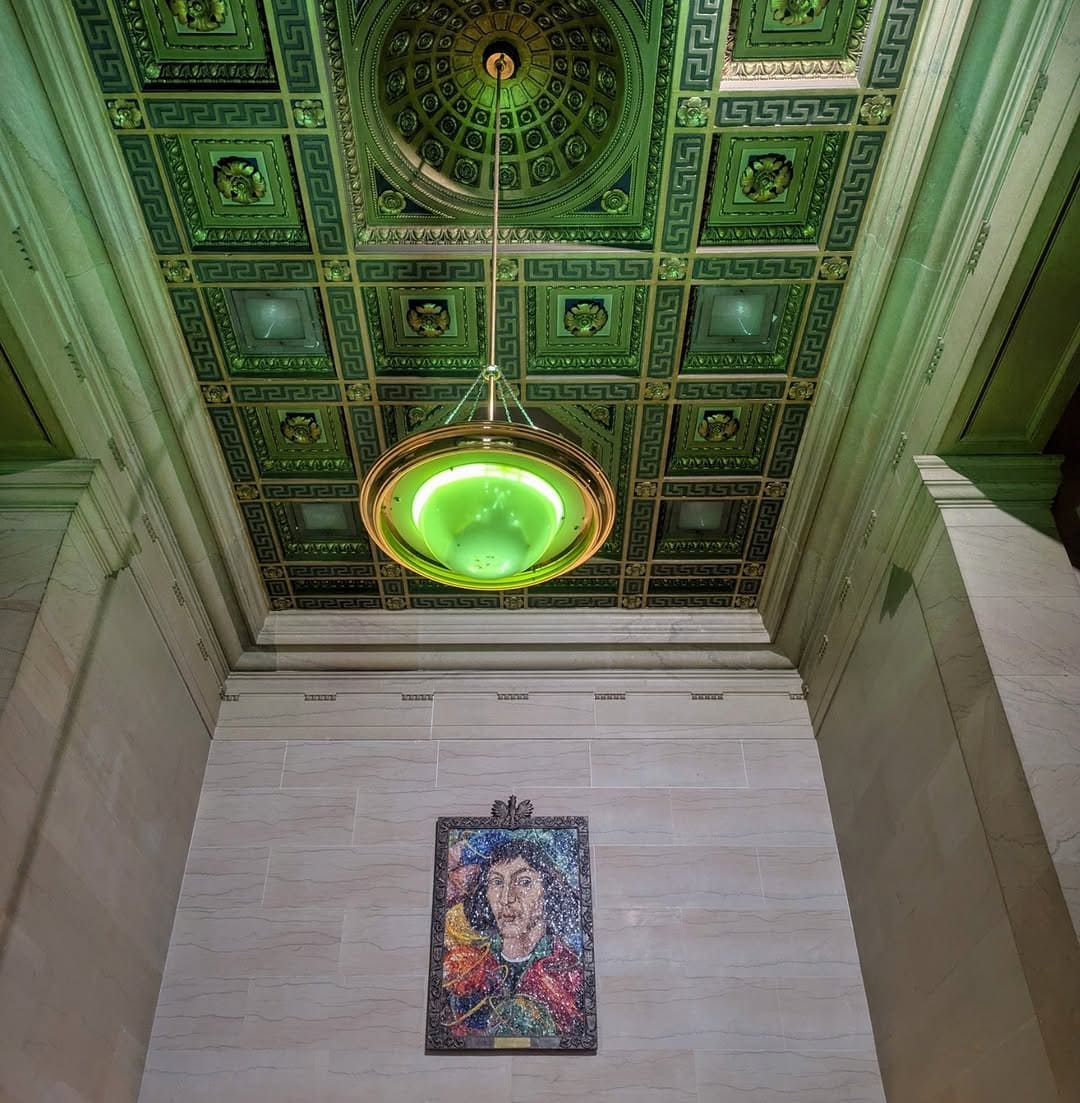
Designed by Cass Gilbert, the building leans into an Italian Renaissance “temple to arts and letters” feel — complete with an Entrance Hall lined by massive pink Tennessee marble columns and an ornate ceiling filled with rosettes, caissons, and decorative details.
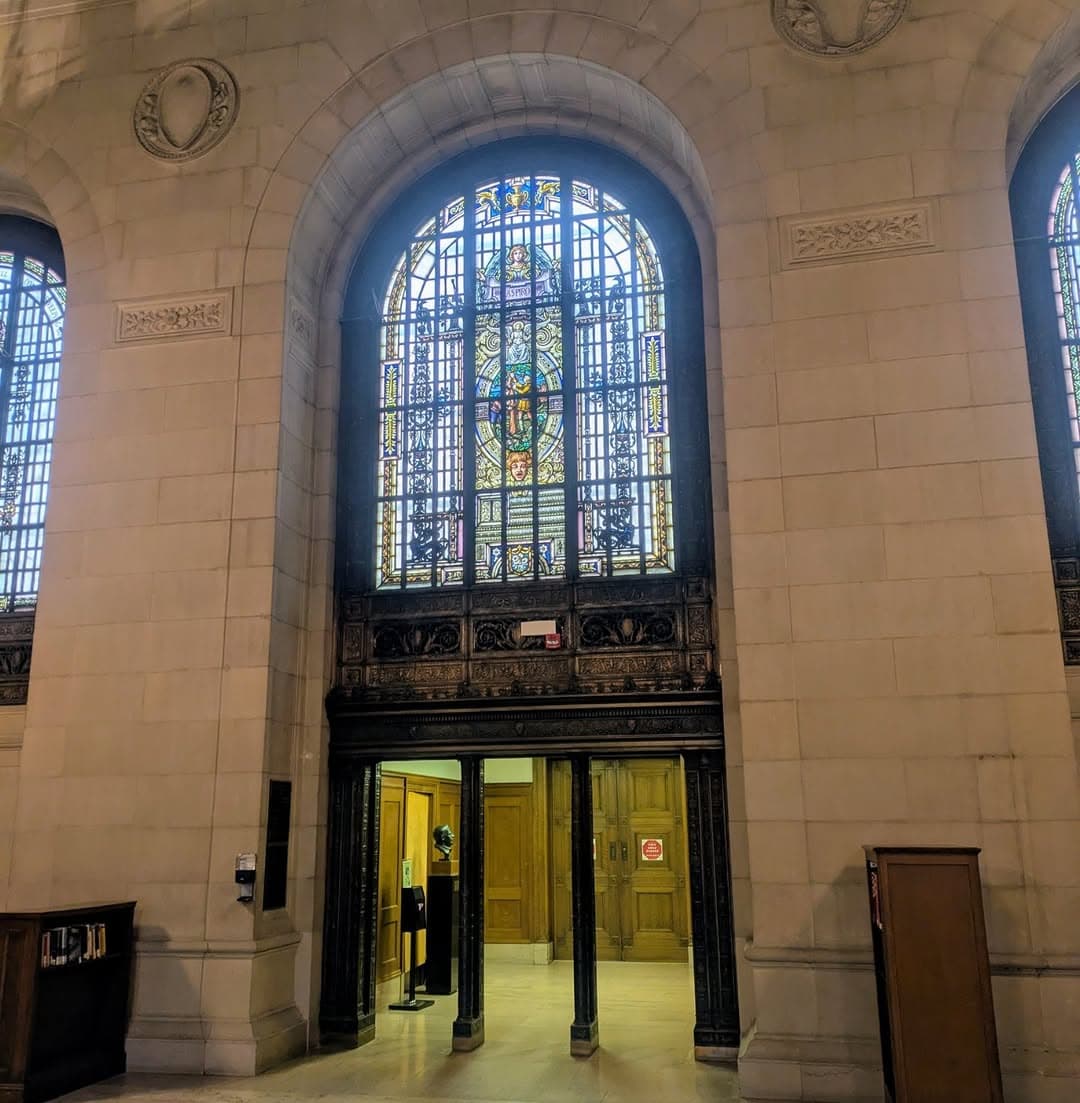
Keep wandering and you’ll spot moments that feel like museum pieces: the original Pewabic Pottery fireplace (designed in 1919 by Mary Chase Perry Stratton and Horace Caulkins) and the painted windows in Adam Strohm Hall that read like illuminated manuscript pages.
It’s also very much a living, working library — so you can plan a self-guided visit during posted public hours. Working it into a day of exploring Detroit’s Cultural Center and Detroit Institute of Arts is easy.
Plus, Art & Architecture Tours are available on the third Sunday of every month from October through May.
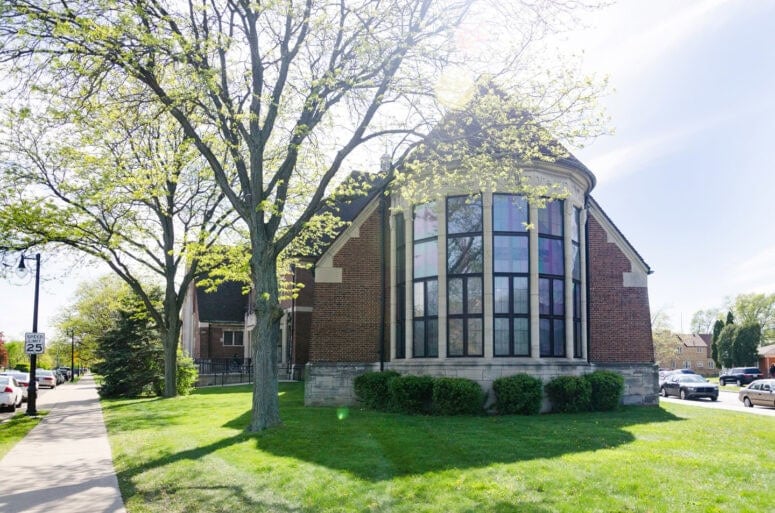
Detroit Public Library — Parkman Branch
1766 Oakman Blvd, Detroit
The Parkman Branch is one of those neighborhood libraries that feels quietly timeless — welcoming at first glance but with enough architectural character to make you slow down and take it in.
Known as the Francis Parkman Branch, it opened in April 1931 — a detail that places its story squarely in Detroit’s early 20th-century era of civic growth.
Inside, historic photos highlight spaces like the Mary Conover Room, where a barrel-vaulted ceiling and classic interior detailing that feels intentionally crafted, not cookie-cutter.
Look around and you’ll notice thoughtful exterior touches too, including distinctive arch details that give the building a solid, enduring presence — the kind of neighborhood landmark that was built to last.
Today, it’s still very much in active use with programming and practical services, including branch-specific printing. So, you’re welcome to visit any time during open hours.
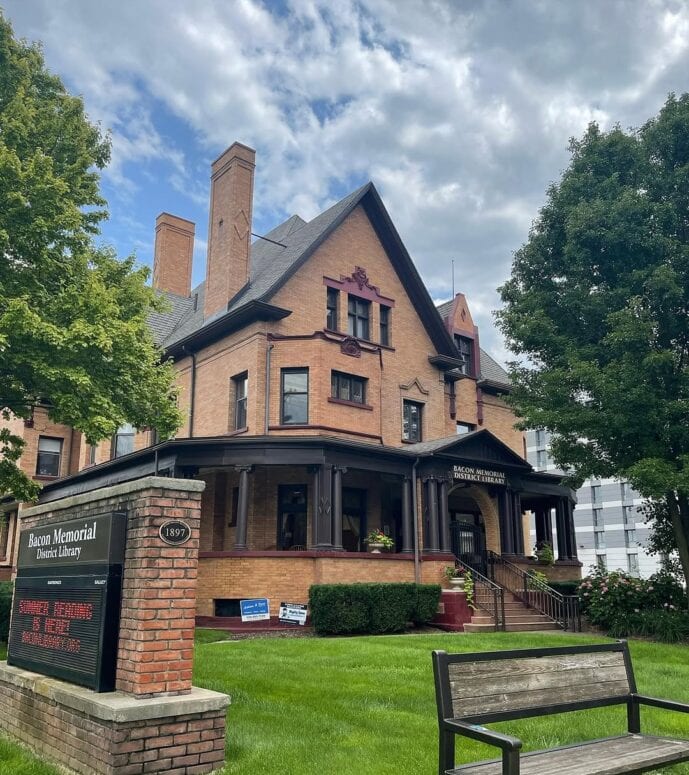
Bacon Memorial District Library | Wyandotte
45 Vinewood St, Wyandotte
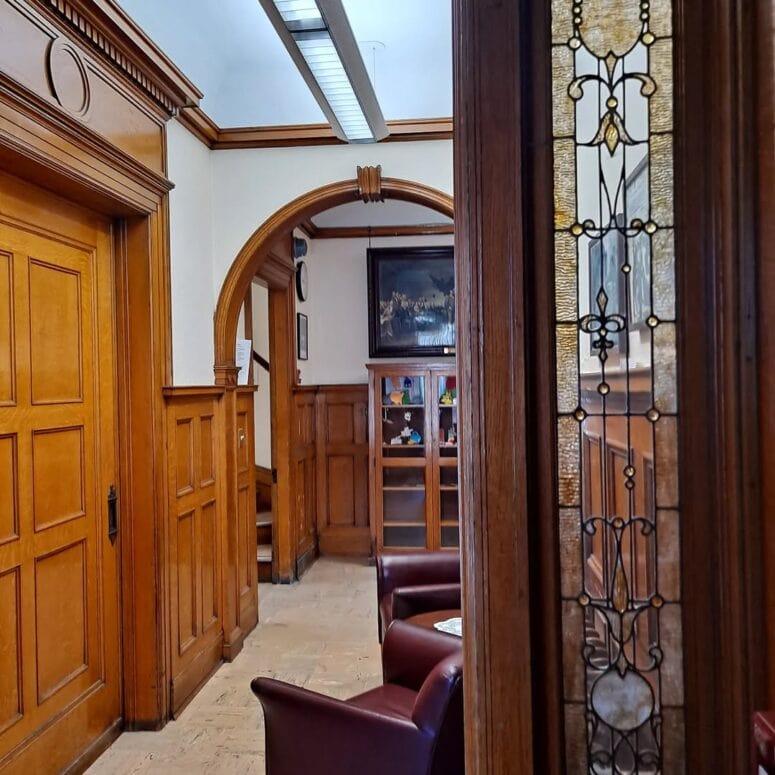
This one feels less like “running errands” and more like stepping into a piece of Wyandotte history. Bacon Memorial District Library operates out of the Ford–Bacon House.
Built in 1897, the four-story home is known for its Queen Anne character, brick exterior with sandstone trim, and the kind of old-world details that instantly set the mood for a slow browse.
Inside, it’s easy to spot what makes the space special — the building was originally designed with 27 rooms and 11 fireplaces, and that stately, lived-in atmosphere still comes through as you explore.
Even with all that historic charm, it’s very much a modern community library. You’ll find plenty beyond the shelves, including hands-on services, community support like the Bacon Cares Station, and a steady lineup of resources designed to make the library useful in everyday life.
Want a deeper dive into the house itself? The library also has a request option for house tours (and a historical speaker) if you’re hoping to turn your visit into something a little more special.
Note: If you’re planning a visit in the near future, the building is in the middle of a renovation. While it’s expected to reopen on March 2, it’s worth double-checking updates before you go.
Sage Branch Library | Bay City
100 E Midland St, Bay City
Sage Branch Library feels like a storybook landmark dropped into a neighborhood setting — the kind of place where the building itself is part of the experience. It’s a branch of the Bay County Library System, but it carries the presence of a stand-alone historic institution.
The library was dedicated to the people of West Bay City in January 1884 as a gift from Henry W. Sage of Ithaca, New York, whose lumber operations were part of the area’s boom-era story.
Architecturally, it’s often described as a blend of French Chateau, Ruskin Gothic, and Victorian Gothic, with features like a gabled roof, dormers, and a bay window that make it stand out immediately.
Step inside, and you’ll find details that make it feel more like a preserved historic site than a typical branch library — a grand stairway rising from the lobby and a standout fireplace in the front reading room with a massive wood mantel and hand-painted ceramic tiles depicting figures from literary works and fairy tales.
Outside, the charm continues with the Lady of Learning statue in a front niche and a cast iron fountain featuring Leda and the Swan.
It’s still very much in active use today, offering full library service, programs, Wi-Fi, and public computers, plus a community room for meetings in Bay City. While no formal tours are listed, it’s an easy spot for a self-guided walk-through during open hours.
Hoyt Main Library | Saginaw
505 Janes Ave, Saginaw
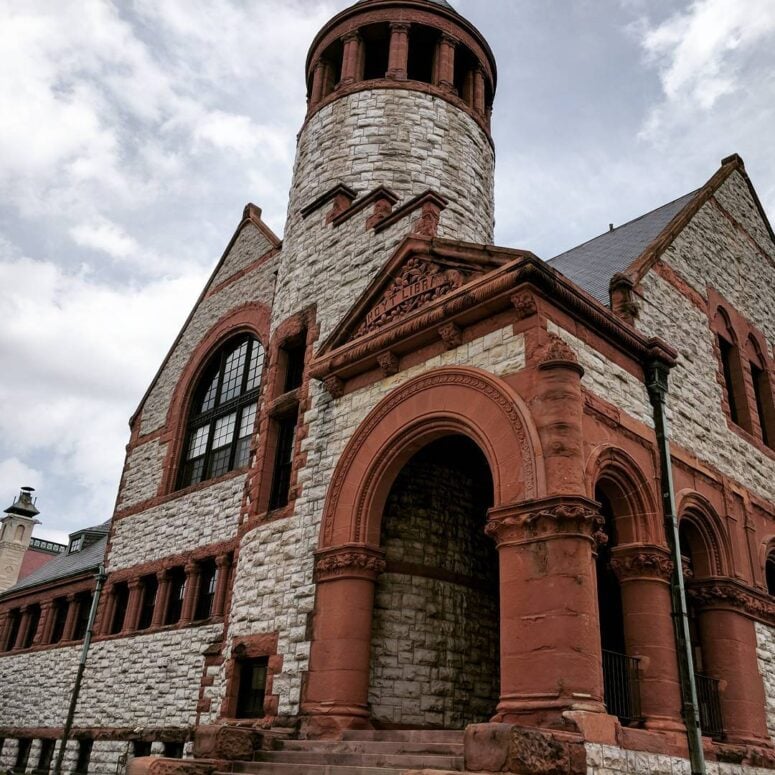
Hoyt Main Library looks like something you’d expect to find in a European city center, not in the middle of Saginaw, Michigan — all rugged stone, rounded arches, and a fortress-like Romanesque presence that makes you slow down as soon as you spot it.
The library opened in 1890, made possible by Jesse Hoyt’s bequest of a site and $100,000 to establish and operate a public library for the city (then East Saginaw).
A national design competition followed, and the Boston firm Van Brunt and Howe was selected — with the final design clearly showing the influence of H. H. Richardson’s Romanesque style.
Architectural details are a big part of the draw. The exterior walls are built of Bay Port limestone and trimmed with red sandstone, with intersecting gables, heavy massing, and a round corner tower that leans fully into that Richardsonian feel.
A major update in 1920–21 added the Janes Street entrance: a Norman-style porch modeled after Canterbury Cathedral, with carved red sandstone arches and columns that became the library’s main entry.
The building has continued to evolve — including a 1959 addition and a 1994 renovation — while keeping its original character front and center.
It’s also a destination for researchers, with a reputation as one of Michigan’s top genealogy centers, and it even ties into local exploring with a historic walking tour you can access through the library’s genealogy resources.
Branch District Library — Coldwater Branch
10 E Chicago St, Coldwater
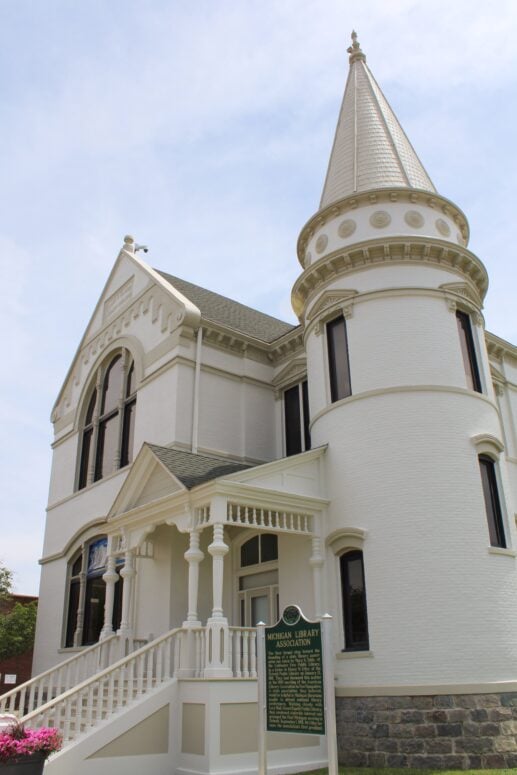
At first glance, the Coldwater Branch looks like a classic downtown library stop. Then, you realize you’re looking at a building with deep local roots — it began as a purpose-built library in 1886, created through the gift of Edwin R. Clarke.
The building’s original layout was based on a functional library plan by William F. Poole (of the Chicago Public Library), translated into a working design locally by architect M. H. Parker — a setup that prioritized light-filled reading rooms and practical library flow long before “library design” was a buzzword.
From the outside, it carries a Queen Anne personality with a cross-gabled roofline and a corner tower that still gives it presence on the block.
It’s also a library that’s grown with the community. A major addition and renovation in 1979 expanded the space while keeping the historic building at the heart of the experience.
Today, you can pop in for a self-guided look during posted branch hours, and if you want to go deeper on local history, the Holbrook Heritage Room has its own hours and recommends appointments.
Mackinac Island Public Library
903 Huron St, Mackinac Island
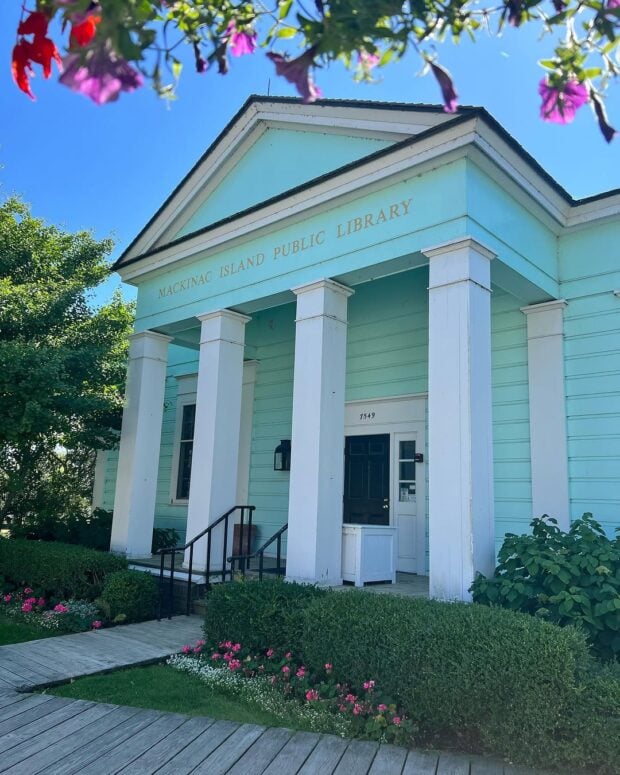
A library stop hits different on Mackinac Island — no cars, just a peaceful walk (or a horse ride) to a quiet place that feels perfectly in step with island life.
It serves the island’s year-round community of about 500 residents and welcomes seasonal visitors looking for a calm break from the bustle.
A library isn’t new to the island. There’s been a library on Mackinac Island since 1936, and Rosa Webb is credited as the founder of the first library here.
The current building for the Mackinac Island Public Library became its home after a move from Market Street in January 1992 — and the interior was designed by Carleton Varney.
Inside, you’ll find a main reading room, a specialized rare books room, and an inviting porch that’s made for lingering on warm days.
It’s also a great stop for families — there’s a strong children’s selection, and on cool days, you might even catch a fire going in the fireplace.
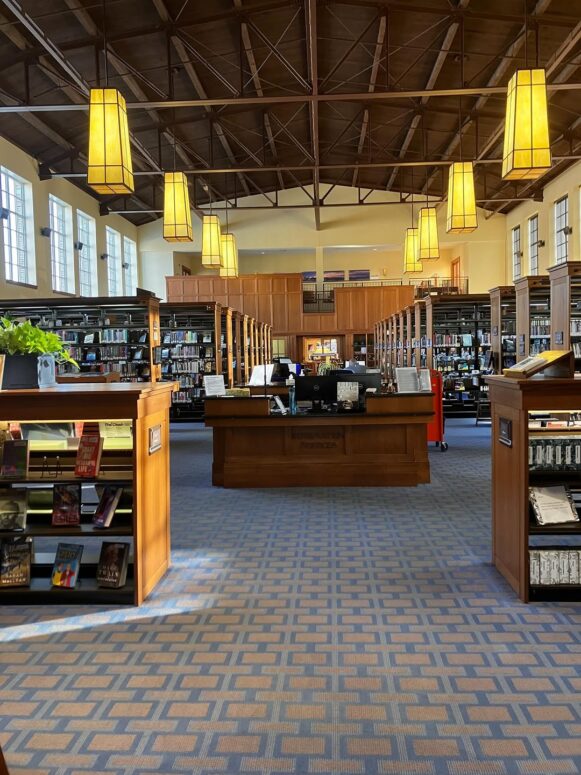
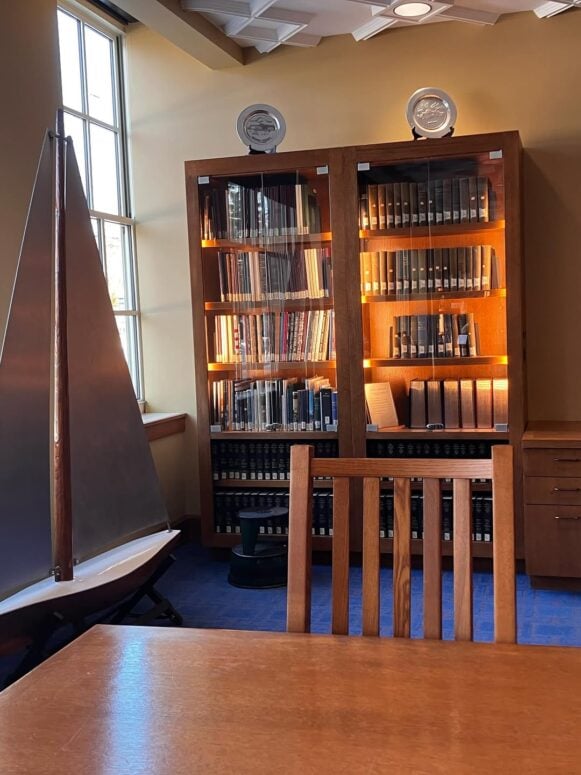
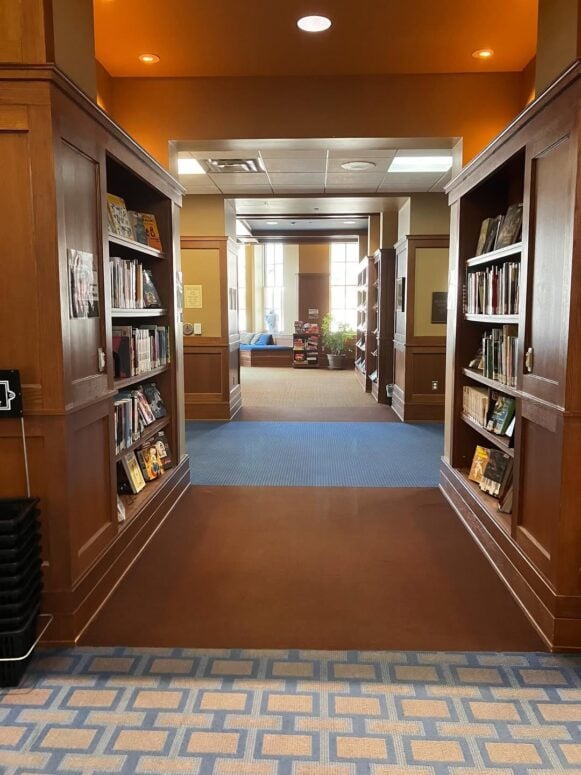
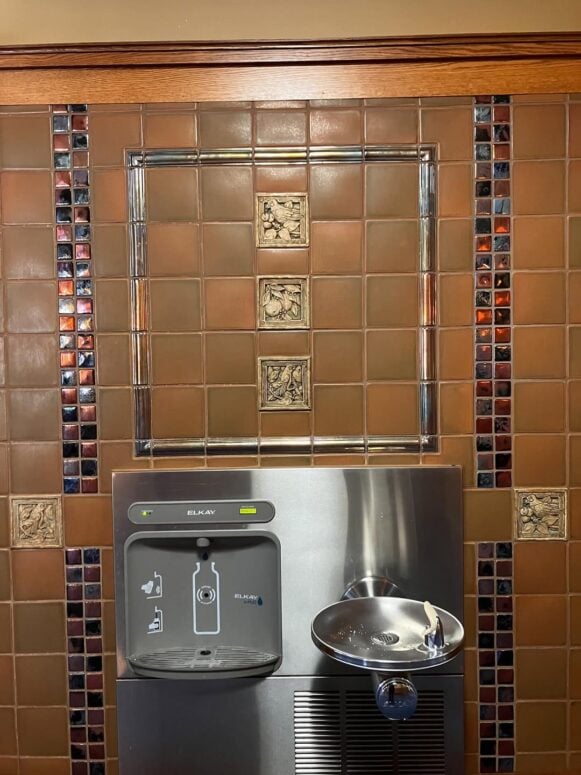
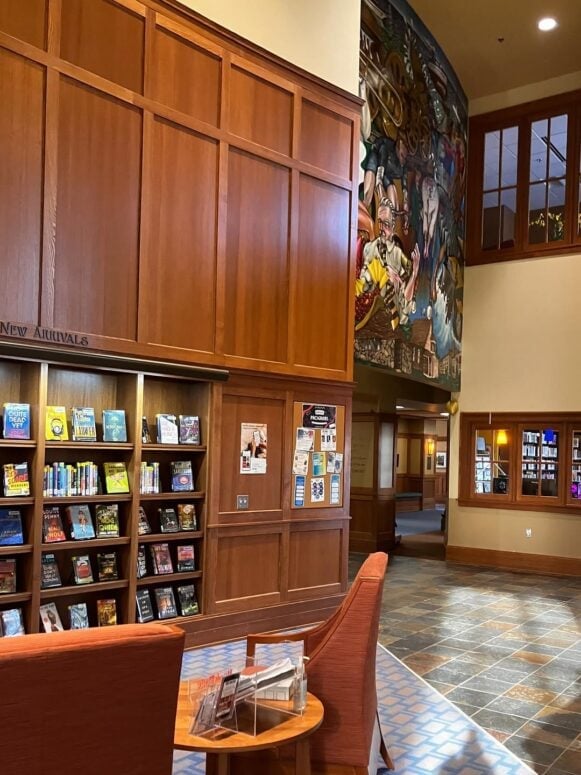
Charlevoix Public Library
220 Clinton St, Charlevoix
Charlevoix Public Library is one of those buildings that instantly feels like a local favorite — full of character, deeply tied to the community, and beautifully adapted for modern use.
The library is housed in a former elementary school that was built in 1927. After the school closed, the building was transformed into the current library through a 2004–2006 renovation. That adaptive reuse is a big part of what makes the space so memorable.
The yellow brick exterior and beach-inspired interior palette give it a look that feels right at home in Charlevoix, while the main reading room in the former gymnasium still shows off a lofty beamed ceiling.
Also, the library features a signature mural by Charles Thompson near the entry that reflects Charlevoix life in the late 1920s, tying the art directly to the building’s original era.
Today, it blends historic charm with active community use, including exhibits, events, meeting spaces, and everyday library services.
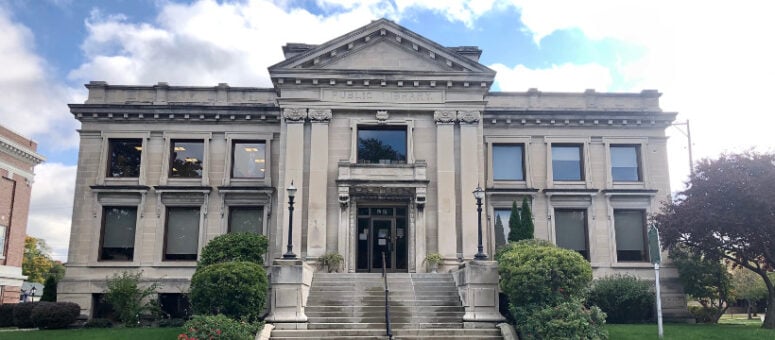
Manistee County Library — Main Branch
95 Maple St, Manistee
Perched on a bluff above downtown, the Manistee County Library’s main branch has the kind of presence that makes it feel like more than a library stop — it feels like part of the city’s story.
The building opened to the public in June 1905 as a city library. Construction funding came from Andrew Carnegie and the Lakeside Club of Manistee, and George L. Harvey of Port Huron designed the building.
The library has served the community continuously since then and was listed on the National Register of Historic Places in 1983.
This Beaux-Arts Classical Revival building features a symmetrical brick facade, stone detailing, and a prominent entrance pavilion, reflecting early 20th-century civic pride while anchoring the city’s historic district.
An expansion and renovations have preserved its original character while adding modern accessibility.
The main branch also holds some standout historic pieces that make a visit feel extra memorable. One is the “Great Colonial Clock,” donated in November 1925 by lumberman Edward Buckley. It still sounds its Westminster chimes every 15 minutes.
Another is a gift from Thomas J. Ramsdell, a former Michigan State Representative, lawyer, and philanthropist. In 1905, he donated a pre-civil war copy of “The Birds of America” — Bien Double Elephant Edition Audubon prints — that was later bound in the 1970s and remains on display.
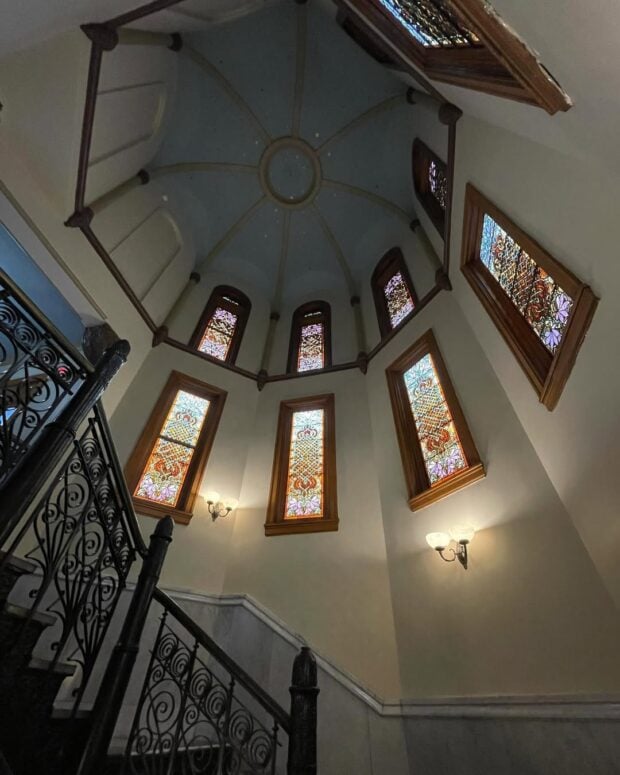
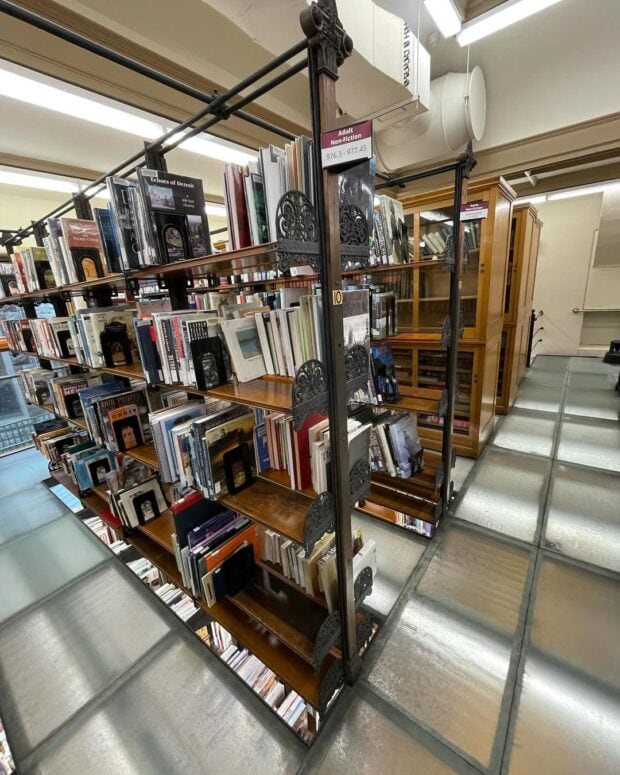
Hackley Public Library | Muskegon
316 W Webster Ave, Muskegon
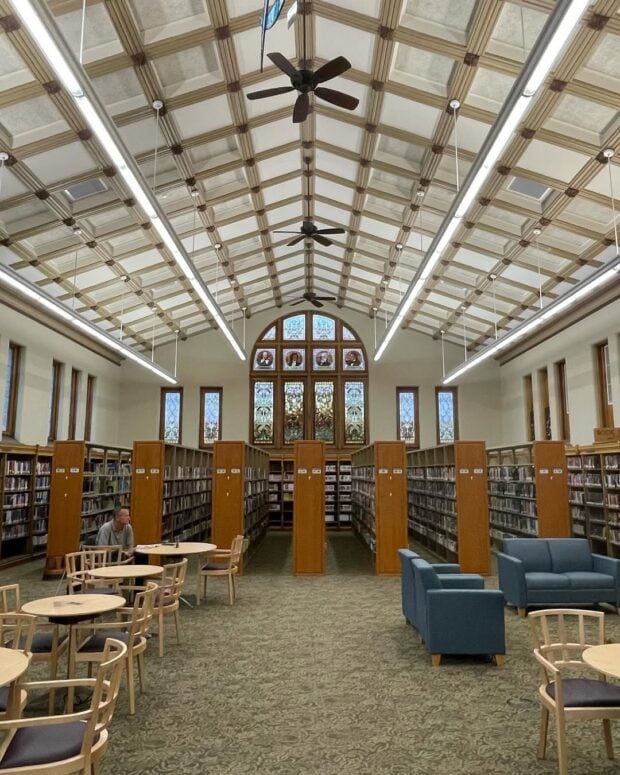
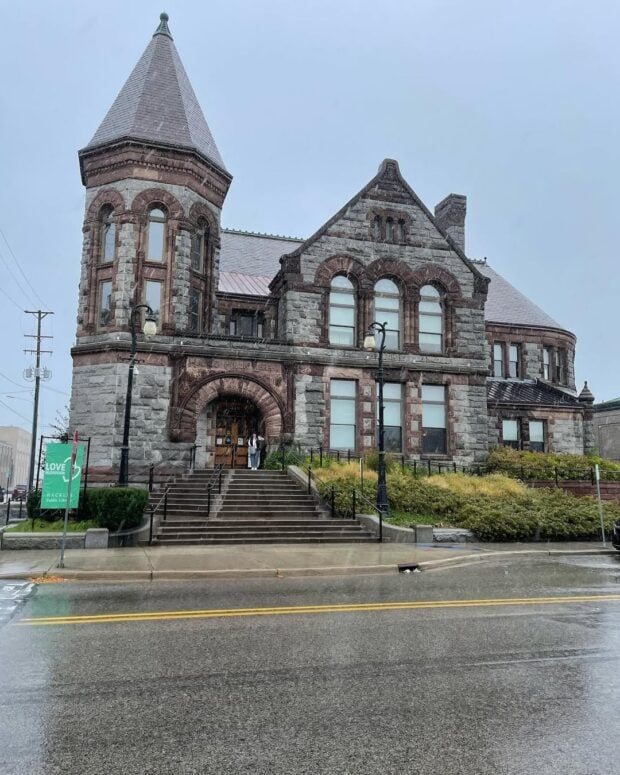
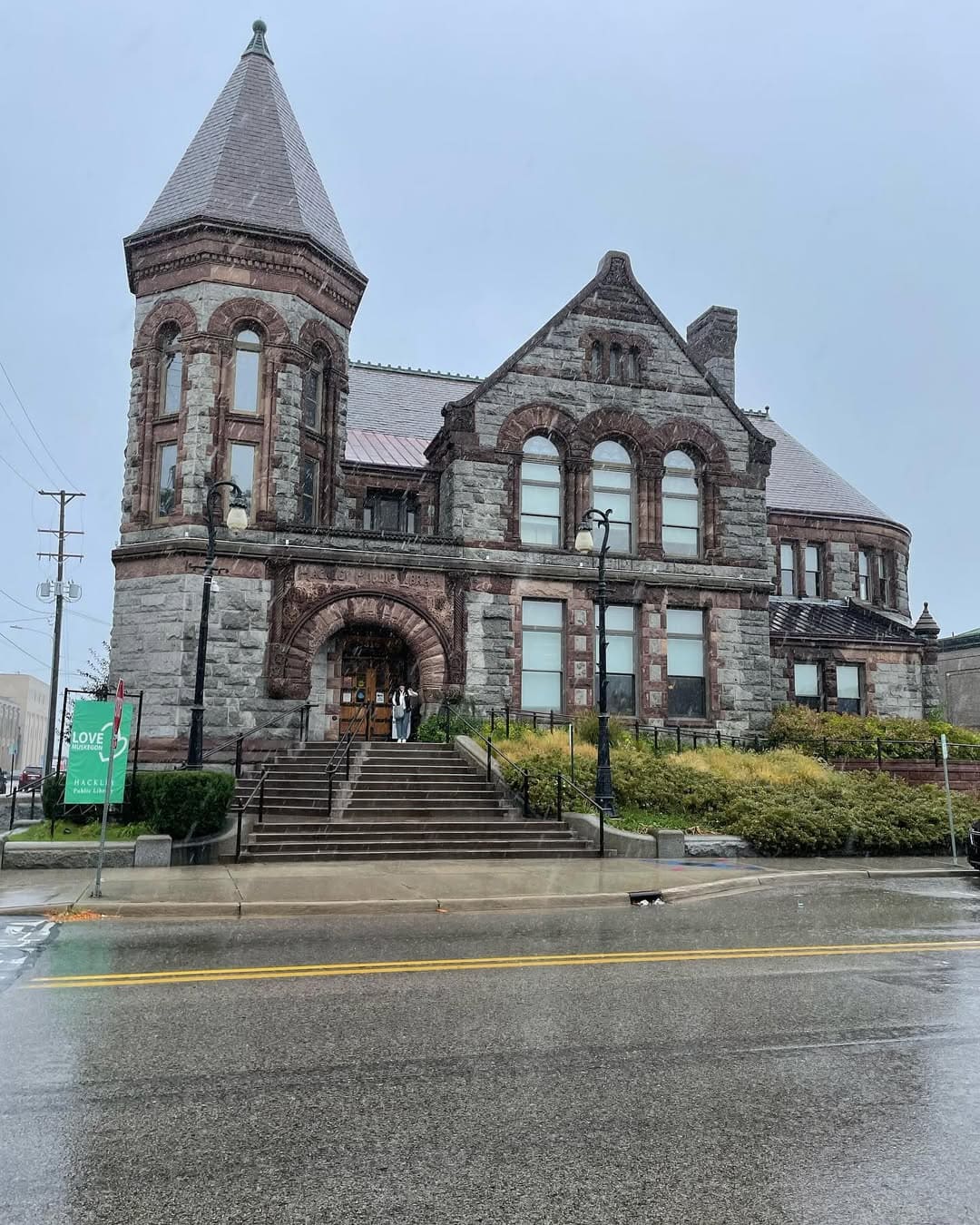
Hackley Public Library is one of those places that make you stop before you even get to the door — a Richardsonian Romanesque landmark with massive stone arches, intricate carving, and the kind of late-19th-century civic grandeur that still feels impressive today.
Gifted to Muskegon by Charles H. Hackley, the library opened in 1890 and was designed by the Chicago firm Patton & Fisher. It was built at a cost that topped $200,000, using syenite granite with Lake Superior sandstone trim, and it’s every bit as dramatic as you’d hope.
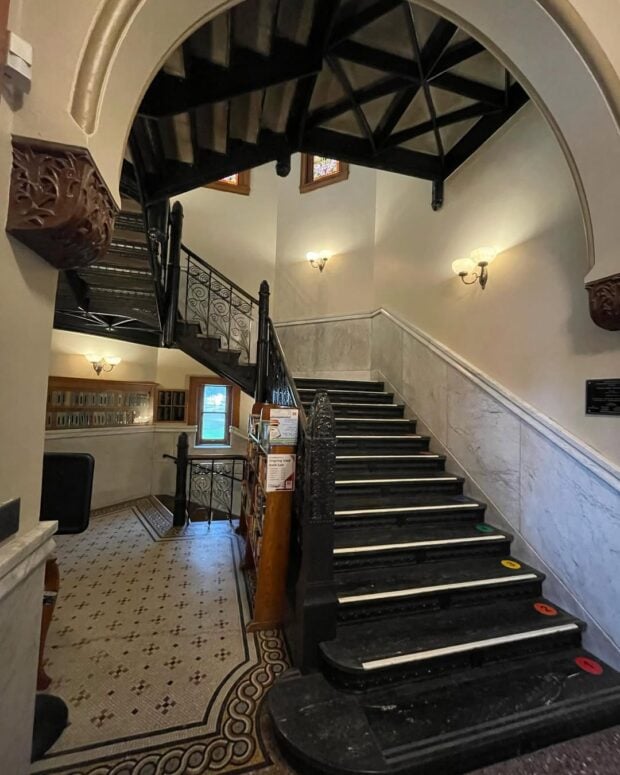
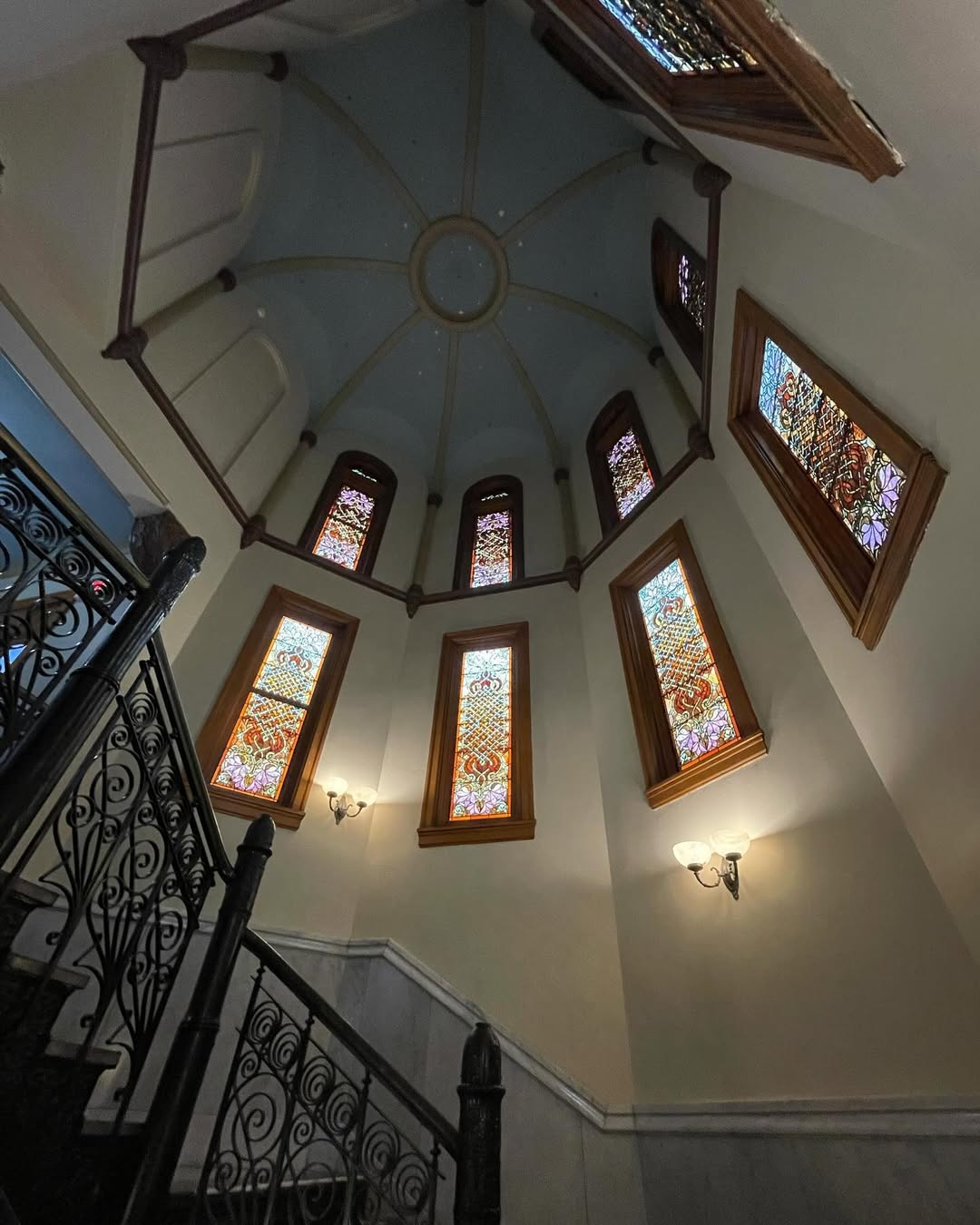
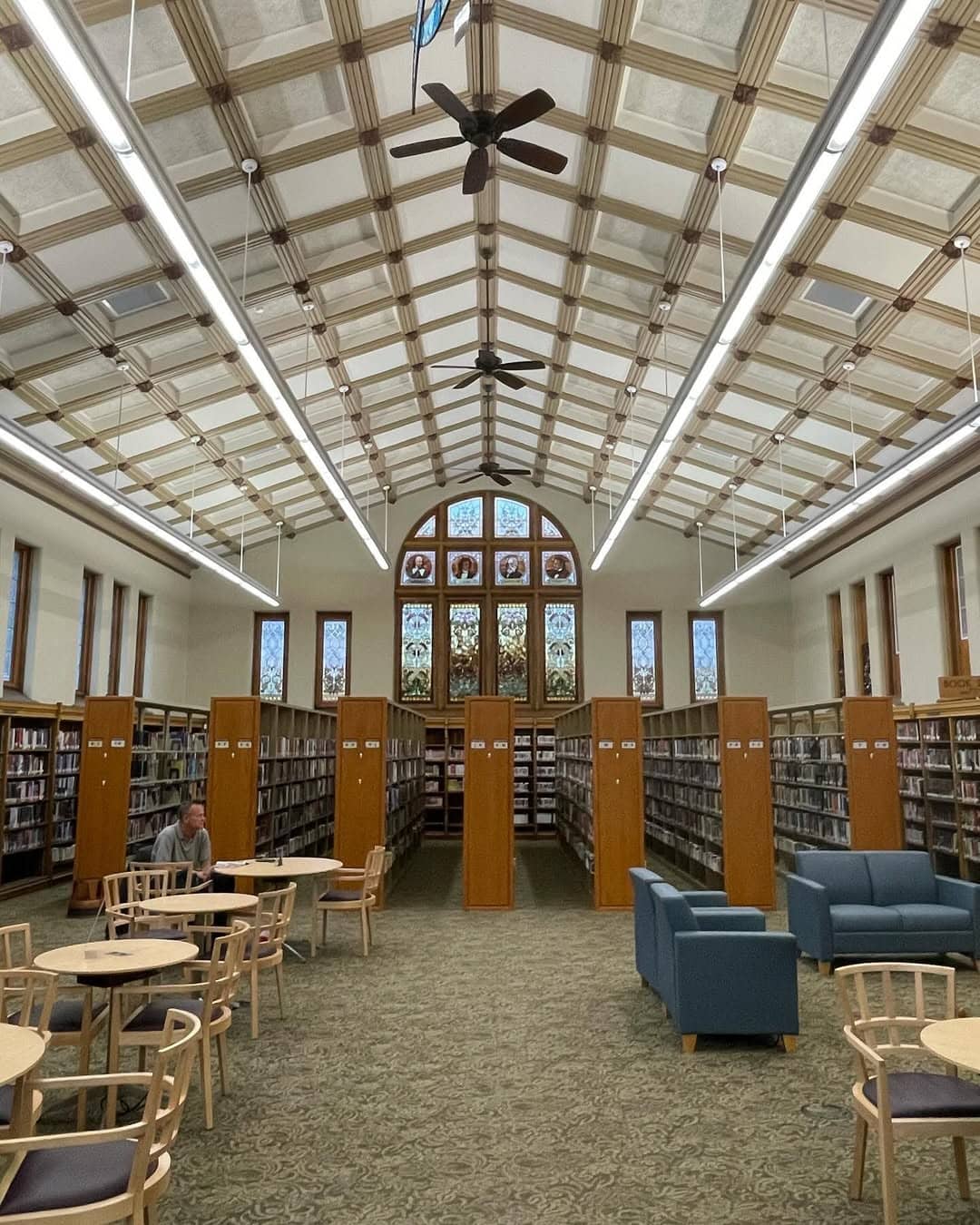
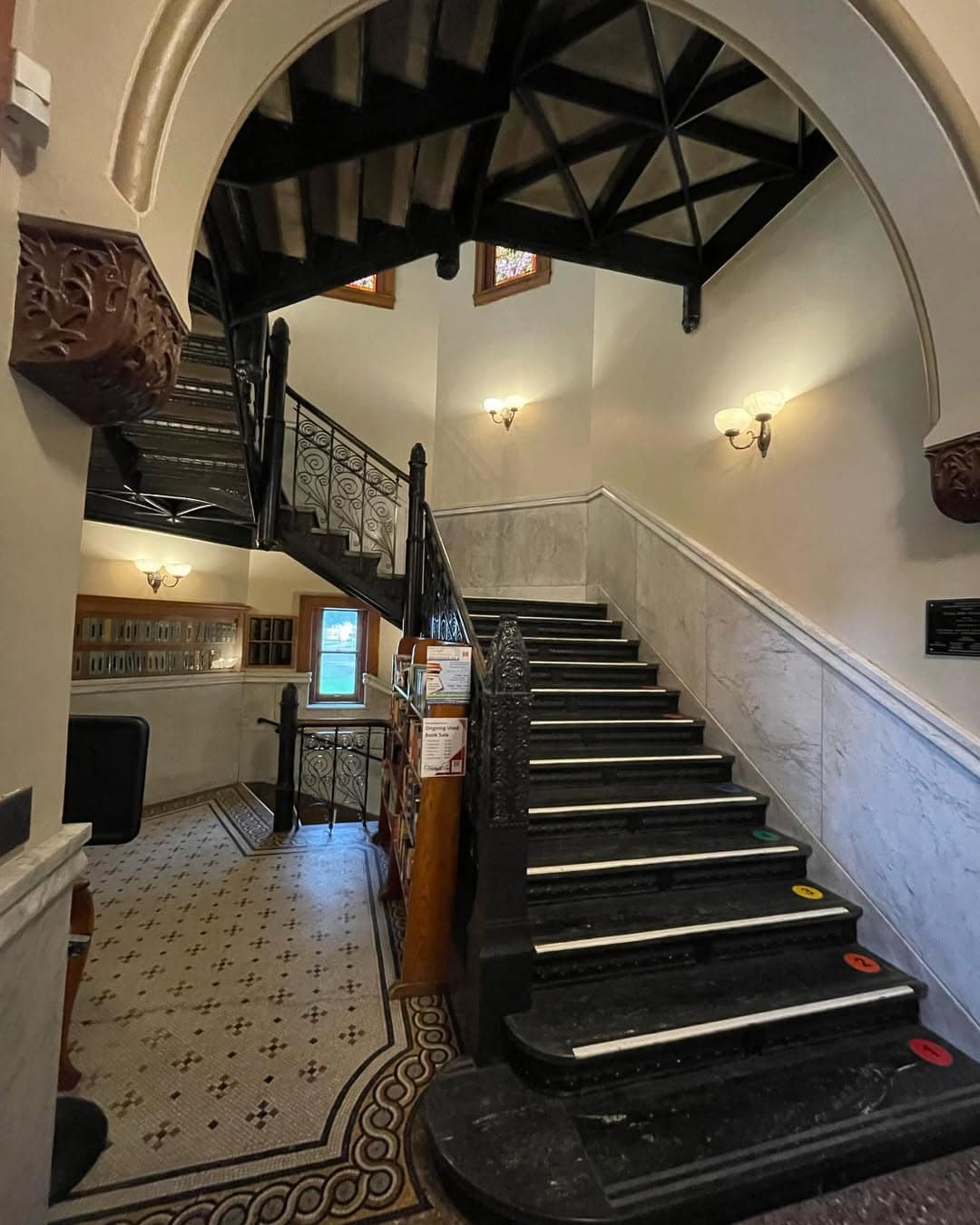
Inside, the details are just as memorable — from the stained glass windows attributed to the Millet and Burke Company of Chicago to richly finished woodwork, decorative stone, and historic rooms that feel preserved without feeling untouchable.
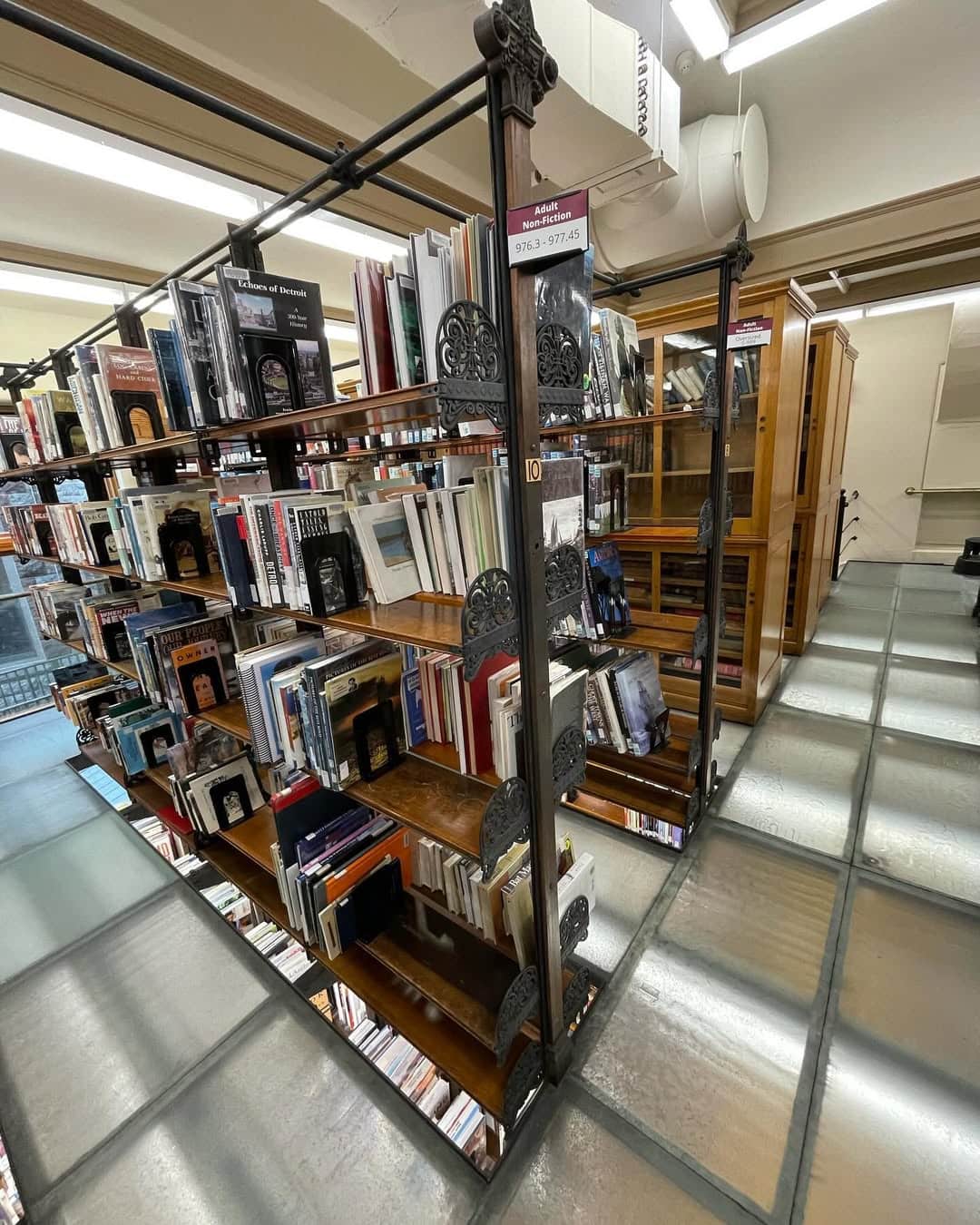
It also has some truly distinctive features that make a visit extra fun for architecture lovers and library nerds alike — including the restored glass floor in the stacks, murals by Muskegon artist Wilfred Berg, and a facsimile edition of the Book of Kells on display.
The library’s own history pages and self-guided interior descriptions make it a rewarding place to explore at your own pace.
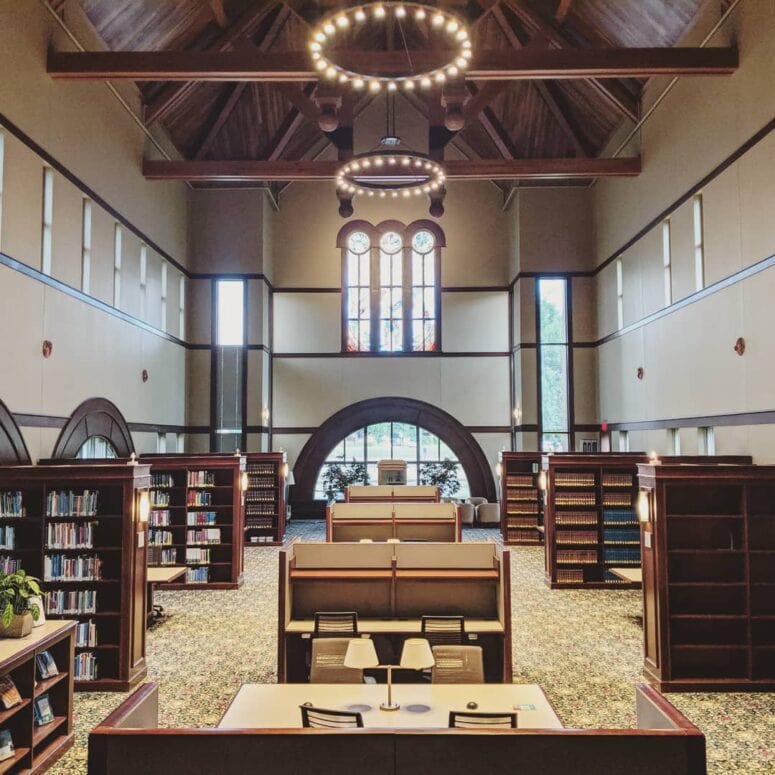
Steelcase Library Reading Room — GVSU | Grand Rapids
401 Fulton St W, Grand Rapids
If your ideal library stop leans modern and calming, the Steelcase Library Reading Room is a standout.
It’s part of the Steelcase Library in Building A of the Richard M. DeVos Center on Grand Valley State University’s Robert C. Pew Grand Rapids Campus, right in Downtown Grand Rapids.
The Steelcase Library supports a wide mix of professional programs and campus users, with specialized collections and services, alongside collaborative spaces, study rooms, and quiet study areas.
The Reading Room is part of that balance. With a cathedral-like vaulted ceiling, stained glass windows, and comfortable seating and work tables, it’s a quieter space within the library that also supports group work and active academic use.
This is a great pick if you want a contemporary contrast to Michigan’s older landmark libraries.
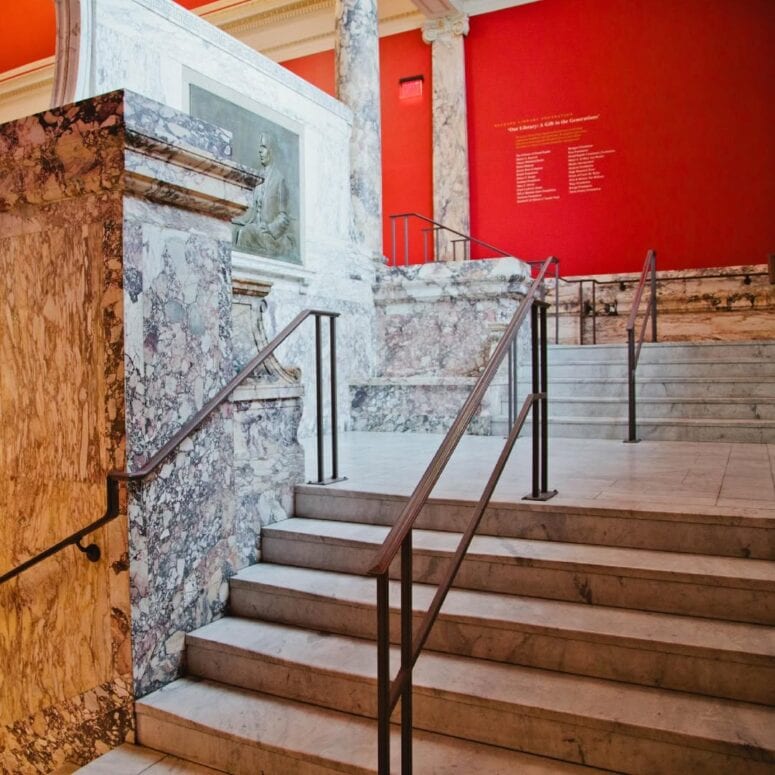
Grand Rapids Public Library — Main Branch
111 Library St NE, Grand Rapids
Grand Rapids Public Library’s Main Branch is a great example of how a historic library can evolve without losing its identity.
The building brings together the original 1904 Ryerson Building with the Keeler Wing, creating a flagship space that reflects more than a century of growth in one place.
The Ryerson Building became the library’s permanent home in 1904, funded through major gifts from Martin A. Ryerson and Andrew Carnegie.
In the mid-20th century, the library expanded with a large addition, and a major renovation completed in 2003 reworked the Main Library to better connect the older structure with the Keeler Wing.
That project restored key features of the original Ryerson Building, including its atrium and skylight, and added a large atrium to help unify the two wings despite their different materials and architectural styles.
If you want to go beyond a self-guided visit, Art & Architecture Tours are available on select dates, which is a great way to experience the building’s design evolution in more depth.
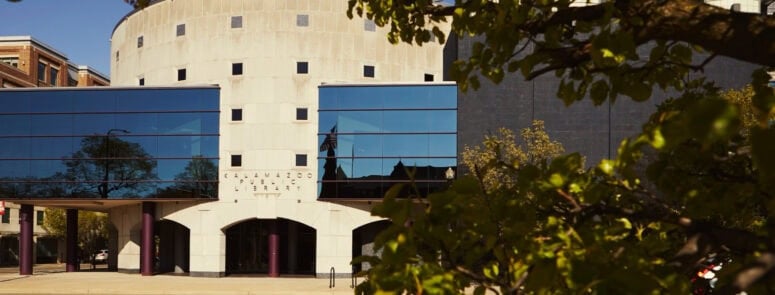
Kalamazoo Public Library — Central Library
315 S Rose St, Kalamazoo
Kalamazoo’s Central Library is a great pick if you love bold civic architecture that feels distinctly modern.
The current downtown building grew out of the 1959 central library and museum structure, designed by Louis C. Kingscott, Inc. and inspired by Le Corbusier’s Villa Savoye.
Then, it was transformed through a 1998 renovation that kept the building’s core form while dramatically reworking its exterior and interior.
That renovation is what gives the building its striking look today: reflective glass with purple mullions, black granite towers topped with iridescent beacons, and a limestone-clad cylindrical rotunda with a copper-shingled dome that visually links all four floors.
Inside, the design leans into openness and connection, with a large central aperture, balcony views between levels, and light-driven features that make the space feel active and contemporary instead of closed off.
If you want more than a self-guided visit, Kalamazoo Public Library also has a Library Tours & More request option where groups can request a library tour or speaker.
Kalamazoo Public Library — Washington Square Branch
1244 Portage St, Kalamazoo
Washington Square Branch is one of those neighborhood libraries that people remember instantly — charming, compact, and full of personality, to the point that locals have long nicknamed it “The Castle.”
The branch has served the area since 1927, and its design still stands out today. Along with a copper weathervane reader perched on top, the old English building features tapestry brick, limestone trim, and a two-toned slate gabled roof.
Inside, the original character carries through with oak woodwork, decorative panels, small-paned leaded glass windows, open fireplaces, and rough timbers framing the steep ceiling.
Washington Square Branch is also a great example of a historic branch that has stayed useful while keeping its charm.
A 1997 restoration repaired and updated major systems (including brick, roof, and windows), added an elevator, and refreshed interiors in ways that complement the building’s original style.
Just like you can for Central Library, you can request a tour of Washington Square Branch if you want more than a self-guided visit.
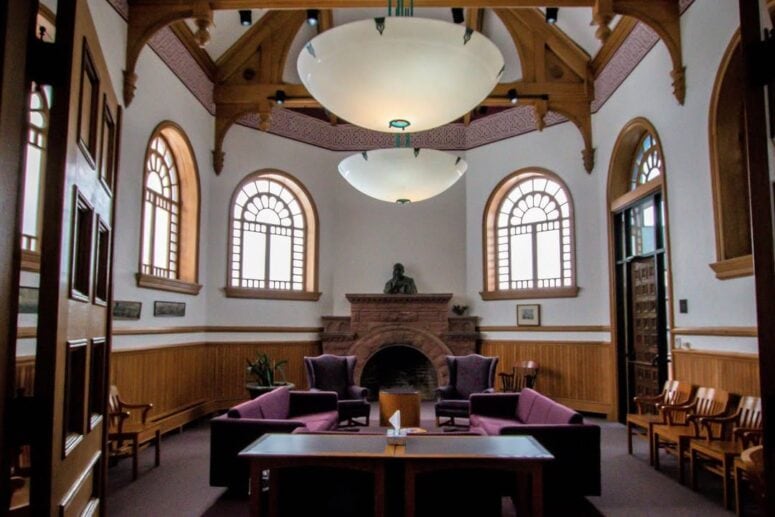
Burrage Library — University of Olivet
320 S Main St, Olivet
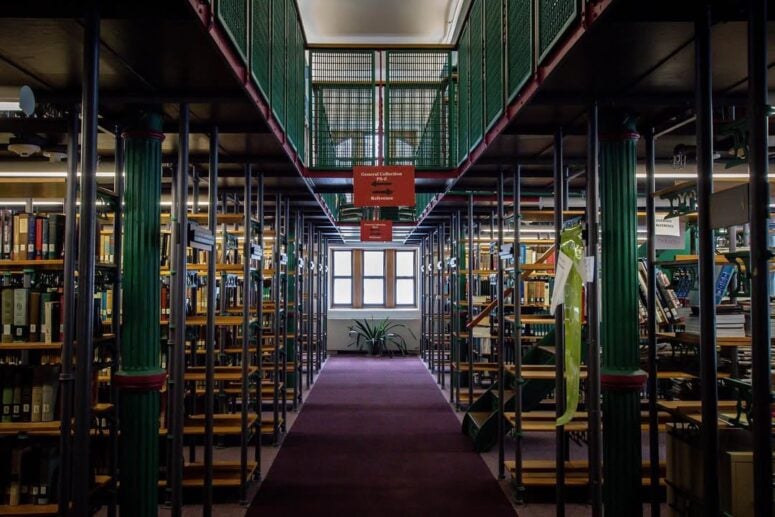
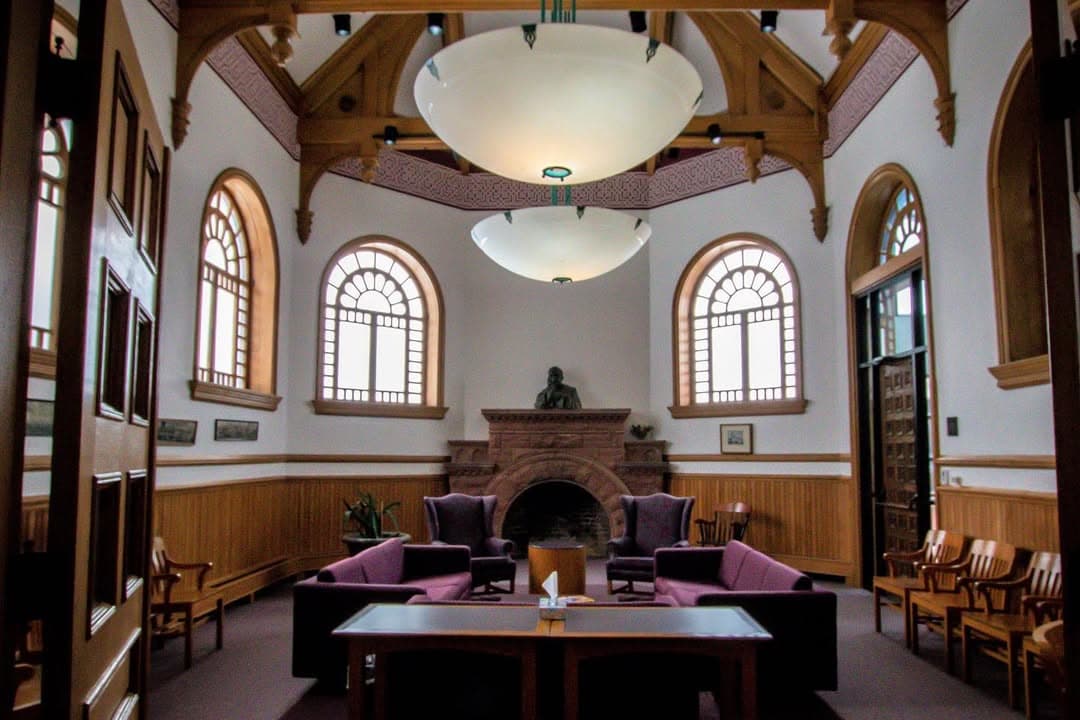
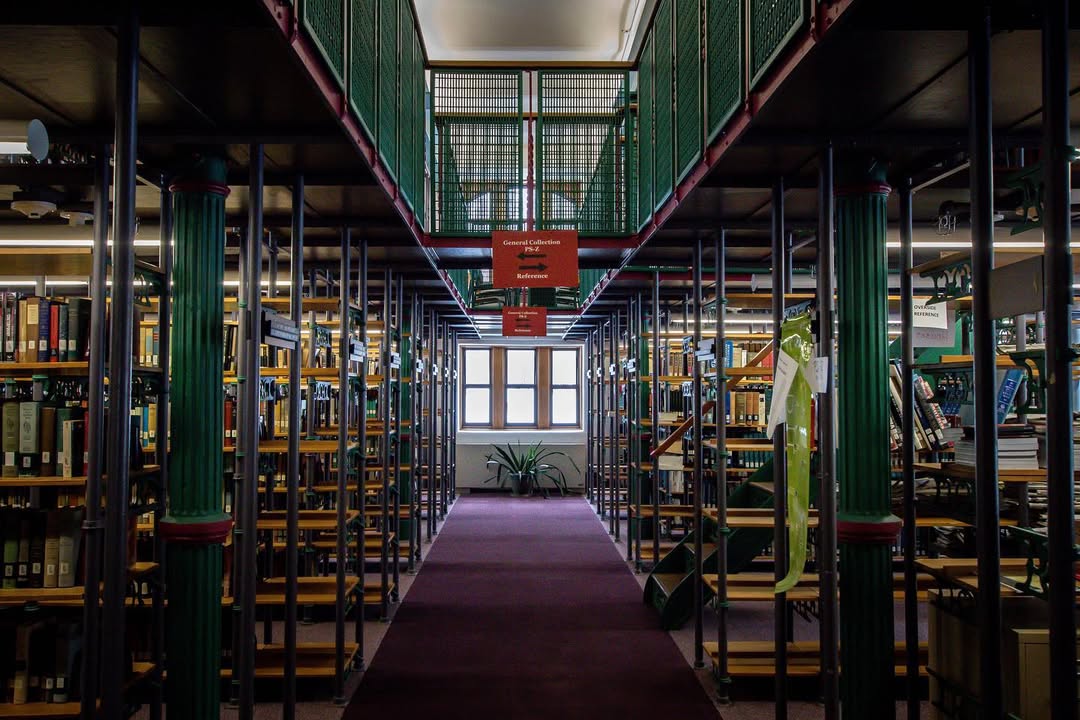
Burrage Library anchors the University of Olivet campus with a dramatic Richardsonian Romanesque presence that feels more like a historic landmark than a typical campus library.
Built in 1889–90 and designed by Arthur Bates Jennings, it was promoted by librarian Joseph L. Daniels and funded through gifts from Leonard Burrage and Lucy E. Tuttle.
Its massive, asymmetrical form, two octagonal towers, and deeply set windows give it that unmistakable fortress-like look.
The materials are part of what makes it so memorable, too — rock-faced Ionia sandstone in mottled tones on a granite foundation creates a textured, substantial exterior that reads as both rugged and refined.
The building was later remodeled and expanded in 1992–93 by WBTL Architects, a project that increased capacity and modernized function while keeping the historic character front and center.
Today, Burrage Library serves both the university community and the general public, with books, periodicals, research resources, online databases, and interlibrary loan support.
Also, the library page includes a virtual tour, which is a nice option if you want to preview the space before visiting.
Note: Posted hours vary by academic year/summer schedules (with extended hours during exams and special events), so it’s worth checking the current schedule before you go.
Library of Michigan | Lansing
702 W Kalamazoo St, Lansing
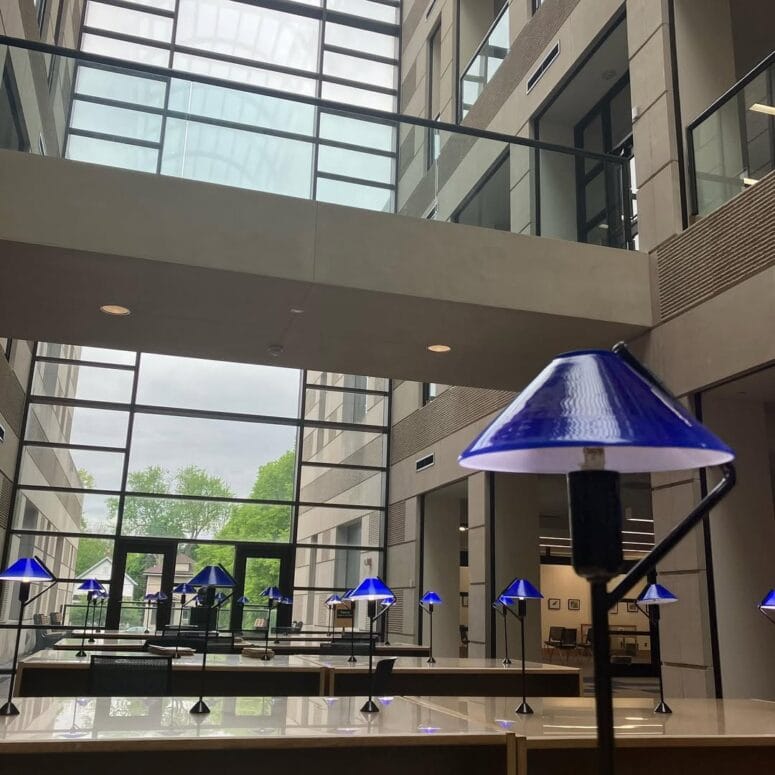
The Library of Michigan is housed in the Michigan Library and Historical Center in Lansing, a striking civic building within the State Capitol Complex that brings together the state library and the Archives of Michigan in one destination.
Completed in 1989 and designed by William Kessler and Associates of Detroit, the Michigan Library and Historical Center was built with Michigan materials throughout, including a limestone exterior, polished granite walls, and white oak used in doors, furniture, and trim.
Its design blends classical and modern influences, with dramatic glass atriums that rise up to 93 feet and fill the interior with natural light.
At the center is a copper-clad outdoor courtyard built around a Michigan white pine, paired with the Great Lakes Fountain for a strong visual nod to the state’s natural identity.
Also, it’s one of the state’s most significant research destinations, with historical, genealogical, government, and special collections, along with exhibits and public programming.
Group visits and guided tours of the Library of Michigan can be arranged in advance (subject to staff availability).
Jackson District Library — Carnegie Branch
244 W Michigan Ave, Jackson
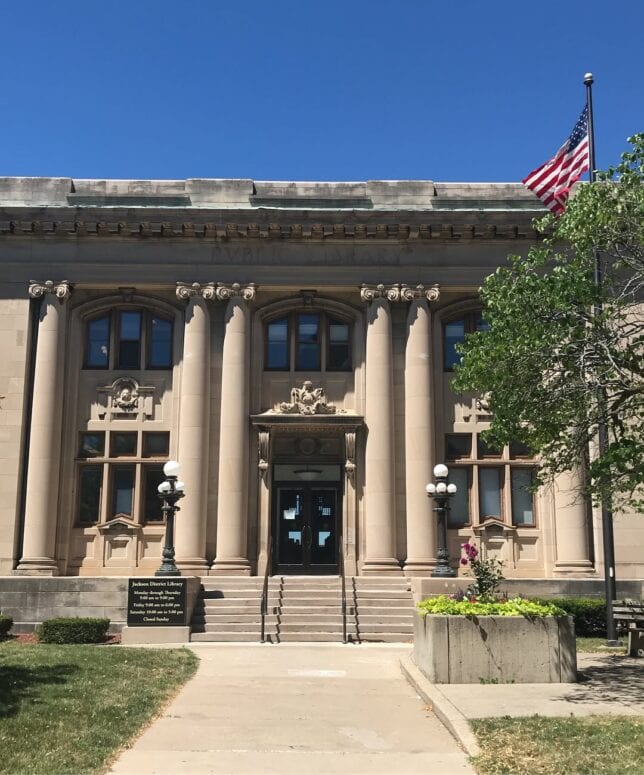
The Carnegie Branch in Downtown Jackson is the main branch of the Jackson District Library, and it has the kind of grand civic presence that makes it feel instantly iconic.
This is one of Michigan’s standout Carnegie-era library buildings, with a broad front stair, a symmetrical limestone facade, and a columned entrance that gives it a timeless, formal look.
The building was made possible by a $70,000 Andrew Carnegie grant, designed by the Milwaukee firm Ferry & Clas, and constructed from 1903 to 1906.
Architecturally, it’s best described as a Beaux-Arts classical library rather than a simple Neoclassical one, with six engaged Ionic columns, a modillioned cornice, and richly detailed stonework.
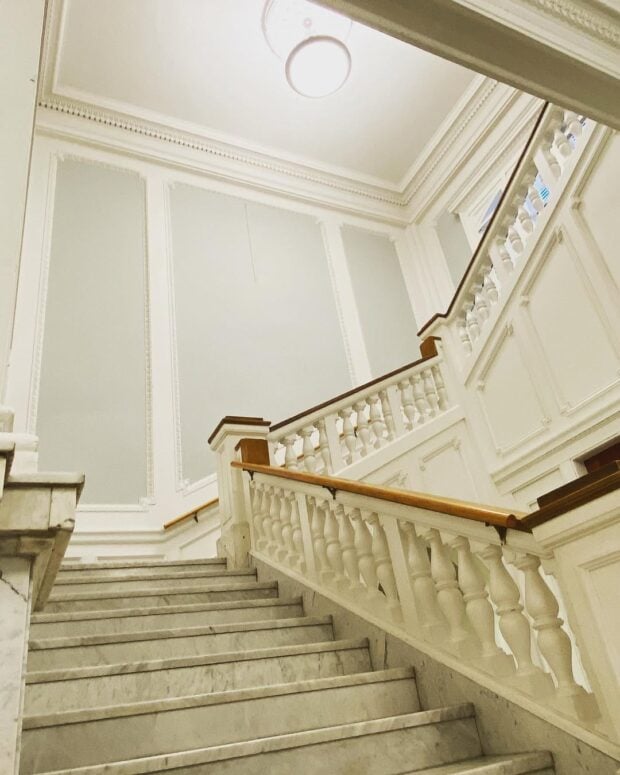
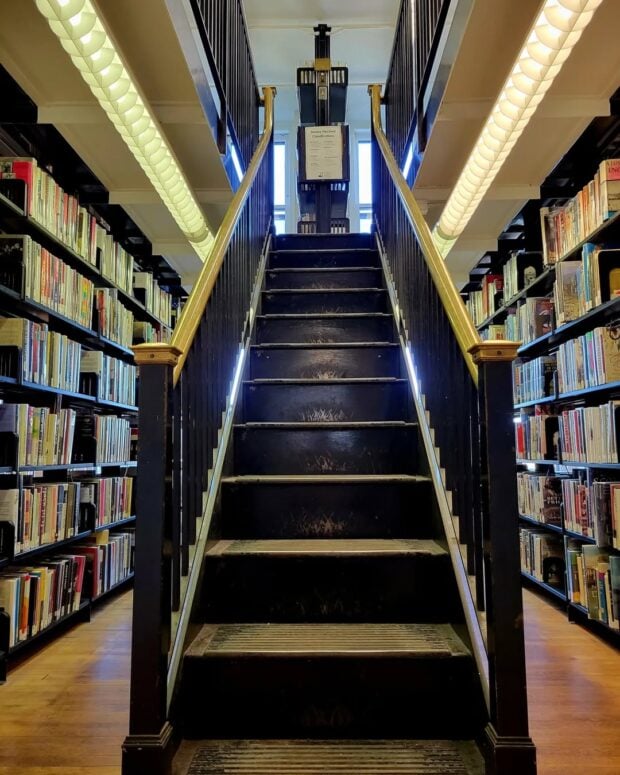
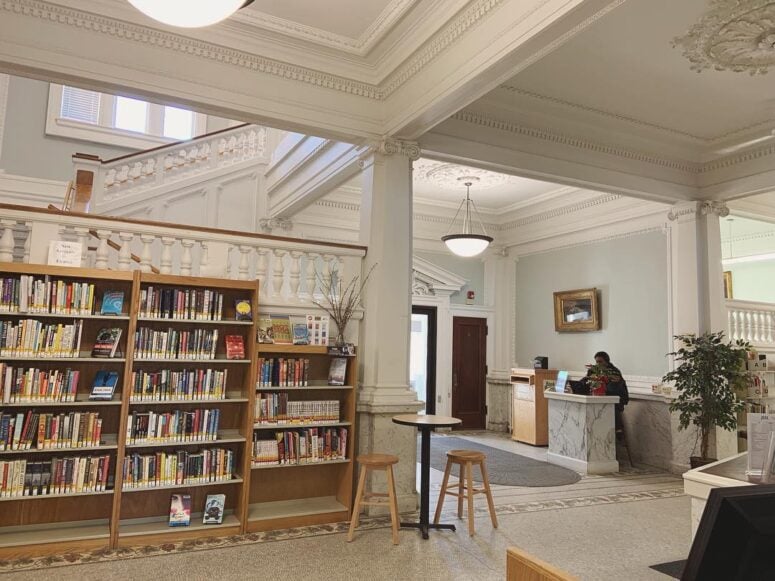
Inside, the details are just as memorable, including a terrazzo floor with an inlaid grapevine border, marble wainscoting, marble stair treads, and a main reading room with a glazed brick fireplace and mezzanine stacks.
A circular rear addition (completed in 1981) added space for an elevator, lobby, and history/storytelling rooms while keeping the original building’s historic character front and center.
Howell Carnegie District Library
314 W Grand River Ave, Howell
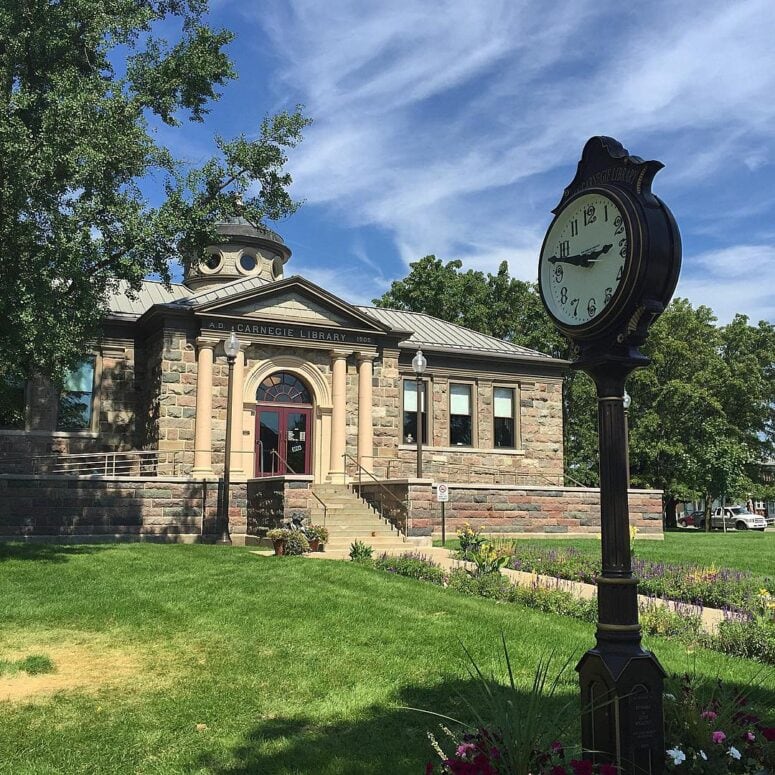
Howell Carnegie District Library is one of those classic Michigan library buildings that instantly feels like a landmark — with a grand stair approach, a formal central entrance, and a strong civic presence right in Downtown Howell.
The historic Carnegie building was funded by Andrew Carnegie and completed in the early 1900s, with construction and design spanning 1902 to 1906. Its architecture reads as Beaux-Arts classical, but with a distinctly local feel thanks to walls of granite fieldstone cut on-site.
The original building’s symmetrical facade, pedimented entrance portico, paired engaged columns, and dome on a drum give it the timeless look people often picture when they think of a Carnegie library.
What makes it especially interesting is how the historic structure was expanded without losing its visual identity.
A restoration and expansion effort in the late ’80s/early ’90s added a large rear addition that stays set back and visually understated, keeping the original Carnegie portion as the clear focal point.
Inside, the historic library is organized around a central skylit rotunda with ornamental moldings and preserved finishes that still make a visit feel special.
If you want to get a look before your visit, a virtual tour is available on the library’s website.
Hudson Carnegie District Library
205 S Market St, Hudson
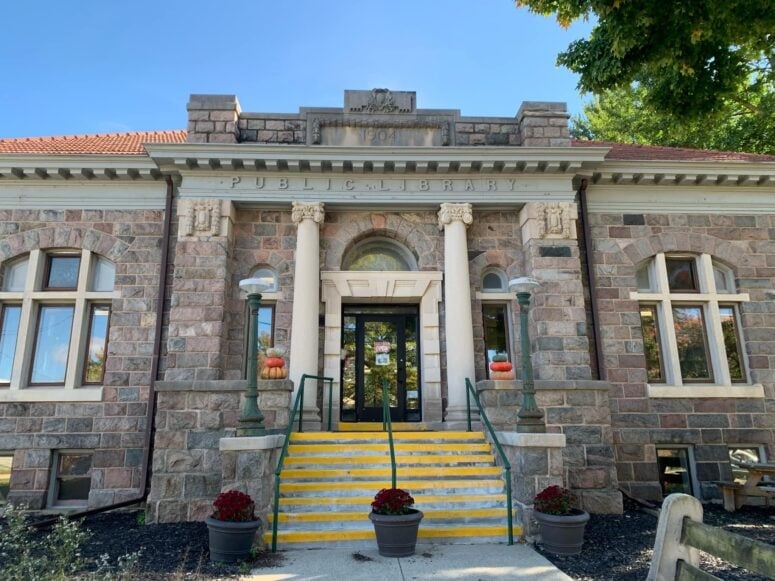
Hudson Carnegie District Library is a classic small-town Carnegie library that still feels deeply woven into daily community life. Set in Downtown Hudson, it stands as a historic stone building that immediately reads as both sturdy and welcoming.
The library’s story began in the early 1900s, when Hudson secured a $10,000 grant from Andrew Carnegie after agreeing to support a free public library and provide a site.
The site was purchased in 1903, Claire Allen of Jackson was selected as architect, and the building was constructed in 1904 and dedicated in February 1905.
The design is a modified Beaux-Arts classical take on the Carnegie library model, scaled to fit the town while still giving the entrance a formal civic presence.
That architectural personality shows up in the details.The building was constructed of local fieldstone by the Koch Brothers of Ann Arbor.
Meanwhile, the main entrance is dressed up with a raised section above the doorway, classic columns on either side, and decorative stone trim that adds a surprising amount of elegance to a compact library.
This history and design give the building the same civic optimism people love in Michigan’s Carnegie libraries, with a compact, enduring design that still anchors the block today.
Ironwood Carnegie Library
235 E Aurora St, Ironwood
Ironwood Carnegie Library is one of Michigan’s true Carnegie standouts — a compact downtown library with deep roots and a remarkably long run of continuous service.
The library was built with Andrew Carnegie funding in the early 1900s, with the original $12,000 grant later increased to $17,000. It was designed and built by Archie Donald and Daniel Egan of Ashland, Wisconsin, completed in 1901 and dedicated in January 1902.
The building is widely recognized as Michigan’s oldest continuously operating Carnegie library.
Architecturally, it delivers exactly the kind of classic Carnegie feel you hope for in a small-town library — a durable brick-and-brownstone exterior, simple formal proportions, and a welcoming, community-scaled presence.
Inside, much of the historic character remains, including original features like the circulation desk, woodwork, iron grates, and radiators, while the library continues to support modern services, technology, and programming.
Ishpeming Carnegie Public Library
317 N Main St, Ishpeming
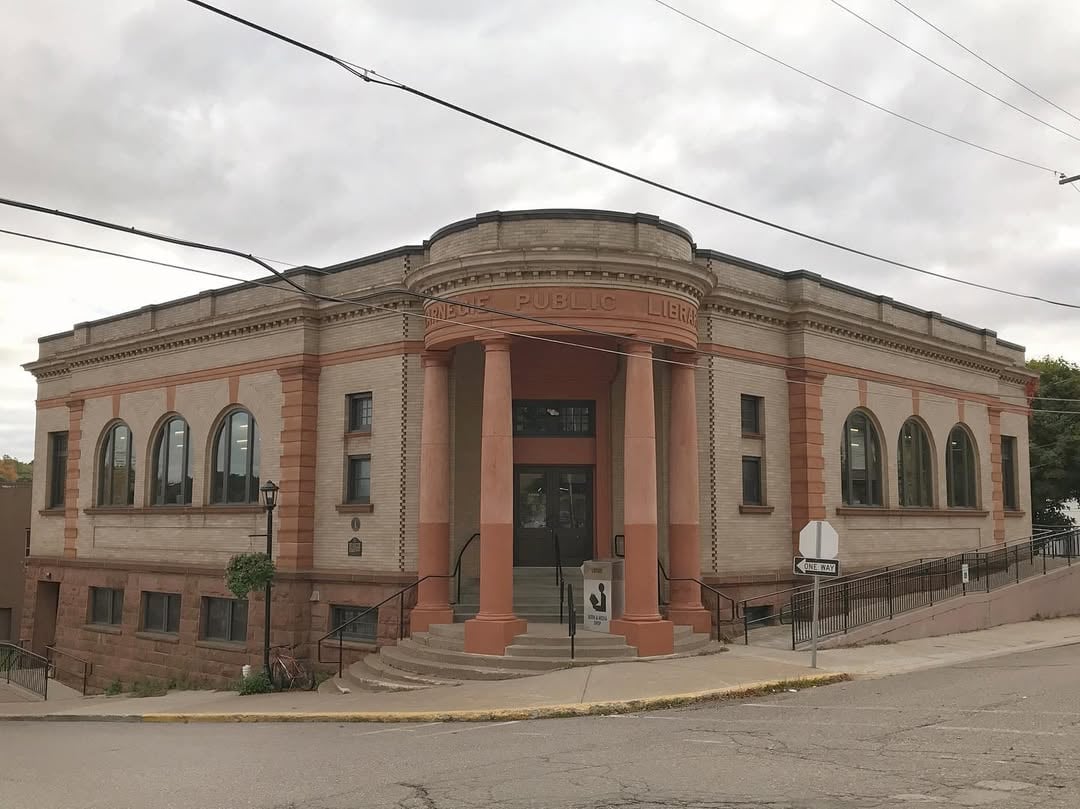
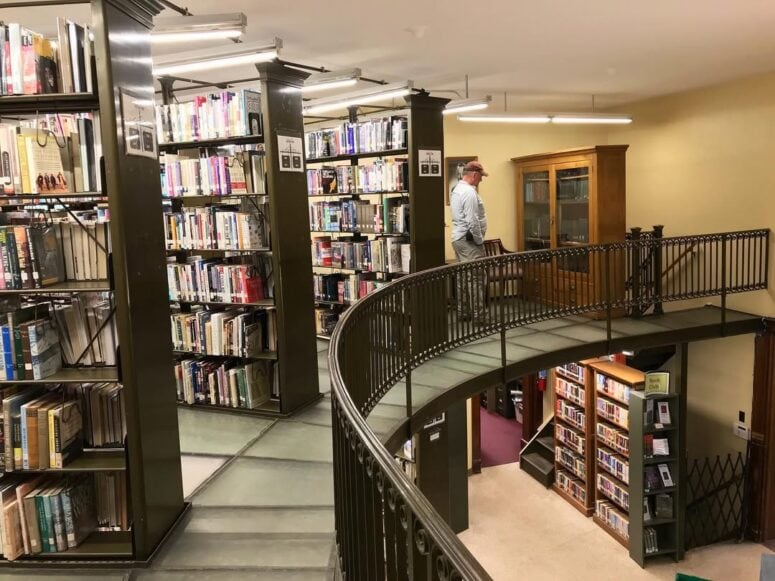
The Ishpeming Carnegie Public Library is a downtown landmark with deep local roots and classic early-1900s civic architecture. It is associated with a $20,000 grant authorized by Andrew Carnegie in 1901.
Built in 1904, it has served the community for generations and remains one of the Upper Peninsula’s most recognizable library buildings.
The building is a one-story brick Neoclassical Revival structure with a rectangular footprint and a formal, balanced design that gives it a dignified presence on Main Street.
It is also recognized as a Michigan State Historic Site (listed January 18, 1980).
Plus, it has had a pop-culture moment — appearing in the 1959 film “Anatomy of a Murder” as a courtroom law library stand-in.

More Than Books: Michigan’s Libraries Are Magnificent Destinations
From Gothic quadrangles and Romanesque stonework to riverfront reading rooms and island charm, Michigan’s libraries prove that great architecture isn’t limited to museums or mansions.
These spaces tell stories — of philanthropy, civic pride, academic ambition, and community resilience — all while remaining welcoming places to wander, read, and reflect.
Whether you’re planning a weekend road trip or simply looking for your next quiet escape, these architecturally distinctive libraries offer a uniquely Michigan way to explore the state, one beautiful building at a time.
